The menu is only one part of a successful catered event. The most useful questions to ask your caterer before booking cover staff responsibilities, service timing, food preparation, menu choices, and venue facilities. For a wedding meal, ask how the proposed dinner service fits around the reception schedule.
It’s natural to focus first on the dishes guests will enjoy, from aromatic curries to freshly prepared breads and desserts. Clear answers about food preparation, dietary needs, and included service also help you plan the meal with confidence.
This checklist covers cuisine, staffing, venue setup, menu tastings, beverages, desserts, and cake service. It also offers practical prompts for discussing timing and guest counts, so you can compare the details that matter and plan a welcoming meal from the first course to the last.
Key Takeaways
- Match the cuisine and menu flexibility to your guests’ tastes, dietary needs, and the style of your event.
- Clarify what staff handle before, during, and after the meal so service fits your event schedule.
- Review the venue’s kitchen and serving facilities to understand what the caterer needs for setup.
- Ask how beverages, desserts, and cake service are handled, including any related fees.
- Discuss food preparation, menu tastings, and how to share allergy information when planning the final menu.
Do you specialize in any specific cuisines?
A caterer’s cuisine specialty shapes more than the menu. It influences ingredients, cooking methods, and presentation. Ask which regional cuisines the kitchen prepares and request specific dish examples. For an Indian menu, you might discuss tandoor cooking, fragrant curries, naan, and kebabs. Specifics give you a clearer picture than a broad label such as “international cuisine.”
Ask how the menu can reflect your event’s cultural traditions while respecting each dish’s character. A Punjabi-inspired meal, for example, can bring familiar regional flavors into a format suited to your reception. Discuss spice levels, vegetarian choices, and how dishes will be served. If guests have varied food preferences, ask about combining familiar favorites with regional specialties.
Menu flexibility should be practical as well as creative. Ask which dishes can be adjusted, which ingredients can be substituted, and how changes affect preparation and presentation. If you want a vegetarian entrée alongside a meat dish, clarify how both fit into the menu plan. Share allergy information early and identify the affected dishes so suitable alternatives can be discussed. For planners managing specific dietary standards such as kosher dining, exploring established restaurant groups like TALIA'S Brands can provide useful insight into how specialized culinary operations navigate custom menu requirements.
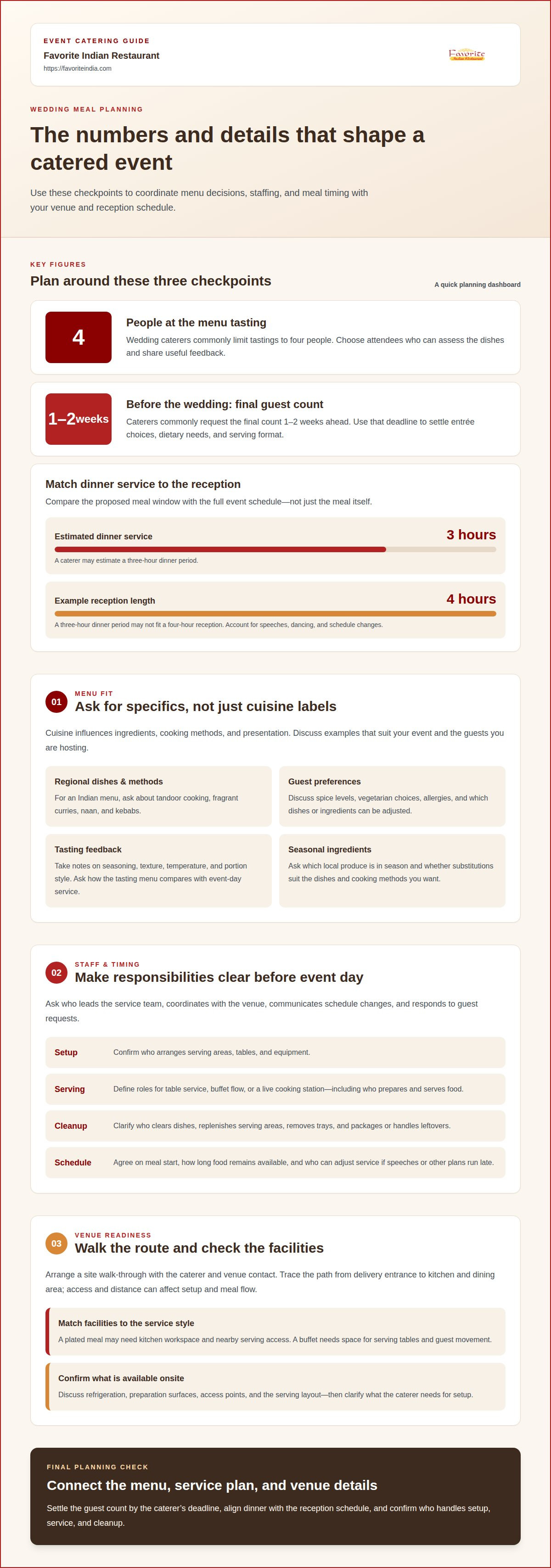
A tasting lets you evaluate seasoning, texture, temperature, and portion style before choosing dishes. Wedding caterers commonly limit menu tastings to four people. Decide who should attend, such as the couple and a relative familiar with the family’s food traditions. Bring a short list of dishes to taste, and take notes on what you would keep, adjust, or replace. Ask how the tasting menu compares with the food served at the event.
Seasonal local produce can help a wedding menu taste fresh, reduce waste, and save money. Ask which ingredients are in season for your event and whether they suit your preferred dishes. For example, a seasonal vegetable might work well in a side dish, while a signature entrée stays unchanged. Discuss substitutions in advance, especially if a particular ingredient or cooking method is central to the cultural meaning of a dish.
Clarify when the final menu and guest count must be settled. Wedding caterers commonly request a final guest count 1-2 weeks before the wedding. Use that deadline to plan decisions about entrée choices, dietary accommodations, and serving format. A focused conversation can cover these points:
- Cuisine: Which regional specialties and cooking methods are familiar to your kitchen?
- Customization: Which dishes can accommodate spice preferences, vegetarian guests, or allergies?
- Tasting: Who should attend, and how will tasting feedback shape the final menu?
- Seasonality: Which local ingredients can complement the dishes you want to serve?
Can you tell me about your service staff and their experience?
Ask who handles leftovers, how they’re packaged, and when they’re removed from service. Clarify serving times, including when dinner begins and how long food remains available. These answers help coordinate the meal with the event schedule and clarify what happens after guests finish eating.
Experience matters most when staff responsibilities are clear. Ask who leads the service team, communicates with the venue, and responds to guest requests. One person might coordinate meal timing while servers deliver dishes and clear tables. Confirm who handles setup, replenishes serving areas, and completes cleanup rather than assuming those duties are included.
Staffing should match the service format, guest movement, and menu. Ask how many staff members are planned and what each role covers. A seated dinner, buffet, and live cooking station each create different demands. For a live grill, clarify who prepares food, serves guests, and keeps the station organized. Ask how the team manages a busy serving area.
Request a service timeline that connects setup, guest arrival, meal service, and cleanup. A caterer may estimate a three-hour dinner period for a wedding meal service. A wedding reception may last four hours, which can make a three-hour dinner period a poor fit. Compare the proposed meal window with speeches, dancing, and other scheduled moments before finalizing the event plan.
Ask how staff manage delays between courses and who can adjust service if the schedule changes. A late toast may shift dinner service, while a long photo session may affect when guests reach the meal. Identify the event contact who can make timing decisions, and agree on how that person will communicate changes to the service lead.
Food service also involves clear handling decisions. Ask how staff keep dishes organized, who removes empty trays, and how leftovers are handled. If you want food packed after the event, discuss who will package it and when. Include these details in the service plan so hosts aren’t making last-minute decisions during cleanup.
- Setup: Confirm which staff arrange serving areas, tables, and equipment.
- Serving: Define roles for table service, buffet flow, or live stations.
- Cleanup: Clarify who clears dishes and handles leftover food.
- Timing: Align the dinner period with speeches, dancing, and reception plans.
Clear role assignments and a realistic schedule help service run smoothly, from the first dish to final cleanup.
Venue experience and onsite facilities
A venue’s kitchen, access points, and serving layout shape how catering works on event day. Arrange a site walk-through with the caterer and venue contact. Trace the route from the delivery entrance to the kitchen and dining area. A long carry, narrow doorway, or distant service space can affect setup and meal flow.
Ask what facilities the menu requires. A plated meal may need kitchen workspace and nearby serving access, while a buffet needs room for serving tables and guest movement. Discuss available refrigeration, preparation surfaces, electrical outlets, and water access. Ask which equipment the venue supplies and which the caterer brings, then record the answers against the floor plan.
Ask how the service lead communicates with the venue manager and who makes decisions if access or room arrangements change. Clarify staff responsibilities for unloading, arranging service areas, and clearing equipment. Identify who will direct deliveries if the event entrance differs from the guest entrance. A shared site plan gives both teams the same reference.
Read the event agreement for its deposit schedule, cancellation deadlines, refund terms, and process for guest-count changes. Check how a revised count affects the final invoice and note when changes must be submitted. Written details help you plan payments and avoid relying on verbal assumptions.
Once your event date and venue are settled, allow time for a site review, menu planning, and staffing arrangements. The lead time depends on the date, venue access, and setup complexity. A custom room layout or multiple service stations calls for more coordination than a straightforward meal plan.
- Facilities: List available kitchen space, refrigeration, outlets, and water access.
- Access: Map delivery routes, doors, elevators, and the distance to serving areas.
- Experience: Ask for examples from venues with similar layouts or service needs.
- Coordination: Name the venue contact and catering lead for event-day decisions.
- Agreement: Review deposit, cancellation, and guest-count terms in writing.
Before signing, compare the site plan, staffing responsibilities, and agreement terms together. This connects the venue’s facilities with the service your event requires.
Beverages, desserts, and cake fees
Ask for a written breakdown of beverages, desserts, and cake service before comparing catering quotes. There’s no single catering cost per person for every event in the United States. The price depends on the menu and event details, so request a quote based on your plans.
Ask the caterer to list food, beverages, staff, equipment, delivery, setup, and cleanup separately. Then ask which items are optional and which charges could change if the menu or event plan changes. A quote may describe dinner service but list beverage service or cake handling separately. An itemized proposal makes inclusions and potential extra fees easier to compare.
For beverages, specify what you want served, such as water, tea, coffee, or other drinks, and ask how each will be provided. Clarify whether the caterer supplies the beverages, serving equipment, and staff, or whether the venue handles any part. Ask how drinks will reach guests during dinner. A self-serve station, table service, and a staffed beverage station each need different arrangements.
Treat dessert as a separate menu decision. Ask which choices suit the meal, how they’ll be presented, and whether serving utensils or display pieces are included. If you’re considering Indian sweets, name the varieties you have in mind and ask how they can be served alongside other desserts. Confirm whether dessert is included in the proposed meal or is a separate selection.
Discuss the wedding cake separately, even if it comes from another bakery. Ask who receives and stores it, places it on the display table, and serves it to guests. Then ask whether cake cutting, plating, or cleanup carries an additional fee. These are questions, not automatic charges. Having each answer in writing helps prevent assumptions about what the catering team will handle.
Before accepting a proposal, compare the same details across every version of the menu. Check that each quote reflects the same guest count, beverage selections, dessert plan, cake responsibilities, and service format. If one proposal includes coffee service while another lists it separately, the totals don’t represent the same event plan. Ask for revisions when your selections change.
- Quote: Request separate lines for food, drinks, service, and event logistics.
- Beverages: Specify the drink choices and who supplies and serves them.
- Desserts: Clarify selections, presentation, and serving arrangements.
- Cake: Assign delivery, storage, display, cutting, and cleanup responsibilities.
There is no single catering cost per person in the United States. The price depends on the menu, service style, guest count, and venue logistics, so request a quote based on your event details.
Food preparation and menu options
A menu can sound appealing on paper yet depend on preparation details that affect the finished meal. Ask which dishes are prepared onsite and which arrive ready to serve. For example, clarify when naan is baked in relation to service. Discuss how the kitchen coordinates dishes that use different cooking methods, such as tandoor specialties and simmered curries.
Ask what happens between menu approval and event service. Review the dish selections, note ingredient changes, and confirm the final menu in writing. If you’re considering a creamy curry and a grilled entrée, ask how each dish is prepared and presented. Specific descriptions make options easier to compare than broad labels like “traditional” or “fresh.”
Use the tasting to assess more than flavor. Note texture, seasoning, portion style, and how dishes complement one another. If a dish tastes too spicy or rich, describe the change you want clearly. Ask whether the adjustment affects other ingredients or preparation. Keep feedback specific, such as “milder heat” or “more sauce with the rice.”
Ask how the kitchen organizes the approved menu for preparation. Find out how dish names, ingredient notes, and requested adjustments are recorded together, and how the team uses that record when preparing several selections. A clear menu document can help prevent a late edit from being mistaken for the original recipe. Keep one current version and retire earlier drafts.
Menu flexibility also means choosing a format that works for the gathering. Compare plated courses, shared dishes, and buffet service against the venue layout and guest preferences. Shared dishes can invite conversation, while individually plated meals give guests a defined selection. Ask how substitutions affect presentation and whether the same preparation approach works for the main menu and alternatives.
Before settling on dishes, walk through each item with the caterer and record the answers to these prompts:
- Ingredients: Which core ingredients define each selected dish?
- Preparation: Which cooking method brings out its intended flavor and texture?
- Changes: How will approved recipe adjustments be recorded?
- Service: How will the dish be presented in the chosen meal format?
- Final review: Does the current menu document match the selected dishes and notes?
A written menu should name each dish and capture agreed adjustments. Compare it with your tasting notes before approval. This final review can catch a mismatch, such as a requested mild curry appearing with the original spice level, before event planning moves ahead.
Also share guests’ allergy information with the caterer before service. Ferah recommends providing wedding caterers with guests’ allergy information two weeks before the wedding. Ask how that information will be matched to menu selections and communicated to the kitchen, so the agreed dishes and any requested adjustments can be reviewed together before the event.
Best Indian Food in Hayward, CA | Favorite Indian Restaurant | Indian Food near me: Saturday Lunch Buffet
Favorite Indian Restaurant in Hayward offers a Saturday Lunch Buffet, a natural way to explore a buffet-style meal before planning an event. It gives you a chance to consider the dining format and menu experience that could suit your gathering. For another occasion, the Weekend Dinner Buffet and Live Indian Grill Experience offer different ways to enjoy a shared meal.
If you’re planning a celebration, Indian Food Catering connects your menu decisions with the event itself. The questions in this guide can help you discuss cuisine, preparation, service, and venue needs before making plans. Explore the Saturday Lunch Buffet details, or contact Best Indian Food in Hayward, CA | Favorite Indian Restaurant | Indian Food near me about catering. You can also visit favoriteindia.com.
Make your next catering conversation count
Before choosing a caterer, turn your notes into a short event brief. Include the occasion, venue, preferred dining style, and details that matter most to your guests. Mark which choices are essential and where you can be flexible. This gives your next conversation a clear purpose and helps keep decisions focused.
The questions to ask your caterer before booking are most useful when they lead to specific decisions. Record each answer beside the relevant menu or service detail, then note any points that still need agreement. This simple record can help you compare proposals on the same terms and share decisions with everyone helping plan your event.
Once your priorities are clear, take the next step at Best Indian Food in Hayward, CA | Favorite Indian Restaurant | Indian Food near me. Bring your event ideas and begin shaping a meal around the gathering you have in mind. A thoughtful plan is a welcoming start to a memorable celebration.
Frequently Asked Questions
Do you have a liquor license and are you fully insured?
Ask whether alcohol service is included and who is responsible for providing it. Request written licensing and insurance documentation relevant to your event, then compare the business name and event details with your agreement. If the venue handles alcohol, clarify that arrangement with its representative. Don’t assume general insurance documentation covers every activity or party involved in the event.
How can you verify a caterer’s license, insurance, and food safety record?
Request the documents directly and check that the named business matches the company in your agreement. For a license or food safety record, ask which issuing organization maintains it and how to verify its status. For insurance, review the coverage period and named insured. Keep copies with your event records, and note any differences between the paperwork and the business name you’re hiring.
How do catering service styles compare, such as buffet, plated, and family-style?
Choose a format based on the atmosphere and guest interaction you want. A buffet gives guests choices and encourages movement; plated service creates a more structured meal; family-style service puts shared dishes at the center of table conversation. For upscale events, bespoke providers like Evolved Catering Services often adapt these formats to balance refined presentation with smooth guest flow. Consider how your guests prefer to dine and whether the format suits the occasion. The right choice supports the gathering’s tone and flow.
How far in advance should you book a wedding or event caterer?
Once your event date and venue are settled, allow time for a site review, menu planning, and staffing arrangements. The lead time depends on the date, venue access, and setup complexity.