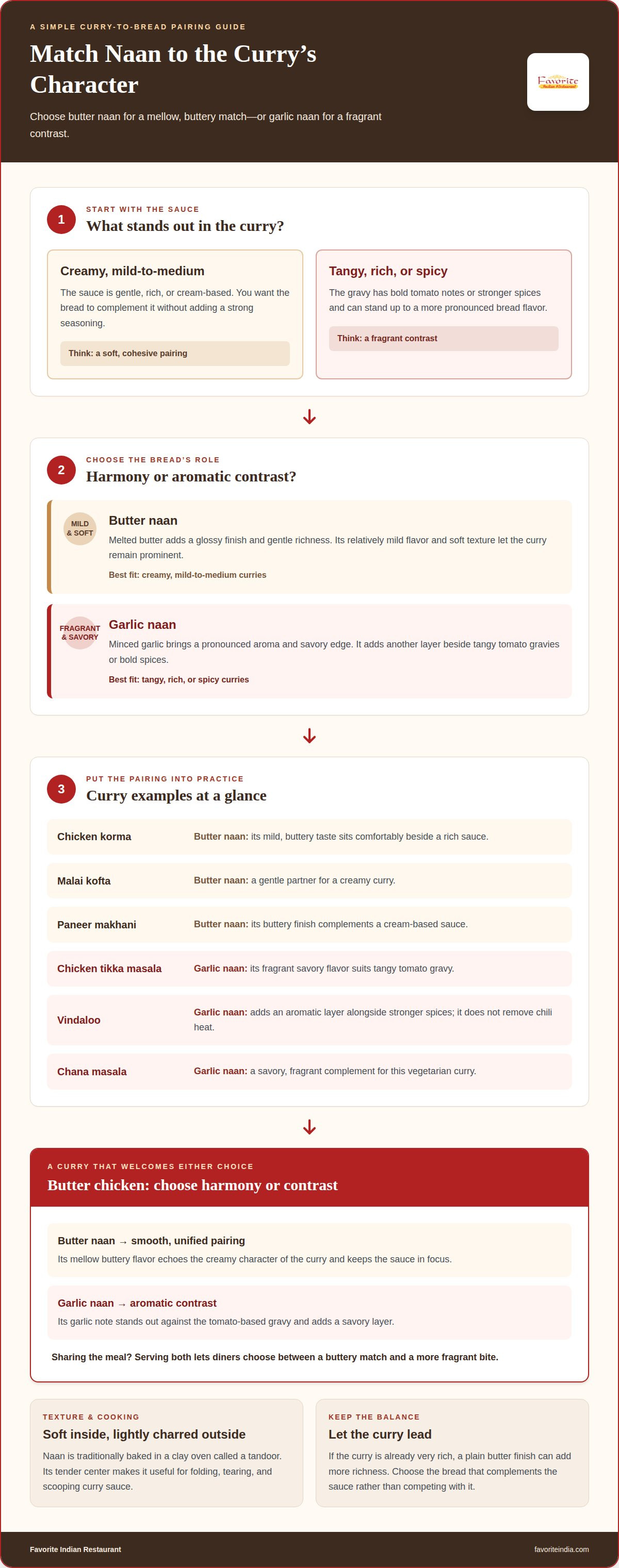
The more boldly flavored naan isn’t always the better match for curry. The garlic naan vs butter naan choice depends on the curry’s character: butter naan’s soft, buttery richness suits creamy, mild-to-medium curries, while garlic naan’s aromatic bite complements tangy, rich, or spicy gravies. Both are delicious for scooping up sauce, but they bring a different balance to the plate.
If you’ve wondered whether garlic might overpower a delicate curry or butter naan might feel too rich alongside a creamy one, the pairing can be simple. Match the bread’s flavor to what you want to highlight: a gentle, buttery finish or a fragrant garlic accent.
Here, you’ll see how each naan pairs with familiar curry styles, what its texture and flavor add, and how other naan varieties can round out a meal. Pay attention to the sauce and seasoning to make the choice feel natural, whether you’re sharing a comforting dinner or exploring Punjabi and North Indian cooking.
Key Takeaways
- Choose garlic naan when its aromatic flavor will complement a tangy or spicy curry; opt for butter naan when you want a soft, buttery match for a creamy, milder sauce.
- With butter chicken, either bread can work: garlic adds a fragrant contrast, while butter naan echoes the curry’s rich, creamy character.
- Butter naan’s appeal is its tender texture and buttery finish, making it a comforting choice for scooping up curry.
- Explore other naan varieties for different textures and flavors, and consider how each one will balance the curry rather than compete with it.
- Calorie comparisons depend on the serving and how the bread is prepared, so compare similar portions and toppings rather than relying on the name alone.
1. Which naan goes best with butter chicken?
Both garlic naan and butter naan pair well with butter chicken, but they bring different flavors. Butter naan gives the creamy curry a mellow, buttery companion. Garlic naan adds an aromatic, savory note that contrasts with the tomato-based gravy. For this pairing, choose based on whether you want harmony or contrast with the sauce.
Butter naan is finished with butter after cooking, giving it a glossy surface and rich taste. Its mild flavor lets the butter chicken remain prominent, while its soft texture makes it easy to scoop up sauce. Tear off a piece and gather a little gravy for a smooth, cohesive bite. This pairing works especially well when you want the bread to complement, rather than compete with, the curry.
Garlic naan includes minced garlic, giving the bread a more pronounced aroma and savory edge. The garlic stands out against butter chicken’s tangy tomato notes, making each bite more layered. Naan dough contains dairy, and naan is finished with butter, so garlic naan isn’t automatically a lighter alternative. Its defining difference is the garlic flavor.
When choosing garlic naan vs butter naan, consider how strongly the curry is seasoned. With mild butter chicken, garlic naan provides a noticeable counterpoint. If the sauce tastes especially rich, butter naan keeps the combination gentle. At a shared table, serving both lets diners choose between a unified buttery flavor and an aromatic contrast.
Fat, carbohydrate, and sodium amounts depend on the recipe and serving size. Butter naan may contain more fat if it receives a heavier butter finish. Both use flour-based dough, so carbohydrates depend largely on the portion and recipe. You can’t rank sodium from the names alone because preparation and salt amounts vary.
Neither bread is automatically healthier. The better fit depends on personal dietary needs, portion size, and preparation. Someone limiting added fat may prefer less butter, while someone monitoring sodium should consider the recipe’s salt content.
There is no single typical price for garlic naan or butter naan at U.S. Indian restaurants. The menu price depends on the restaurant, region, portion, and whether the bread is ordered separately or included as part of a meal.
Both styles can be adapted for vegan or gluten-free diets. A vegan recipe can use plant-based alternatives to dairy and butter; a gluten-free version needs a flour blend without wheat. Standard naan commonly contains dairy and wheat, so the exact ingredients depend on the recipe.
2. Plain butter naan characteristics and curry pairings
Plain butter naan starts as naan, then receives melted butter after cooking. That finish gives the bread a glossy surface, soft texture, and gentle richness. Its flavor stays relatively mild, so it can support a curry without adding garlic or another strong seasoning. Tear a piece and use it to scoop sauce, rice-free and simply, letting the curry remain the main flavor.
Butter naan’s mildness works especially well beside creamy curries. Chicken korma, malai kofta, and navratan korma have rich sauces that pair comfortably with its tender, buttery taste. The bread’s richness echoes the sauce, while its plain flavor avoids competing with ingredients such as cream, nuts, or paneer. For a milder meal, pair butter naan with one of these dishes and let the sauce bring the spice.
Butter naan also suits mild-to-medium-spiced curries, including paneer makhani. With a cream-based sauce, its buttery finish makes each bite feel cohesive rather than sharp. If a curry is already very rich, alternate naan with spoonfuls of the sauce instead of adding butter to the bread. This simple choice keeps the pairing balanced while retaining the soft texture naan brings to the meal.
Garlic naan changes the balance. Minced garlic gives the bread a fragrant, savory character that stands out against tangy tomato gravies. Try it with chicken tikka masala or a spicier curry such as vindaloo. Garlic doesn’t remove chili heat; it adds an aromatic layer that makes the bread more noticeable beside bold spices. Choose it when the curry can stand up to that stronger flavor.
For vegetarian pairings, garlic naan can complement chana masala, while butter naan offers a gentler partner for malai kofta. These examples show the practical difference: garlic brings an extra savory note, while butter emphasizes softness and richness. Consider the sauce first. Tangy or spicy gravies welcome garlic’s aroma; creamy, mild-to-medium curries often suit butter naan’s quieter flavor.
Butter chicken works with either style. Butter naan follows the curry’s creamy, buttery character for a smooth, unified pairing. Garlic naan adds contrast to the tomato-based gravy, bringing fragrance to each bite. For a shared meal, serve both breads beside the dish so diners can choose between a harmonious match and a more aromatic alternative.
Naan is traditionally baked in a clay oven called a tandoor, where its surface develops a warm, lightly charred character. The quick cooking helps keep the center tender beneath the finished surface. Since butter is applied after cooking, plain butter naan’s final flavor depends partly on that finishing touch. Each piece makes a soft scoop for curry, from creamy korma to tomato-rich butter chicken.
3. Butter naan’s soft texture and buttery richness
Butter naan is known for its soft, fluffy texture and buttery finish. Melted butter gives the surface a gentle sheen and rich flavor, while the bread itself remains mild. Its softness makes each piece easy to fold or tear by hand. With a curry such as butter chicken, naan also scoops up sauce, bringing bread and gravy together in each bite.
The finish matters. Butter is brushed over naan after cooking, adding flavor at the surface without turning the bread into a heavily seasoned accompaniment. The bread’s warm, plain taste remains clear beneath the butter. For a balanced mouthful, tear a small piece, gather a little curry, and let the soft bread carry the sauce without overwhelming its spices.
A traditional clay oven called a tandoor gives naan its characteristic baked surface. Naan cooks in roughly 90 seconds, and its brief time in the oven helps preserve a tender center beneath the browned exterior. The contrast is part of the appeal: the outside has more structure, while the inside stays pliable. Butter adds richness to that texture without the pronounced garlic aroma found in garlic naan.
Freshness also affects texture. Naan is at its best within about two minutes of coming off the tandoor wall, when its surface and center feel freshly baked. It’s still good after five minutes, though its texture changes as it cools. Serving butter naan promptly helps its finish remain fragrant and the bread supple enough to fold around curry or tear into pieces.
Takeaway handling can alter the crust. Trapped steam softens naan’s crust after fifteen minutes in a container, and naan can become chewy after thirty minutes in a car. These details matter if you want a tender bite rather than a softened or chewy one. At home, serve naan soon after opening the container, while it’s still warm and flexible.
Choose butter naan when a soft, rich bread is part of the meal’s appeal. With a mild curry, its buttery finish adds flavor without introducing another strong seasoning. With butter chicken, it echoes the sauce’s creamy character for an especially cohesive pairing. Garlic naan brings a more aromatic contrast; butter naan keeps the focus on a gentle, fluffy texture and the curry itself.
4. Popular naan choices
Garlic and butter naan are familiar choices, but other breads bring different ingredients and formats to the meal. Some are topped, some stuffed, and others stand out for their dough or regional tradition. Knowing what goes into each style helps you choose whether the bread should add fragrance, richness, sweetness, or a more substantial filling alongside curry.
Garlic naan is topped with fresh garlic and coriander, giving it an aromatic, savory character. Choose it if you want noticeable seasoning with your bread. Butter naan, by contrast, is finished with butter and has a softer, richer taste. Choose between them based on whether you want garlic and herbs to stand out or prefer a milder buttery finish.
Cheese naan is filled with grated cheese, commonly mozzarella or cheddar, placed over the rolled-out dough before baking. Its cheesy center makes it a more substantial bite than a plain accompaniment. Paneer naan is filled with chunks of paneer before cooking in a tandoor. Paneer gives it a distinct cheese-based filling without relying on grated mozzarella or cheddar.
For a spiced filling, keema naan contains cooked, seasoned minced meat before baking in a tandoor. Aloo naan, associated with the Punjab region of India, is made with mashed potatoes and aromatic spices. These stuffed styles make the filling part of each bite, rather than leaving the bread as a neutral scoop for curry. They offer two different options: seasoned meat or spiced potato.
Peshawari naan has a sweeter profile, with a filling of nuts, dried fruits, coconut, and sugar. Kashmiri naan may use dough enriched with yoghurt, milk, and cream, and can include dried fruits, nuts, coconut, cardamom, or saffron. Since fillings and dough enrichments differ, these named styles contrast with savory garlic naan and buttery naan.
Names also reflect distinct bread traditions. Kulcha is generally made with baking powder rather than yeast. Naan-e-Afghani is a traditional Afghan flatbread made from flour, water, salt, and yeast, typically baked in a tandoor. Barbari, Taftoon, and Lavash are popular breads in Iranian traditions; Iranian naan uses flour, water, yeast, and salt, and is baked in a tandoor or oven.
For a curry meal, start with the flavor you want the bread to contribute. Garlic naan adds herbs and garlic, butter naan offers a buttery finish, and stuffed choices introduce ingredients such as paneer, potato, or minced meat. Peshawari and Kashmiri styles bring sweet fillings. Naan is a choice about texture and flavor, not just a way to pick up sauce.
5. Which has more calories: garlic naan or butter naan?
The name alone doesn’t determine which naan has more calories. Recipe, portion size, and the amount of finishing butter matter more than whether garlic appears in the name. Both styles use dough, and both may be brushed with butter after cooking. A larger piece or heavier butter finish can affect the comparison more than the garlic topping.
Start with the preparation. Plain butter naan gets butter on its surface after cooking, adding calories from that fat. Garlic naan adds minced garlic for aroma, but garlic itself isn’t the main factor in its calorie total. If the garlic naan also receives butter or ghee, that finish contributes too. Compare the bread as prepared, not just by its menu label.
Portion size is the next useful measure. A broad, thick naan contains more dough than a smaller, thinner piece, even before toppings are considered. For a fair comparison, look at similar-sized servings of garlic naan and butter naan. Comparing one full naan with a smaller portion can make the apparent difference misleading.
Dough ingredients also influence the finished bread. Naan dough commonly contains flour and dairy, though recipes and amounts vary. A restaurant’s garlic naan and butter naan can therefore have different calorie profiles, even if their portions look alike. The style name can’t replace recipe and serving information.
For a practical meal decision, consider what accompanies the bread. A piece used to scoop butter chicken adds to the meal’s overall intake, while the curry contributes its own ingredients and energy. Choosing a smaller bread portion or sharing naan at the table changes how much you eat without requiring a guess about which style is lighter.
Neither garlic naan nor butter naan is automatically the lower-calorie choice. A lightly finished garlic naan may contain less added butter than a generously buttered naan, but a garlic version finished with butter can narrow or reverse that difference. The deciding factors are the amount of dough, added fat, and portion eaten. These details matter more than the difference between garlic and plain flavors.
If calorie tracking guides your choice, use nutrition information for the exact serving when it’s available. Otherwise, treat estimates based on the bread’s name as uncertain and focus on portion size and visible butter. For a meal built around exploring curry and naan pairings, choose the flavor you enjoy and keep the serving in mind.
Best Indian Food in Hayward, CA | Favorite Indian Restaurant | Indian Food near me: Naan
Best Indian Food in Hayward, CA | Favorite Indian Restaurant | Indian Food near me gives diners a place to enjoy naan alongside curry. Choose butter naan for a mellow match with Butter Chicken, or garlic naan for a more aromatic contrast. The right pairing depends on whether you want the bread to echo the curry or add its own savory note.
Naan also fits a shared meal. The Saturday Lunch Buffet and Weekend Dinner Buffet offer occasions to enjoy a range of dishes with bread at the table. For a relaxed meal built around curry and naan, consider the buffet that suits your plans.
Contact Best Indian Food in Hayward, CA | Favorite Indian Restaurant | Indian Food near me to plan your visit.
Make your next curry meal your own
Let your next meal reflect the flavors you enjoy most. The choice between garlic naan and butter naan can shape the plate, whether you prefer an aromatic accent or a softer, buttery companion. You can also make the meal a shared experience, with different breads and curries bringing varied tastes to the table.
At Best Indian Food in Hayward, CA | Favorite Indian Restaurant | Indian Food near me, the Saturday Lunch Buffet, Weekend Dinner Buffet, and Live Indian Grill Experience offer different ways to enjoy a meal. Choose the setting that suits your plans, then pair your curry with naan that fits the flavors you want alongside it.
Ready to plan a meal around curry and naan? Explore Best Indian Food in Hayward, CA | Favorite Indian Restaurant | Indian Food near me and choose a welcoming next step for your table.
Frequently Asked Questions
What Are the Different Types of Naan Breads and How to Pair Them?
Common styles include plain, garlic, butter, cheese, paneer, keema, aloo, and sweet-filled naan. Think about the role you want bread to play: a plain style can accompany a strongly seasoned meal, while cheese, paneer, or potato fillings make the bread more substantial. For a shared table, choosing contrasting styles lets diners enjoy different textures and flavors alongside the same curry selection.
What is the most popular type of naan?
There isn’t one naan style that’s the right favorite for every diner. Plain naan is a straightforward choice for meals with richly seasoned curries, while garlic and butter versions offer more distinctive finishes. Preferences also depend on whether you want bread mainly for scooping sauce or as a more prominent part of the meal. Choose the style that suits your dish and taste.
Which naan goes best with butter chicken?
Butter naan suits butter chicken when you want the bread to blend with the curry’s rich character; garlic naan gives the pairing a more pronounced savory accent. For a meal with several diners, ordering both styles makes the choice easy without changing the curry. Each person can try a bite of each bread and decide which balance they prefer for the rest of the meal.
Does garlic naan contain fresh garlic or garlic butter?
Garlic naan commonly includes minced or fresh garlic, but preparation varies. Some versions may also receive butter or ghee after cooking, so the presence of garlic doesn’t tell you whether the bread contains garlic butter. If you’re avoiding a specific ingredient, the name alone may not answer that question. Ask about the preparation and ingredients before ordering, especially for an allergy or strict dietary need.
How do you make garlic naan or butter naan at home?
For garlic naan, add minced garlic to the naan dough. For butter naan, cook plain naan and brush it with melted butter afterward.