When planning outdoor catering with Favorite Indian Restaurant in Hayward, consider how Punjabi and North Indian dishes will travel and be served. Outdoor heat can make food service a timing challenge, even when the menu is freshly prepared. Keep cold foods at or below 40°F, according to the USDA Food Safety and Inspection Service, and manage how long dishes remain out for service. Hot foods also need careful holding and timely presentation.
Good food deserves to arrive fresh and ready to share. Along with insulated transport, plan for the venue, weather, guest timing, allergens, and how each dish will be served. These practical steps can help you plan cold transport, insulated service, allergen labels, serving utensils, preparation schedules, and outdoor cooking.
Discuss these details with your caterer to plan a welcoming meal, with safe handling considered from delivery through the final serving.
Key Takeaways
- When planning Favorite Indian Restaurant catering for an outdoor meal, consider how food will be transported and served at the venue.
- Serve Punjabi and North Indian dishes in smaller batches in hot conditions to limit time on display.
- For catered dishes, make allergen information clear and assign each dish its own serving utensil.
- Coordinate food preparation and delivery with the meal schedule to help preserve freshness and texture.
- For outdoor cooking, keep raw ingredients separate from ready-to-eat foods and use a food thermometer to check doneness.
1. How professional caterers use temperature-controlled transportation and insulated service equipment
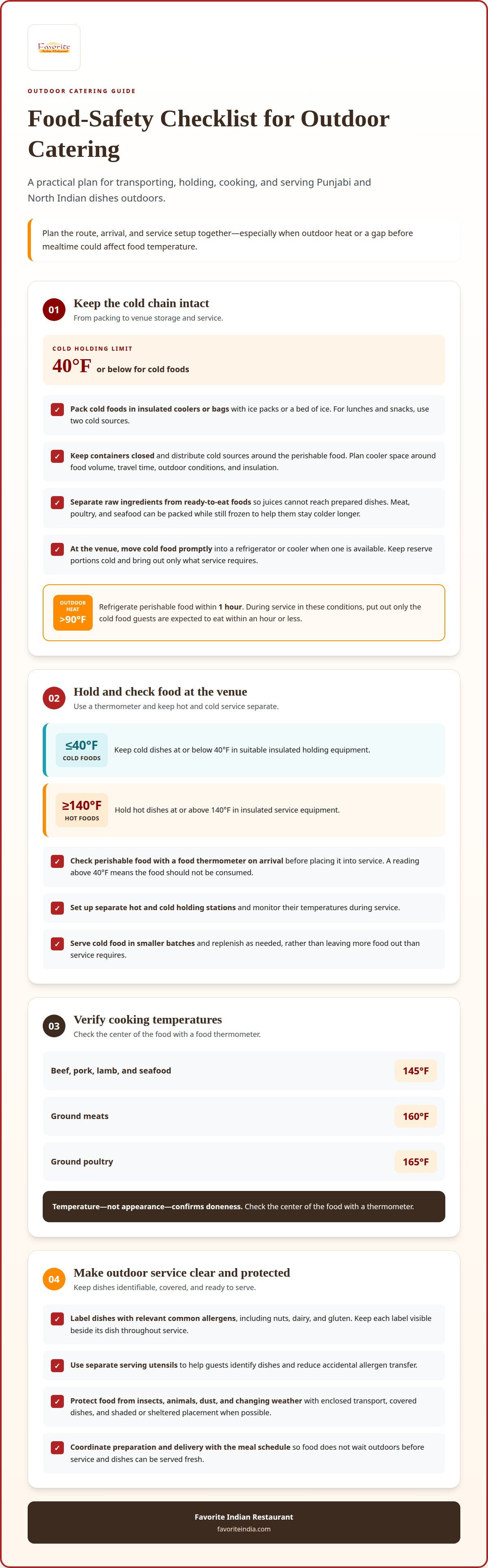
Temperature control begins before food leaves the kitchen. Cold foods at outdoor events should be kept at or below 40°F, according to the USDA Food Safety and Inspection Service. Caterers use insulated carriers and temperature-controlled transportation to limit warming during travel, then move dishes into suitable holding equipment at the venue. For a summer lunch, that means planning the route, arrival, and service setup together rather than leaving cold food waiting outdoors.
At arrival, a caterer can use a food thermometer to check the temperature of perishable food before placing it into service. A reading above 40°F means the food should not be consumed. The check helps identify whether transport or a delay affected the cold food, instead of relying on how chilled a container feels. The team can then keep food that remains safely cold in a refrigerator or cooler at the destination, when one is available.
Perishable lunches and snacks need the same attention as a catered meal. During transport, caterers keep them in insulated coolers or cooler bags with ice packs, then store them in a refrigerator or cooler at the destination when available. If outdoor temperatures exceed 90°F, perishable food should be refrigerated within 1 hour. For service in that heat, caterers can put out only the amount of cold food expected to be eaten within an hour or less.
At the service point, insulated equipment helps keep cold dishes cold and hot dishes hot. Hot foods should be held at or above 140°F, while cold foods stay at or below 40°F. Caterers can separate hot and cold holding stations and monitor their temperatures during service. That separation also makes it easier to replenish a cold salad or chilled snack without disrupting hot dishes.
For freshly cooked food, holding temperatures are only part of the process. The USDA Food Safety and Inspection Service recommends cooking beef, pork, lamb, and seafood to an internal temperature of 145°F. It recommends cooking ground meats to 160°F. Ground poultry should reach 165°F, according to the USDA Food Safety and Inspection Service. A food thermometer checks the center of the food, helping the cooking team verify the temperature rather than judge doneness by appearance.
Food also needs protection from insects, animals, dust, and changing weather. Caterers can use enclosed transport, cover dishes at the serving station, and place food in shaded or sheltered areas when possible. These steps help protect prepared food outdoors, while insulated equipment helps maintain suitable temperatures for service.
2. How professional caterers keep perishable foods cold during transport
Cold transport starts with a plan for the food, route, and service schedule. A caterer groups perishable items, packs them in insulated coolers or bags, and adds ice packs or a bed of ice. For lunches and snacks, use two cold sources. This helps keep food chilled as it travels from preparation to the outdoor venue.
Cooler capacity depends on food volume, travel time, outdoor conditions, and the cooler’s insulation. A caterer considers these factors when selecting enough space for food and cold sources. Containers need to close securely, with cold sources distributed around the perishable items. The transport plan should keep food at 40°F or below, while allowing staff to load and unload without leaving containers open.
For a lunch delivery, chilled dishes and snacks can travel in separate, closed containers inside insulated coolers. Meat, poultry, and seafood can be packed while still frozen to help them stay colder longer. Keep prepared foods apart from raw ingredients so juices cannot reach ready-to-eat dishes. Loading containers in delivery order also helps staff retrieve what they need without disturbing the rest.
At the venue, cold food moves promptly into a refrigerator or cooler when one is available. A caterer can keep reserve portions in cold storage and bring out only what service requires. In temperatures above 90°F, perishable food should be refrigerated within 1 hour. For outdoor service in those conditions, staff can offer only the cold food guests are expected to eat within an hour or less.
Hot and cold dishes travel in separate insulated equipment. Cold carriers protect chilled salads and snacks, while insulated hot carriers help retain heat in cooked dishes. Separate equipment makes unloading clearer and helps staff move each dish to the right holding station. Coordinating these steps is central to keeping food safe at an outdoor event, especially when setup separates arrival from mealtime.
Bacteria can multiply as perishable food warms, so a cooler is only one part of a broader transport plan. A caterer considers the route, outdoor exposure, food volume, and destination storage before choosing the setup. Keeping food safe at an outdoor event also depends on moving dishes efficiently from packing to delivery, then into cold storage or service. An organized handoff helps prepared food reach guests in good condition.
3. How professional caterers label allergens and prevent serving-utensil cross-contamination
Clear labels and separate utensils help guests identify dishes and reduce accidental allergen transfer. Caterers can label dishes with relevant common allergens, including nuts, dairy, and gluten. Keep labels visible beside the food throughout service, not separate from the dish. At a table with several salads and hot dishes, each label should stay with its serving pan as food is replenished.
Preparation begins with a deliberate sequence. The catering team keeps ingredients and prepared dishes organized, uses clean equipment for different foods, and washes hands frequently. Raw ingredients stay apart from ready-to-eat foods, and their containers remain closed during handling. These steps reduce the chance that residue or drips reach food meant to be served without further cooking.
Transport requires the same separation. Caterers can place prepared dishes in covered containers and keep them apart from raw ingredients and allergen-containing components. At the event, assign one serving utensil to each dish. A spoon used for a dairy-containing sauce, for example, should not be moved to a salad labeled dairy-free. If a utensil falls into another dish or is used incorrectly, replacing it helps prevent further cross-contact.
Serving stations need a clear layout. Position dishes so guests can read labels and use the correct utensil without reaching across neighboring pans. Staff can monitor the table and replace utensils that are dropped, shared, or returned to the wrong dish. This matters at outdoor gatherings, where guests may serve themselves while talking and moving between tables.
How can an event caterer prevent cross-contamination when preparing and serving food outside? Separate ingredients and prepared foods, label dishes clearly, assign each dish its own utensil, and clean food-contact surfaces. The team can also set up a three-part utensil-washing station with soapy water, clear hot water, and a sanitizing solution. After sanitizing, utensils and surfaces should air dry, since towel drying can reintroduce bacteria.
Food-contact surfaces that touch potentially hazardous foods should be sanitized every four hours. During a long outdoor service, the catering team can track this interval and clean surfaces between tasks as needed. A designated washing area also helps keep used utensils apart from clean ones. These routines reduce opportunities for contamination and support safer handling during summer, when outdoor dining brings more activity around serving tables.
Labels work best as part of the full service plan, not as a substitute for careful preparation. A caterer can keep allergen information consistent from kitchen packing through outdoor presentation, then maintain separate utensils and clean surfaces at the station. This continuity helps guests make informed choices and lets the serving team handle dishes carefully.
4. How caterers coordinate Punjabi food preparation, transport, and service timing
A catering timeline connects kitchen preparation, delivery, setup, and the moment each dish reaches guests. For a Punjabi or North Indian meal from Favorite Indian Restaurant, the plan works backward from mealtime, allowing time for transport and serving-station preparation. Dishes such as tandoor-cooked items and kebabs are best coordinated with service so guests can enjoy their intended texture, while salads and other cold dishes can remain chilled until the serving area is ready.
Prepare produce according to each ingredient’s needs. Rinse fresh fruits and vegetables under running tap water before packing, even when their skins or rinds won’t be eaten. Packaged produce labeled “ready-to-eat,” “washed,” or “triple washed” doesn’t need washing. Keep clean produce separate from unwashed items and prepared dishes, then pack it in covered containers for transport.
Handwashing also needs a plan at an outdoor venue. Staff should wash their hands frequently while preparing and serving food. If running water isn’t available, they can clean their hands with a water jug, soap, and paper towels, or moist disposable towelettes. Disposable gloves don’t replace handwashing. A designated hand-cleaning setup helps staff handle Punjabi dishes and accompaniments with clean hands during preparation and service.
At the service station, arrange cold dishes for prompt service and replenishment from cold storage. A thermometer helps staff monitor food temperatures during holding. If the outdoor temperature is above 90°F, perishable food should be refrigerated within 1 hour. For outdoor service in those conditions, caterers provide only the amount of cold food guests are expected to eat within an hour or less.
That one-hour limit shapes both the serving plan and the amount placed on display. Rather than setting out every portion at once, a caterer can keep cold foods in reserve and bring out additional portions as guests eat. This approach suits salads and chilled accompaniments served with Punjabi and North Indian dishes. The service schedule should account for mealtime, guest flow, and replenishment without leaving food waiting.
Coordinate transport and presentation around the same schedule. Keep prepared dishes protected during delivery, set up the serving area before exposing food, and bring cold items into service only when staff are ready. A shaded station can help protect food from direct sunlight when possible. If conditions or the event schedule change, the caterer can adjust the presentation order and time the service of tandoor-cooked dishes and other items that are best enjoyed freshly served.
For outdoor dining, timing affects food quality as well as safety. A well-sequenced plan helps fresh salads stay crisp, keeps cold accompaniments chilled until service, and avoids unnecessary delays between preparation and eating. Coordinating these steps gives staff a clear routine for handling produce, transporting Favorite Indian Restaurant’s Punjabi and North Indian dishes, and replenishing the table.
How professional caterers manage food safety during summer outdoor cooking
Summer cooking brings live heat, open air, and changing service conditions to outdoor gatherings. A catering team plans its cooking sequence around the menu, weather, venue, and serving time, rather than leaving cooked food waiting beside a grill. Hot foods should be held at or above 140°F, while cold foods need separate cold storage. Keeping those stations apart helps staff manage each dish’s temperature during service.
Cooking temperatures depend on the food. According to the USDA Food Safety and Inspection Service, beef, pork, lamb, and seafood should reach an internal temperature of 145°F. Ground meats should reach 160°F, and ground poultry should reach 165°F. A food thermometer is the way to check internal temperature across cooking methods. Staff can measure the thickest portion, avoiding contact with bone, to get a useful reading.
Outdoor heat makes timing especially important. When the temperature is above 90°F, picnic food should not remain in the danger zone for more than 1 hour. Caterers can cook in planned batches and move finished dishes promptly into hot holding equipment, such as chafing dishes or warming trays. They can also keep the cooking area and guest-serving area distinct, so ready-to-eat food stays away from raw ingredients.
Before cooking, raw meat, poultry, and seafood should remain securely wrapped so their juices cannot reach prepared food. Keep marinades refrigerated, not on a counter or outdoors. If a marinade will become a sauce for cooked food, the kitchen team should reserve a clean portion before it touches raw ingredients. Partially cooked food should go directly to a hot grill when cooking resumes, not sit outside while staff prepare other dishes.
Staff wash hands with soap and running water for at least 20 seconds before handling food or utensils. Disposable gloves don’t replace handwashing. Food stations should be shaded or protected from direct sunlight when possible, and food should be covered between serving periods. If an ingredient is thawed in cold water or a microwave, it needs to be cooked immediately.
Discuss the food-safety rules and permits that apply in the event’s state or county, including who handles any relevant approvals for the venue and cooking setup. The menu, equipment, and location shape that discussion. During service, staff can monitor holding temperatures, separate raw and cooked foods, and replenish dishes in measured batches. These steps help manage summer heat while preserving the pleasure of freshly cooked food.
Indian Food in Hayward, CA | Favorite Indian Restaurant
Favorite Indian Restaurant provides Indian Food Catering for gatherings where a shared meal is part of the occasion. For outdoor dining, discuss the venue, service schedule, guest needs, and planned menu. These details help shape a practical event plan around the meal and its setting.
The Saturday Lunch Buffet, Weekend Dinner Buffet, and Live Indian Grill Experience are other ways to enjoy Indian food for a gathering. If catering fits your event, contact Favorite Indian Restaurant about Indian Food Catering.
Plan an outdoor meal guests can enjoy with confidence
For an outdoor event, share the venue setup, expected mealtime, guest dietary needs, and whether the service area will be in full sun or shade when discussing catering with Favorite Indian Restaurant. These details can help the team understand the setting and your plans for the gathering.
Food safety is an important part of planning an outdoor meal. A thoughtful plan can help the meal run smoothly and give guests time to enjoy the conversation and food together. For an occasion in Hayward, Favorite Indian Restaurant offers Indian Food Catering as an option for a shared meal.
Visit Favorite Indian Restaurant’s website for catering information to learn more about planning your gathering.
Frequently Asked Questions
What USDA food safety temperature rules should I confirm with a caterer for hot and cold foods at an outdoor event?
Cold foods should stay at or below 40°F, according to the USDA Food Safety and Inspection Service. Hot foods should be held at or above 140°F. Ask how the service team monitors both temperatures during setup and replenishment, especially if hot and cold dishes share a serving area. A clear plan should identify separate holding arrangements and how staff respond if a dish moves outside its safe temperature range.
How should a caterer manage the time perishable food sits out outdoors before it must be discarded?
In outdoor temperatures above 90°F, perishable food should be refrigerated within 1 hour, and cold food should be served in small batches. Perishable food left out for more than 2 hours after cooking or purchasing should not remain for later service. Ask the caterer how staff track when each batch leaves cold storage. If the time or temperature history is uncertain, the food should not be served.
What should I ask a caterer about transporting and storing food safely for an outdoor event?
Discuss the travel route, expected arrival time, insulated transport, and storage available at the venue. Ask how the caterer checks perishable food temperatures on arrival and keeps reserve portions cold until service. For lunches and snacks, the transport plan can include two cold sources. Also discuss which areas can keep food out of direct sun and how the team will move dishes from arrival to service without unnecessary delays.
How can a caterer keep hot food at 140°F or above outdoors?
A caterer can use chafing dishes, warming trays, or slow cookers, then monitor the food with a thermometer during service. Chafing equipment needs time to warm before food is placed in its pan; fuel should be lit about 30 minutes beforehand. Ask how the team will position hot dishes away from wind and direct exposure, and how it will replenish pans without leaving cooked food waiting at the station.
What handwashing and sanitation facilities should I confirm with a caterer for an outdoor food event?
Discuss how staff will wash hands and clean utensils at the venue, particularly if running water is unavailable. A water jug, soap, and paper towels can support hand cleaning outdoors. Utensil washing can use a three-part station with soapy water, clear hot water, and sanitizing solution. Discuss how the team will keep clean utensils apart from used ones and let sanitized equipment air dry during service.
What should a caterer do if food has been left out too long or its temperature is unknown?
The caterer should keep the food out of service until its handling history and temperature can be established. The caterer should keep food with an uncertain handling history out of service and discard leftovers that have been left out too long. Smell and appearance cannot establish safe temperature history. The team should separate questionable food from dishes still being served and avoid topping up a fresh pan with it.
How much ice or cooler capacity is needed to keep food at 40°F or below?
Choose cooler capacity based on food volume, travel time, outdoor conditions, and insulation, leaving room to distribute cold sources around the food. Use ice packs or a bed of ice; pack perishable lunches and snacks with two cold sources.