An Indian dinner feels complete not because the table is crowded, but because its flavors and textures are balanced. A typical dinner party has three courses: appetizers, main courses, and dessert. For the main meal, crowd-pleasing Indian main courses pair a curry or sabzi with dal, rice, naan or roti, and a few sides, giving guests a satisfying mix of rich, savory, fresh, and comforting flavors.
Fragrant curries, tender vegetables, warm bread, and fluffy rice make a meal easy to share. Choose dishes that complement rather than compete, then tailor the selection to a vegetarian or nonvegetarian gathering. This guide covers how to balance the main components, choose breads and sides, and plan a party menu that feels generous without becoming overwhelming. It also offers ways to keep a group meal running smoothly, whether you’re hosting a relaxed lunch or a festive dinner.
Key Takeaways
- Build a balanced spread by pairing curries and sabzi with dal, rice, bread, and complementary sides.
- Choose rice, naan, or roti to suit the mains and make the meal easier to serve and enjoy.
- Combine vegetarian dishes with chicken or seafood options to create a menu with variety for different preferences.
- Adjust the mix of appetizers, mains, and desserts to fit the size and style of your gathering.
- For a catered meal, consider how warm naan or roti can complement the mains and round out the table.
1. Balancing curries, sabzi, dal, bread, and rice
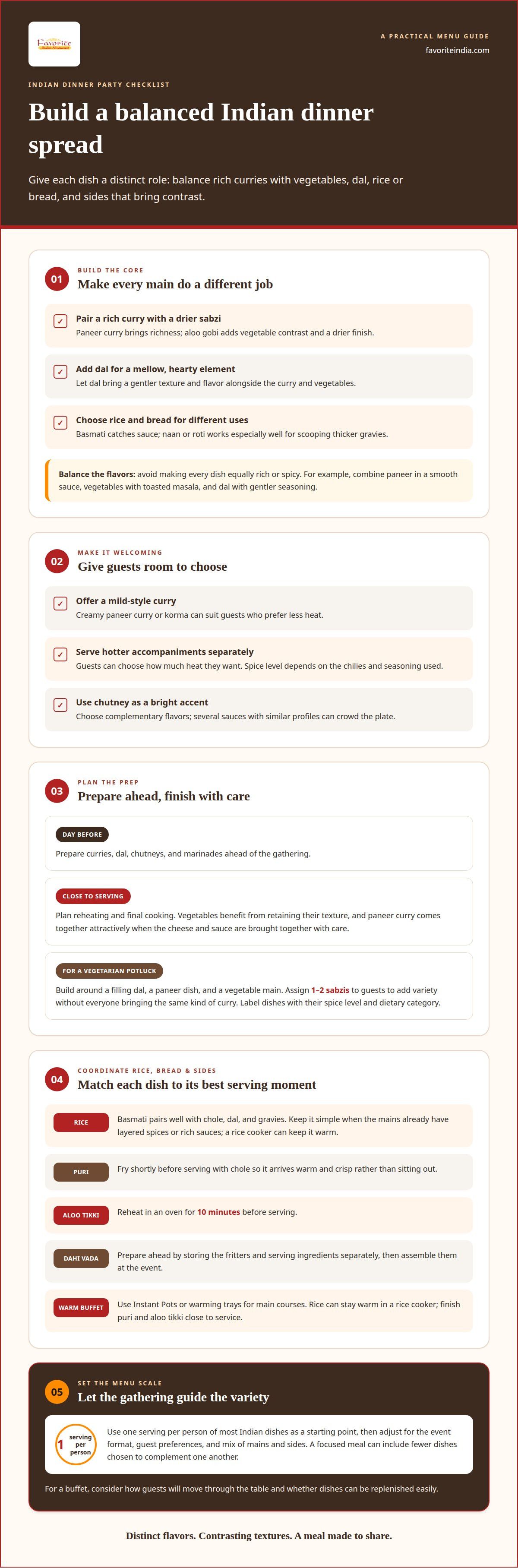
A balanced Indian meal gives every dish a distinct role. Pair a curry with a drier sabzi, then add dal, rice, and bread for varied textures. Paneer curry brings richness, while aloo gobi offers a vegetable contrast and a drier finish. Dal adds a mellow, hearty element, and basmati rice catches the sauce. Naan or roti is ideal for scooping up thicker gravies. This combination makes crowd-pleasing Indian main courses feel complete without filling the table with similar dishes.
Keep the flavors distinct instead of making every dish equally rich or spicy. For example, serve paneer in a smooth sauce, vegetables with toasted masala, and dal with gentler seasoning. Rice pairs easily with saucy dishes, while bread works especially well for scooping thicker curries. Chutney can add a bright accent, but several sauces with similar flavors may crowd the plate. Choose components that complement each other, so guests can combine them to taste.
For guests with different spice preferences, include a mild-style curry, such as creamy paneer curry or korma, and serve hotter accompaniments separately. Heat varies with the chilies and seasoning used, so a dish’s spice level depends on its preparation. This approach lets guests choose how much heat they want without requiring separate menus. It makes the meal more welcoming to diners with different comfort levels.
Advance preparation helps coordinate dishes that need different finishing steps. Curries, dal, chutneys, and marinades can be prepared the day before a gathering, leaving time for final cooking and service. Plan which items need reheating and which benefit from finishing close to serving. Timing matters for paneer curry, where the cheese and sauce should come together attractively, and for vegetables, which benefit from retaining their texture.
For a vegetarian potluck, build the menu around a filling dal, a paneer dish, and a vegetable main. A useful pairing is creamy paneer with a drier sabzi, served with rice and roti. Potluck hosts can assign 1-2 sabzis to guests, adding variety without asking everyone to bring the same kind of curry. Labels that note spice level and dietary category help guests choose among the dishes.
Restaurant-style vegetarian curries rely on layered flavor, not simply extra heat. Soften aromatics, toast spices into the masala, then simmer the sauce before adding paneer or vegetables. This sequence flavors the base while keeping the main ingredient distinct. For a group, choose a paneer dish and a vegetable dish; their contrasting textures offer satisfying choices alongside dal, rice, and bread. That balance makes a shared meal feel generous without becoming repetitive.
2. Rice, bread, and side dishes to serve with mains
Rice and bread give saucy mains two distinct, satisfying accompaniments. Fluffy basmati pairs well with chole, dal, and gravies, while naan or roti can scoop up thicker sauces. For a buffet, saffron rice or basmati can be prepared ahead and kept warm in a rice cooker. This helps coordinate rice service with curries finishing at different times. Keep the rice simple when the mains already feature layered spices or rich sauces.
Choose sides for contrast and serving practicality. Puri is commonly fried shortly before serving with chole, so it arrives warm and crisp rather than sitting out. Aloo tikki can be reheated in an oven for 10 minutes before serving. Dahi vada can be prepared ahead by storing the fritters and serving ingredients separately, then assembling them at the event. These examples show how a menu can include freshly finished textures alongside dishes prepared earlier.
Dal and bean dishes also work well with advance planning. Chole can be kept warm in an Instant Pot and served over rice, making it a substantial option for a catered spread. Dal brings another texture and flavor profile, while beans offer a hearty alternative to meat mains. Whether a dish is homemade or bought, consider its role: pair a rich, saucy main with a lighter side instead of filling the table with similar gravies.
Guest count helps guide the variety and quantity of dishes. A useful starting point is one serving per person of most Indian dishes, then adjust the menu for the event format, guest preferences, and mix of mains and sides. A buffet with rice, bread, dal, and vegetarian and meat dishes gives guests options across the table. A more focused meal can include fewer dishes, each chosen to complement the others. Also consider how guests will move through the buffet and whether dishes can be replenished easily.
For a warm buffet, use Instant Pots or warming trays to keep main courses ready to serve. Rice can stay warm in a rice cooker, while puri and aloo tikki benefit from finishing close to service. This timing preserves the contrast between soft rice, crisp bread, and saucy mains. It also lets a homestyle menu pair a vegetarian dish, such as chole, with a meat option without making every plate feel alike.
When planning a gathering, consider how rice, breads, and sides will be served alongside the mains. Explore event dining options for a meal arranged around the group and its menu.
3. Chicken and seafood main-course options
For a large group, saucy chicken curries are easy to portion and serve. A Pakistani and North Indian chicken curry recipe serves 6 people and takes 55 minutes in total. Its ingredients include 2 pounds of bone-in, cut-up, skinless chicken. The curry format also pairs naturally with rice or bread, making it practical for a buffet. Chicken dopiaza is another option, with onions giving the dish its defining character.
Chicken dishes offer different textures and levels of richness. Chicken tikka takes 20 minutes, while chicken dopiaza takes 40 minutes. A chicken curry with coconut milk and potatoes takes 40 minutes to make. These examples give a host several styles to consider, from grilled pieces to a saucy main with potatoes. For group service, curries are especially straightforward to portion with a serving spoon.
Pakistani chicken curry brings a warmly spiced, substantial centerpiece to the menu. The featured recipe uses bone-in chicken, which cooks in the sauce and gives each portion a distinct cut. Its 55-minute total time provides a useful planning reference for that recipe, not a universal estimate for every curry. A covered simmer helps the chicken cook in its aromatic sauce; the recipe’s covered simmer lasts 25 minutes.
Seafood adds a different texture alongside chicken, rice, and vegetables. A seafood curry brings a saucy option to the table, while simply seasoned fish contrasts with richer chicken gravies. Keep seafood separate from chicken during service, and give each dish its own serving utensil. This clear arrangement helps guests identify their choices and keeps flavors from blending across the buffet.
For a mixed menu, match the chicken preparation to the rest of the meal. A rich curry works with plain rice and a vegetable side, while chicken tikka suits a menu that already includes saucy vegetarian dishes. The Instant Pot chicken pulao recipe requires 25 minutes of preparation time, making it another chicken-and-rice format to consider. Pulao combines the main and starch in one dish, so it may suit a more focused menu.
Choose practical large-group mains by considering how they’ll be portioned. Chicken curry and chicken dopiaza are easy to serve alongside rice or bread. Chicken tikka comes in individual pieces, while seafood curry offers a distinct option for guests who prefer fish. Combining these formats brings variety without making every main a similar sauce.
4. Planning vegetarian and nonvegetarian party menus
Start party planning by matching the menu’s scale to the guest list and occasion. For up to 8 guests, a suggested Indian party menu includes 1 to 2 appetizers, 2 main courses, and 1 dessert. For up to 16 guests, it suggests 2 appetizers, 3 mains, and 2 desserts. For more than 16 guests, plan 3 to 4 appetizers, 4 mains, and 2 to 3 desserts. These outlines help organize the meal without requiring every dish to be elaborate.
Keep the main-course selection manageable. A useful planning guide recommends serving 2 to 3 main dishes at an Indian party, then varying their flavor, richness, and preparation style. A vegetarian-heavy menu can include one to two nonvegetarian dishes for guests who want them. That approach gives the table a clear center while leaving room for different preferences. Choose recipes that suit the event’s pace, rather than adding dishes simply to make the menu longer.
Consider how the menu will unfold. Serve appetizers before guests move to the mains, then finish with dessert. For a lunch gathering, a simpler meal centered on a main and dessert may be easier to coordinate. The occasion also sets the pace: a seated celebration can support courses served in sequence, while a buffet lets guests approach the dishes at their own rhythm.
Plan the cooking schedule around tasks that compete for attention. Several hot dishes may need the stovetop for finishing, so sequence preparation and service to avoid bottlenecks. Plan chutney and other accompaniments separately from the mains, keeping hot-food service focused on dishes that need final heating. This coordination helps the menu come together as a cohesive meal rather than a set of unrelated recipes.
For a sample party menu, serve appetizers, a focused selection of mains, and a dessert that contrasts with the meal’s savory flavors. Keep the courses simple for a smaller gathering. For a larger celebration, add variety where it improves guest choice, such as different cooking styles or flavor profiles. When organizing the menu, account for the serving format, setup space, and event timing.
Look beyond the number of dishes when finalizing the plan. A well-composed menu balances guest preferences, the occasion, and the flow of service. Crowd-pleasing Indian main courses work best when each selection contributes something distinct and the whole menu can be served smoothly. Discuss the event format and preferred balance of vegetarian and nonvegetarian dishes during planning, so the menu feels intentional from appetizers through dessert.
5. Serving naan or roti with Indian mains
Naan and roti do more than fill a place on the buffet. In North Indian cuisine, naan’s tender, chewy texture pairs naturally with thick butter chicken or paneer curry. Roti is a lighter, everyday-style bread for scooping dal or enjoying with a vegetable main. Offering both gives guests a choice, but one well-matched bread can also complete a focused menu.
The cooking method shapes each bread’s texture and service needs. Naan is commonly baked in a tandoor, giving it a soft center and lightly blistered surface. Roti is cooked on a hot griddle, resulting in a thinner, pliable bread. At a catered event, serving either bread warm makes it easier to fold and tear alongside curry. Coordinate bread service with the mains instead of setting it out long before guests eat.
Match the bread to the menu’s sauces and textures. A rich curry such as butter chicken pairs well with naan, which can hold its gravy, while roti complements drier dishes such as aloo gobi. Dal works with either, so choose according to the meal’s overall balance. If rice is also served, bread adds a different texture and a familiar way to enjoy the sauce.
Service flow matters. Bread left uncovered too long can lose warmth and become less pliable, so bring it out in batches as guests begin serving themselves. Covered serving baskets help keep naan or roti together and make the buffet easier to navigate. Position bread near rice and mains, with utensils arranged so guests can take each item without reaching across another dish.
For a mixed gathering, choose bread that complements the dishes rather than duplicating them. A favorite combination might be naan with a creamy curry and basmati rice, or roti alongside dal and a vegetable main. The right pairing depends on whether the menu leans toward saucy gravies, dry sabzi, or a blend. This simple choice helps Indian cuisine feel cohesive from the first serving to the last.
Discuss bread style and serving sequence as part of the catering plan. That lets the menu account for tandoor-baked naan or griddle-cooked roti alongside the mains, instead of treating bread as an afterthought. For a gathering built around warm breads and Indian mains, plan a catered Indian meal with the menu’s pairings and service flow in mind.
Indian Food in Hayward, CA | Favorite Indian Restaurant | Indian Food near me
Best Indian Food in Hayward, CA | Favorite Indian Restaurant | Indian Food near me helps turn menu ideas into a welcoming Indian meal, whether you’re planning dinner for a group or choosing dishes to enjoy together. Its Indian Food Catering turns menu-planning ideas into a professionally prepared spread, while the Friday and Saturday Dinner Buffet and Saturday Lunch Buffet offer buffet dining for different occasions. The Live Indian Grill Experience adds another way to enjoy Indian flavors alongside curries and other mains.
Choose catering when you want a vegetarian or nonvegetarian menu built around complementary mains, rice, and bread. For a restaurant meal, choose the buffet that suits your plans. Contact Best Indian Food in Hayward, CA | Favorite Indian Restaurant | Indian Food near me to discuss the right next step for your gathering.
Make Your Next Indian Meal a Shared Experience
A memorable menu is more than a collection of dishes. It gives guests room to create their own combinations, discover a new favorite, and enjoy the meal at their own pace. As you plan, picture the experience you want at the table: a relaxed meal with familiar flavors, a lively gathering with plenty of choice, or a celebration centered on a few carefully paired mains. That vision can guide your final menu decisions without making the spread feel complicated.
Crowd-pleasing Indian main courses feel welcoming because each dish has a place in the meal and guests can choose what suits them. Bring that sense of hospitality to your next gathering, and let the food make it easy for everyone to share the moment. Explore Favorite Indian Restaurant as you plan a flavorful meal together.
Frequently Asked Questions
What is a typical Indian dinner?
A typical Indian dinner can be served as three courses: appetizers, main dishes, and dessert. The main course often combines a saucy dish, a vegetable or lentil preparation, and a starch, with choices shaped by regional tradition and the occasion. Appetizers set the tone, while dessert offers a sweet finish. The menu can be fully vegetarian or include meat or seafood.
What are the best vegetarian Indian main dishes for a crowd?
Choose vegetarian mains with different textures and flavors, such as Shahi Paneer, Dal Makhani, and Chana Masala. A paneer curry gives the menu a creamy centerpiece, while lentils or chickpeas make it hearty and satisfying. For variety, serve two different styles rather than several similar gravies. A caterer can also help select dishes that fit the gathering’s preferences and provide a balanced vegetarian spread.
Which Indian dishes are suitable for vegan or gluten-free guests?
Some Indian dishes may suit vegan or gluten-free guests, but suitability depends on ingredients and preparation. A chickpea or vegetable curry may be made without dairy, while naan typically contains wheat. Label each dish with its ingredients and dietary notes, and distinguish vegan from vegetarian. Guests with allergies need clear, dish-specific information, since shared preparation areas or utensils can affect whether a meal meets their needs.
What sides pair well with popular Indian main courses?
Fresh, tangy sides can offset rich curries and make a plate feel more balanced. Try cucumber or crisp vegetable salad with a creamy main, and offer mint or tamarind chutney for a bright contrast. Raita adds a cool, yogurt-based option alongside spiced dishes, while pickles provide a sharper accent. Keep dairy-based sides separate so guests can choose according to their preferences.
Which Indian main courses can a caterer prepare ahead and reheat?
Many saucy mains, including lentil dishes, chickpea curry, and chicken curry, can be prepared ahead and reheated for service. Their flavors may meld as they rest, while the final heating and serving schedule is managed. Time bread and crisp sides separately to preserve their texture. For a menu with several dishes, plan which items need finishing close to serving.
What Indian main courses work well for a catered buffet or potluck?
For a buffet or potluck, choose dishes that portion neatly, such as chana masala, dal, or chicken curry, and pair them with rice or bread. Keep each dish in a heat-safe container for transport, and label its spice level and dietary category. This helps guests make informed choices and makes serving simpler. A mix of vegetarian and nonvegetarian mains gives the table broader appeal.