The lowest bill isn’t always the lowest overall cost. In a DIY party vs professional catering cost comparison, cooking yourself may save on food service, but you take on shopping, preparation, serving, and cleanup. Professional catering adds direct service expenses while giving you more time to welcome guests and enjoy the meal.
Homemade food can seem like a way to stretch a party budget, especially for a small, casual gathering. The true difference depends on guest count, menu, ingredients, equipment, and how much work you’re willing to do before and after the celebration.
This comparison looks at how event size, preparation, cleanup, convenience, and stress affect the total effort and expense. You’ll see when DIY makes sense, when professional help may be worth the trade-off, and how a hybrid approach can balance hands-on cooking with a more relaxed gathering.
Key Takeaways
- Compare the full workload, not just ingredient spending: shopping, cooking, serving, and cleanup all count toward DIY’s real cost.
- Match the food plan to your guest count and event style; a simple gathering is easier to manage yourself than a formal, larger celebration.
- Account for serving equipment, food timing, and safe handling when estimating the effort behind a self-catered event.
- Professional catering can make sense when having more time with guests and less responsibility for meal logistics matters most.
- Consider a hybrid approach, such as preparing some items yourself while bringing in catered food for the main meal.
The value of preparation and cleanup time
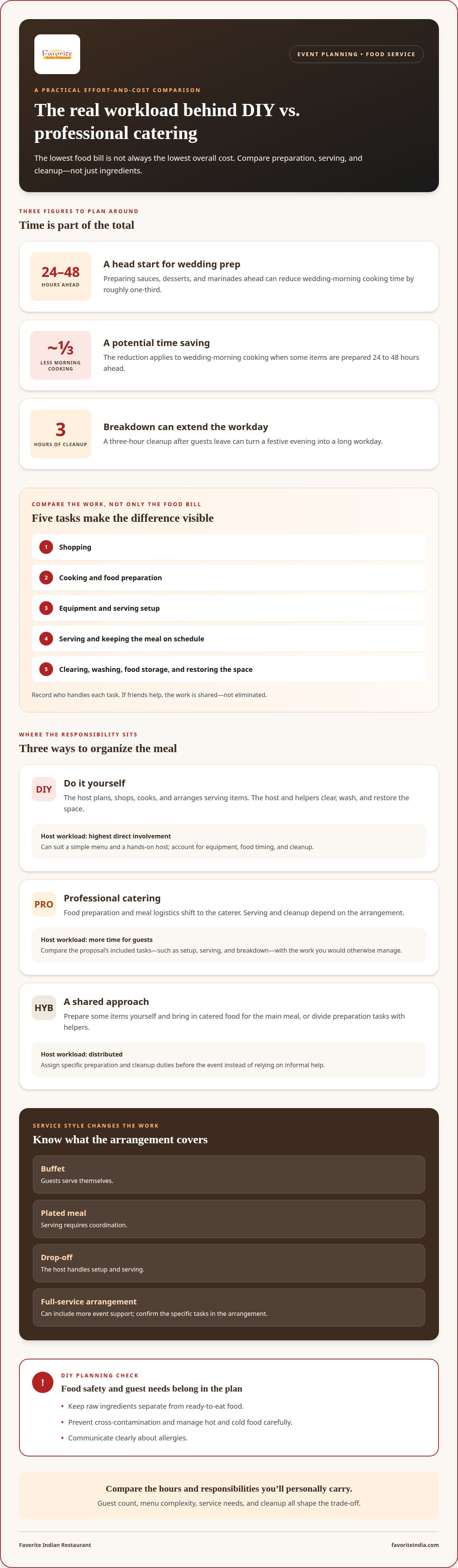
DIY avoids hiring food service, but preparation, setup, and cleanup become your responsibility. For a private party, keep raw ingredients separate from ready-to-eat food, prevent cross-contamination, manage hot and cold food carefully, and communicate clearly about allergies.
Preparation and Setup Responsibilities
DIY preparation starts before party day: plan the menu, shop for ingredients, prepare dishes, and organize serving equipment. For a wedding, preparing sauces, desserts, and marinades 24 to 48 hours ahead can reduce wedding-morning cooking time by roughly one-third. Friends can help set tables, arrange serving dishes, and label foods, but the host still coordinates each task.
Professional catering shifts food preparation and meal logistics to the caterer, so you can focus on the room and your guests. Compare a small wine-and-cheese gathering, where simple setup may be manageable, with a multi-course meal involving several hot dishes. In either case, list the setup tasks before choosing an option.
Cleanup and Breakdown Responsibilities
With DIY catering, you’re responsible for clearing plates, storing or disposing of food, washing equipment, and restoring the space. A three-hour cleanup after guests leave can turn a festive evening into a long workday. If friends are helping, assign specific tasks, such as collecting dishes or wiping tables, instead of leaving breakdown as one large job.
Professional caterers can handle preparation, planning, serving, and cleanup, depending on the arrangement. That can reduce the host’s post-event workload, especially when the venue requires the room to be cleared. A catering plan can also clarify who handles food-service cleanup; catering planning details relate directly to arranging food for an event.
Use a simple time ledger to compare the options fairly. Record shopping, cooking, setup, serving, and cleanup as separate tasks, then note who will do each one. If friends serve the meal while you shop and cook, the work is shared, not eliminated. Include equipment setup and food storage in the same list.
| Option | Preparation and setup | Cleanup and breakdown | Host’s time |
|---|---|---|---|
| DIY | Host plans, shops, cooks, and arranges serving items | Host and helpers clear, wash, and restore the space | Highest direct workload |
| Professional catering | Caterer handles food preparation and meal logistics | May be handled by the caterer, depending on the arrangement | More time for guests |
| Shared approach | Host and helpers divide preparation tasks | Assign cleanup duties before the event | Work is distributed |
Compare the hours and responsibilities you’ll personally carry, not just the food spending.
DIY Catering: Dream or Disaster?
DIY can suit a simple menu and a hands-on host; professional service can ease cooking and serving for a complex event. The right choice depends on guest count, event flow, menu, and how involved you want to be.
Host Involvement and Guest Experience
With DIY, you become the planner, cook, and often the person keeping service on schedule. At a casual dinner, that involvement can be part of the fun. At a formal celebration, time in the kitchen may mean less time welcoming guests or responding if the meal runs late.
For a larger event, plan the meal around guest arrival, speeches, and serving. If you choose DIY, give friends specific tasks rather than relying on informal help. A professional team can take on food preparation and service, helping you stay present throughout the event.
Catering Service Styles and Prices
Buffet, plated, drop-off, and full-service catering differ in labor and coordination, not just food. Guests serve themselves at a buffet; plated meals require coordinated serving; drop-off leaves setup and serving to the host; and full-service arrangements can include more event support.
These figures describe wedding catering overall, not a fixed price for each service style.
Quotes may separate food, delivery, setup, service, gratuity, and taxes. Compare every line and its inclusions, since service style and event arrangements affect the total.
Local Food Prices and Catering Rates
The Knot’s 2025 Real Weddings Study gives a regional range, reflecting that professional wedding catering costs vary across the United States. Ingredient choices and local operating costs can also affect a menu’s total, so a national average won’t predict a specific city’s quote.
For a fair local comparison, match the guest count, menu, service style, and included labor. Then compare written estimates on the same basis. A buffet quote and a plated-service quote may cover different work, even if both include the same dishes.
Start with event size and service needs. A small gathering with a short menu may be manageable DIY, while a larger event with several courses requires careful timing. Serving hot dishes to a roomful of guests, for example, takes coordinated cooking, replenishment, and pacing.
When evaluating caterers, consider menu fit, experience with the event format, and budget transparency. Ask what the proposal includes, such as setup, serving, and breakdown, then compare those duties with the tasks you’d handle yourself. Full-service support can shift more logistics away from you, while drop-off catering leaves more work in your hands.
When Is Hiring a Professional Caterer Worth the Extra Cost?
Professional catering can be worth considering for weddings or other events that require coordinated food service and equipment. Compare the support you need with the rentals, kitchen capacity, and logistics you’d manage yourself.
Caterer Expertise and Equipment
Professional expertise matters when the menu requires coordinated preparation and service. A caterer can plan how dishes move from preparation to serving while you manage the venue and guest schedule. Several hot dishes arriving at once, for example, require more coordination than a simple snack table.
Equipment is another factor. Serving utensils, warming equipment, and food-service containers need to be available at the right time. Ask what the catering arrangement covers, then list any remaining equipment needs. This shows whether hiring help reduces the work or simply shifts it elsewhere.
For weddings, consider the scale before deciding. Preparing food for a small table differs from managing a meal for a large guest list. A professional team may be especially useful when you would otherwise coordinate cooking, food movement, and service during key moments.
Make a practical checklist before comparing options:
- Write down the menu and the equipment each dish needs.
- Note which tasks require the venue kitchen and which happen at the serving area.
- Compare the equipment already available with the items you’d need to rent.
- Assign a person to oversee timing if you handle the meal yourself.
These steps make the trade-off clear. If you’re also responsible for speeches, guests, and event timing, professional support can reduce competing duties.
Rentals and Kitchen Capacity
Rental needs can change the DIY calculation. Most households don’t have 20, 50, or 100 place settings ready for an event, so plates and serving supplies may need to be rented or borrowed. A venue may also require separate arrangements for tables and chairs, adding coordination beyond food preparation.
Kitchen capacity matters too. Check the available preparation space, refrigeration, cooking equipment, and access between the kitchen and serving area. A menu that depends on several dishes finishing together may strain a home kitchen more than a venue kitchen designed for events.
Separate food-service equipment from guest seating in your comparison. A caterer’s equipment and expertise address meal logistics; rentals address the room’s needs. One doesn’t automatically cover the other, so identify who supplies each item and handles setup.
Professional help is most valuable when equipment, kitchen limitations, or event timing would otherwise pull you away from guests. For a simpler gathering with adequate kitchen space and supplies, DIY may be manageable. Compare each task and responsibility before choosing what suits the occasion.
DIY catering costs and event size
DIY costs include more than groceries: guest count, menu, equipment, and labor all matter. The food estimate is a starting point, not the full event budget. A DIY party vs professional catering cost comparison should count both cash expenses and the work required from you.
To estimate your total, build a guest-based list before shopping:
- Price ingredients for the planned menu and guest count.
- Add serving equipment, dishes, and any rentals you need.
- Include cooking, transport, setup, serving, and cleanup responsibilities.
- Account for extra food if guests can serve themselves repeatedly.
Buying ingredients in bulk or using food already on hand may reduce the grocery total. The bigger question is whether you have the equipment and people to prepare and serve the menu. A second DIY party vs professional catering cost estimate can show how changing the guest count affects those needs.
How the Guest Count Changes the Work
Cooking for 8 people is different from cooking for 40, 80, or 120. As attendance grows, ingredient quantities rise, but so do serving and timing demands. A single home oven or a small refrigerator can become a bottleneck when several dishes need attention together.
DIY catering may offer savings for weddings under 60 guests. The balance often shifts at around 60 to 80 guests, when logistics can outweigh savings; professional catering is recommended for weddings with 100 or more guests. Use these planning guides alongside an itemized estimate, since each menu and venue creates different demands.
Compare the Complete Cost
For a fair comparison, calculate DIY food spending separately from equipment, labor, and other costs. Then compare that total with a professional catering estimate for the same guest count and menu style. Use the wedding figure as context, then check whether both estimates cover comparable services.
Try a sample calculation for 40 guests: list each dish, estimate ingredient quantities, and identify who will cook and serve. Repeat the exercise for 80 guests, noting where added equipment or helpers become necessary. This reveals how workload and costs change as the event scales.
A hybrid plan can also reduce your workload: make desserts yourself and hire help for the main meal, or prepare food while booking specialty beverage carts such as Simply Coffee & Matcha for refreshments. Choose an arrangement that fits your guest count, menu, and willingness to stay involved throughout the event.
Professional catering convenience and reduced stress
Hiring a caterer can reduce the decisions competing for your attention during a party. The value is clearest when meal timing, guest needs, and event activities must work together. Compare the added service expense with the time and coordination you’d otherwise take on.
Convenience is practical, not just a feeling. Professional caterers can accommodate different dietary requirements and cuisine preferences while maintaining food safety and cleanliness. For an event with varied guest needs, that support can simplify menu planning and reduce your responsibility for coordinating separate dishes.
Consider a wedding reception with speeches between courses. If you prepare the meal, you must also track the schedule, coordinate serving, and respond if the program changes. With a caterer managing food service, you can welcome guests and help keep the celebration moving. The benefit is less overlap between hosting and kitchen duties.
Professional support can also structure the meal around your event. Before choosing, write down the serving time, menu, dietary needs, and program milestones. Use the list to decide which tasks you want someone else to handle and which you’re comfortable managing yourself.
- For a casual party, drop-off food may reduce cooking without removing setup and serving tasks.
- For a formal dinner, coordinated service can fit more naturally around speeches and courses.
- For a gathering with varied dietary needs, a caterer can help coordinate suitable menu choices.
- For a host who enjoys cooking, preparing selected items can preserve a hands-on role.
Convenience also depends on flexibility. Book professional catering well in advance, particularly during busy seasons, and plan for menu or guest-count changes to be limited close to the event. Settle the menu, guest estimate, and schedule early to reduce uncertainty, then keep later changes to a minimum.
DIY can work well for a simple gathering where cooking is part of your enjoyment. But if you want to join conversations, greet arriving guests, or be present for a key moment, hiring support may add value beyond the meal. Compare all your responsibilities, not just who prepares the food.
For a balanced decision, mark each task as host-led or caterer-led, from menu coordination through serving. If you need to be available for several important moments, shifting food-service responsibilities can make the event easier to enjoy. If cooking is central to the occasion and the plan is manageable, DIY may suit the celebration better.
Best Indian Food in Hayward, CA | Favorite Indian Restaurant | Indian Food near me: Saturday Lunch Buffet
Best Indian Food in Hayward, CA | Favorite Indian Restaurant | Indian Food near me offers Indian Food Catering for hosts weighing convenience against managing every meal detail themselves. It can be a practical next step when you want to spend less of the event coordinating food and more time with guests.
For a meal out instead of hosting at home, the Saturday Lunch Buffet lets you enjoy Indian food without planning a party menu. The Weekend Dinner Buffet and Live Indian Grill Experience suit different dining occasions, while catering is a natural fit for celebrations where food service is part of the planning.
Explore Indian Food Catering for event planning, or contact Best Indian Food in Hayward, CA | Favorite Indian Restaurant | Indian Food near me to discuss your gathering.
Plan a Gathering You Can Enjoy
Before settling on a menu, decide what role you want on the day. Would you rather spend the celebration cooking and organizing, or welcoming guests and sharing the meal? Your preference can guide the next planning choice as clearly as the guest list.
To assess DIY party vs professional catering cost, write down the experience you want, then match your food plan to it. Mark the tasks you’re happy to handle and those you’d prefer to leave to someone else. For a gathering centered on relaxed hospitality, catering can leave more room for conversation and connection.
If Indian food suits your celebration, explore the options and decide what fits your plans. Contact Best Indian Food in Hayward, CA to discuss your gathering, and take the next step toward a welcoming table.
Frequently Asked Questions
What Is the Average Cost per Guest for DIY Party Food in the US?
There isn’t one average cost for every kind of party. A birthday brunch, appetizer reception, and multi-course dinner use different ingredients and preparation. Treat the wedding buffet figure as a limited comparison point, not a universal party-food budget.
How Do DIY Party Food Costs Compare with Catering for 20, 50, and 100 Guests?
These totals exclude additional expenses, so they aren’t equivalent to a complete catering quote. For a useful comparison, match the dishes and service format, then separate food costs from staffing and event support.
What Extra Costs Should Be Included in a DIY Party Food Budget?
Include rental or purchase costs for cookware, serving dishes, utensils, plates, and storage containers. Consider transport for ingredients or prepared food, plus supplies to keep dishes organized during service. A menu served in several courses, for example, may need more serving pieces than one shared platter. List separately what you own, can borrow, need to rent, or must buy.
How Do Menu Type and Dietary Requirements Affect DIY and Catering Costs?
Menu complexity affects ingredient quantities and preparation demands. Separate dishes for dietary needs may require additional ingredients and careful labeling, while a shorter menu can simplify shopping and coordination. Ask guests about relevant dietary needs, group similar requirements, and choose dishes that can be prepared and served clearly. Catering can accommodate different dietary requirements and cuisine preferences, so compare how each option suits your guests.
When Is DIY Party Food Cheaper Than Hiring a Caterer, and What Are the Trade-Offs?
DIY is more likely to cost less when the menu is straightforward and you can use ingredients or equipment you already have. The trade-off is taking responsibility for organizing the meal. A practical middle ground is to prepare part of the menu yourself and arrange professional help for another part, such as making simple sides at home while picking up a flavorful feast from The Catch. Decide based on your budget and the role you want as host.
What fees do caterers typically charge, including service, delivery, setup, gratuity, and taxes?
Catering quotes may list delivery, setup, service, gratuity, and taxes separately from food. Compare each line and its inclusions, since costs vary with service style and event arrangements.