The best Indian sweets to order for a party in Fremont aren’t necessarily all from one region. Pair Bengali sweets such as rasgulla or sandesh with North Indian favorites like gulab jamun and a South Indian treat such as Mysore pak. The mix brings soft, syrupy, milky, and rich textures to the table.
It’s easy to reach for familiar favorites, especially when ordering for guests with different tastes. This guide compares Bengali, North Indian, and South Indian mithai, explains their flavors and textures, and offers a practical way to choose sweets for your gathering. You’ll also find tips for balancing variety and serving style so the dessert spread feels festive and thoughtfully arranged.
Key Takeaways
- Compare Bengali, North Indian, and South Indian mithai by their distinct flavors and textures to build a varied dessert spread.
- Choose sweets with different levels of richness and sweetness so guests have more than one kind of treat to enjoy.
- For easier party serving, consider how each sweet is portioned and whether guests can pick it up neatly.
- Estimate servings with the rest of the menu in mind, including whether sweets are the main dessert or one of several options.
- Explore traditional favorites such as rasgulla, gulab jamun, and Mysore pak to bring regional variety to a Fremont gathering.
Bengali, North Indian, and South Indian sweets
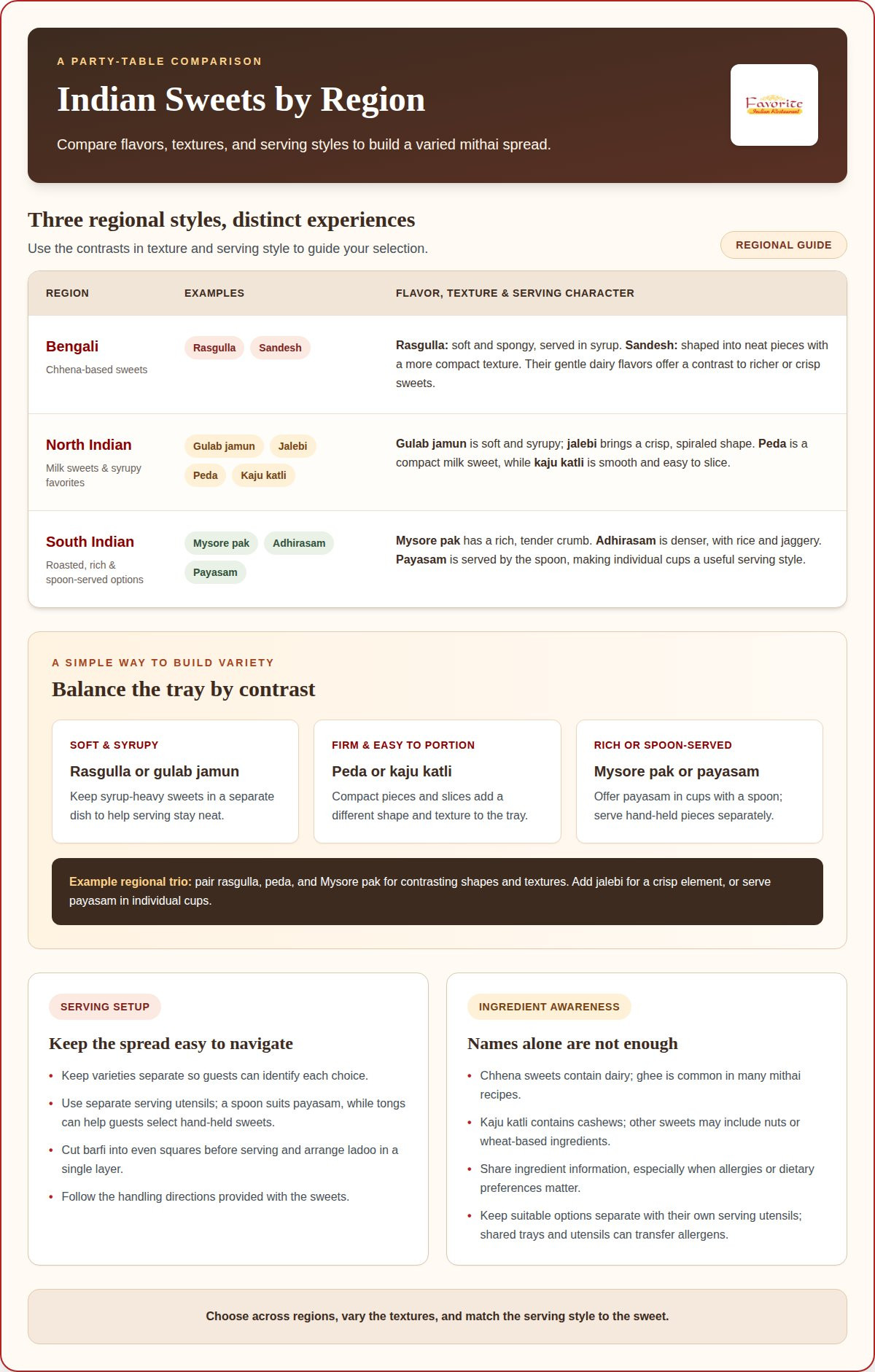
Regional mithai brings different ingredients, textures, and shapes to a party table. Bengali sweets often feature chhena, while North Indian favorites include milk-based and syrup-soaked pieces. South Indian choices can offer roasted flour, ghee, coconut, or jaggery flavors. For a Fremont gathering, choose sweets from different regions to give guests contrasting tastes.
Rasgulla is a soft, spongy Bengali sweet served in syrup. Sandesh, also made with chhena, is shaped into neat pieces and has a more compact texture. Their gentle dairy flavors contrast with richer or crisp sweets. Pair one with a firmer mithai to offer guests a choice beyond syrup-soaked desserts.
North Indian selections come in several distinct forms. Gulab jamun is soft and syrupy, while jalebi has a crisp, spiraled shape. Peda is a compact milk sweet, and kaju katli is smooth and easy to slice. For a varied tray, combine a syrupy sweet with a firmer piece rather than filling the platter with similar textures.
South Indian mithai can add a roasted or buttery note. Mysore pak is known for its rich, tender crumb, while adhirasam is a denser sweet associated with rice and jaggery. Payasam is served by the spoon rather than picked up by hand. Add it in cups alongside hand-held pieces to vary how guests enjoy dessert.
A regional trio might include rasgulla, peda, and Mysore pak, with contrasting shapes and textures. Add jalebi for a crisp element, or offer payasam in individual cups. Consider how each sweet sits on a platter, and serve syrupy sweets in separate dishes to keep serving neat.
For dietary needs, names alone don’t tell the full ingredient story. Chhena sweets contain dairy, and ghee is common in many mithai recipes. Kaju katli contains cashews, while other sweets may include nuts or wheat-based ingredients. Share ingredient information with guests, especially when allergies or dietary preferences matter.
For storage and serving, follow the handling directions provided with the sweets. Set them out on clean dishes and provide clean serving utensils. Keep varieties separate so guests can identify each choice and avoid mixing flavors. For example, serve payasam with a spoon and use a separate utensil for syrupy rasgulla.
Choose mithai by region, texture, and serving style. A Bengali chhena sweet, a North Indian milk sweet, and a South Indian roasted sweet can make a balanced selection. For a Fremont party, this approach celebrates regional variety while helping guests find a familiar flavor or discover something new.
Indian sweets and mithai selection
For party trays, compare mithai by portion size, texture, richness, and ingredients. A few deliberate contrasts make choosing and serving easier.
Party-Friendly Sweet Selection
Choose pieces guests can pick up neatly, such as peda, barfi, and ladoo. Their compact shapes suit trays and individual dessert plates. Add a contrasting texture, such as crisp jalebi, or serve a spoonable dessert in cups. Consider how easily each sweet separates, whether syrup might spill, and how well it holds its shape during serving.
Build a tray around variety, not a long list of similar sweets. For example, combine coconut ladoo, milk peda, and a firm slice of soan papdi. Each offers a different texture and flavor. Retailers such as Regal Plus AE often curate assortments of traditional Indian sweets and dry snacks in similar balanced combinations. Keep sticky or syrup-heavy items in a separate dish, away from dry pieces.
Portioning also affects presentation. Cut barfi into even squares before setting out the platter, and arrange ladoo in a single layer. Use small serving plates for softer pieces that could lose their shape if stacked. A separate spoon works well for cup-served kheer, while tongs help guests select hand-held sweets without touching the rest.
Consider the meal, too. After a rich menu, a small piece of besan barfi may feel more fitting than several dense sweets. For a tea gathering, include a dry, crumbly option such as soan papdi. Vary colors and shapes without overcrowding the tray, so guests can see each choice and serve themselves neatly.
Dietary-Friendly Mithai Options
For vegan guests, consider sweets made without dairy, such as coconut and jaggery preparations. For gluten-free needs, options based on rice flour or chickpea flour may fit, while nut allergies mean avoiding nut ingredients and cross-contact.
Ingredients matter more than a sweet’s traditional name. Besan ladoo commonly uses chickpea flour, but recipes may include ghee. Coconut-based sweets may also contain dairy or nuts. Share ingredient information and keep any suitable option separate with its own serving utensil.
For nut allergies, avoid obvious nut sweets such as kaju katli and pista barfi. A nut-free name alone doesn’t establish that a sweet is safe. Shared trays, utensils, and preparation surfaces can transfer allergens. Keep ingredient details with the dish, and don’t describe a sweet as allergy-safe without reliable ingredient and handling information.
For gluten-free selections, check every component, including flavorings and coatings. Chickpea flour and rice flour are useful ingredients to look for, but preparation practices matter too. Clearly label the tray to help guests choose. For vegan guests, look for sweets prepared without milk, cream, or ghee, and serve them separately from dairy-based mithai.
Traditional Indian sweets
Traditional mithai includes more than milk sweets and syrup-soaked pieces. Modak has a soft outer layer and a coconut-and-jaggery filling, while gujiya encloses a sweet filling inside pastry. Both bring a distinct shape and texture to a party spread. Their recognizable forms also make easy conversation starters for guests exploring Indian desserts.
Festival associations can guide a thoughtful selection. Modak is closely linked with Ganesh Chaturthi, while gujiya is commonly enjoyed during Holi. These sweets offer familiar cultural touchpoints without requiring a themed menu. For a Fremont gathering, choose a filled sweet and a simpler, dry option for contrast without crowding the dessert table.
Fried sweets add crisp edges and concentrated flavor. Imarti is made from batter formed into flower-like spirals, then soaked in syrup. Its shape looks striking on a platter, though syrup can make serving sticky. Place imarti in a shallow dish, separate from dry sweets, and provide a small serving utensil.
Halwa brings a softer, spoonable style to the table. Sooji halwa uses semolina, while carrot halwa is made with grated carrots and milk. Both are rich and easier to serve in individual cups than from a shared tray. Choose one if your guests prefer soft desserts, and provide spoons with the portions.
For a sweet with a crisp bite, consider chikki, a brittle made with jaggery and ingredients such as peanuts or sesame seeds. Its firm texture contrasts with soft halwa and delicate pastry. Break or portion it into manageable pieces before serving. Because chikki often contains nuts or seeds, label the dish clearly for guests.
Traditional sweets also vary in richness. A gujiya with a dense filling can feel more substantial than a small piece of imarti. Pair a rich choice with a lighter option, such as a fruit-forward dessert, if the meal is already filling. Contrasting shapes, textures, and sweetness levels help guests choose comfortably.
Use a simple selection process: choose a regional or festive sweet, add a different texture, then consider serving convenience. For example, serve gujiya with halwa cups, or pair modak with crisp chikki. Keep moist, syrupy, and dry sweets in separate dishes to preserve their textures and keep the display neat.
Traditional mithai can make the dessert table feel personal. A family gathering might feature a sweet tied to a festival or regional memory, while a mixed guest list may benefit from familiar formats and varied textures. Choose a few distinct examples rather than filling each platter with similar flavors. Guests can sample them and find a favorite.
What Indian sweets are best for a large party and easy to serve?
The best Indian sweets to order for a party in Fremont are easy to portion, hold their shape, and suit your serving setup. Kaju katli, kalakand squares, and dry peda work well on trays. Serve softer rasmalai in individual cups with spoons. This mix offers both hand-held options and plated dessert without crowding one serving station.
Shape matters during self-service. Cut kalakand into even squares before guests arrive, and place each piece in a paper liner. Arrange kaju katli in a single layer so guests can lift pieces without breaking them. Small paper cups help contain syrup from angoori rasgulla. Avoid stacking delicate sweets, which can compress their edges.
Consider the serving flow as well as the sweets. Put dry pieces such as peda near the start of the table. Place syrupy rasgulla and rasmalai farther along, with serving spoons and napkins. Guests can move from hand-held treats to wetter desserts without dripping syrup across the display. Keep tongs beside shared trays.
- For grab-and-go serving: Choose firm kaju katli or portioned kalakand.
- For a spoon dessert: Set out rasmalai cups with separate spoons.
- For a mixed platter: Pair one soft sweet with a firmer, sliceable choice.
Keep the display easy to read. Use separate trays for dry, syrupy, and chilled sweets, and label each by name. A “rasmalai” label helps guests identify the cup dessert. Labels also provide space to note ingredients, such as almonds in kaju katli. Leave room between trays for serving utensils.
Temperature affects which sweets belong on the table. Serve chilled rasmalai in small batches, keeping the rest cold until needed. Bring out firm sweets on a separate tray. This keeps the display orderly and prevents chilled desserts from sitting beside dry pieces. Refill from reserve dishes instead of piling new portions onto old ones.
When choosing the best Indian sweets to order for a party in Fremont, test the serving setup before guests arrive. Check whether kalakand lifts cleanly and rasmalai cups sit steadily. Place napkins near syrupy sweets, not at the opposite end of the table. A simple layout makes the selection easier to enjoy.
How many pieces of Indian sweets should I order per guest?
There isn’t one fixed piece count for every party menu. Estimate dessert portions based on guest count, sweet variety, piece size, and other desserts. A small peda and a large gulab jamun aren’t equal portions. Plan by expected servings rather than treating every piece as identical.
Start with this planning formula: guests attending × planned sweet servings per guest = total servings. Then decide how many servings each sweet contributes. If the menu includes cake alongside mithai, account for both desserts. If Indian sweets are the only dessert, allocate more of the planned dessert servings to them.
Next, consider portion size. A bite-sized kaju katli can be sampled alongside another sweet, while a larger gulab jamun may satisfy one guest on its own. For mixed assortments, estimate portions by size, not just by counting pieces. Ask how the sweets are cut or packed, then use consistent portions across the order.
Guest preferences also shape the mix. A gathering centered on Indian cuisine may draw more interest in traditional mithai than a menu with several other dessert choices. Include familiar options such as gulab jamun, then add a contrasting sweet such as peda. For children, small hand-held pieces can be easier to serve.
Use a practical sequence before placing an order:
- Count the guests expected to eat dessert, rather than every invitee.
- List other desserts, such as cake, fruit, or ice cream.
- Choose the planned sweet servings for each guest.
- Divide those servings among the selected mithai varieties.
- Adjust for piece size and individual serving formats.
For example, a party with gulab jamun and cake needs a different mithai allocation from a gathering serving only Indian sweets. Smaller pieces let guests sample several flavors. Larger sweets call for fewer varieties or a more modest portion per guest. Count cup-served rasmalai as an individual serving, not as several small tray pieces.
Finally, plan a modest reserve based on your attendance estimate and serving style. Keep reserve portions separate, then replenish the display as guests serve themselves. This avoids crowding the table early and makes it easier to see what remains. A clear guest count, dessert list, and portion plan provide a more useful order estimate than a generic rule.
Best Indian Food in Hayward, CA | Favorite Indian Restaurant | Indian Food near me: Saturday Lunch Buffet
Best Indian Food in Hayward, CA | Favorite Indian Restaurant | Indian Food near me offers a Saturday Lunch Buffet for guests who want to enjoy Indian dishes in a restaurant setting. For a Fremont party, its Indian Food Catering is a natural next step when you’re planning food for a gathering. The Weekend Dinner Buffet and Live Indian Grill Experience offer additional dining options for a shared meal.
Use these tips to shape your sweet selection, then consider whether catering fits the wider menu. Visit favoriteindia.com or contact Best Indian Food in Hayward, CA | Favorite Indian Restaurant | Indian Food near me to explore the next step.
Make the Dessert Table Part of the Celebration
Let the dessert table reflect the gathering you’re hosting. For a family celebration, a cherished mithai can carry personal meaning; for a broader guest list, contrasting flavors can invite discovery. The best Indian sweets to order for a party in Fremont suit your guests, fit the meal, and feel at home in the occasion. Thoughtful presentation can make dessert part of the celebration, not an afterthought.
As you settle the menu, consider how sweets will complement the rest of the celebration. Favorite Indian Restaurant offers Indian sweets alongside dining and catering options. Explore Favorite Indian Restaurant’s offerings as you plan a welcoming spread for your Fremont gathering.
Frequently Asked Questions
What are the most popular Indian sweets for parties in Fremont, California?
Gulab jamun, motichoor ladoo, and cham cham are familiar choices for a party dessert table. Rather than relying on a popularity ranking, consider what suits your guests and the rest of the meal. Include a recognizable favorite alongside a different style of mithai. Favorite Indian Restaurant offers Indian sweets, including gulab jamun, for guests planning a celebratory menu.
Does Favorite Indian Restaurant offer Indian sweets?
Yes, Favorite Indian Restaurant offers Indian sweets. If you’re planning a gathering, decide how dessert fits the event before settling on the rest of the menu. Mithai might be the main dessert or part of a wider spread. Favorite Indian Restaurant also offers Indian Food Catering, so you can consider the sweets alongside the rest of the gathering menu.
How can I introduce regional mithai to guests who haven’t tried it before?
Give guests a simple way to understand each choice before serving themselves. Place a short description beside the sweet’s name, such as “soft and milky” or “crisp and syrupy,” rather than relying on unfamiliar names alone. This helps guests choose comfortably and gives the dessert table a welcoming, conversational feel without requiring a long explanation from the host.