The right dessert portion isn’t automatically a full serving of each sweet for every guest. For gulab jamun and kheer catering in Union City, plan around whether guests will sample both, how dessert fits into the meal, and the portions you want to serve. Gulab jamun is made from fried milk balls soaked in sweet syrup, so even a small piece makes a rich finish.
It’s easy to focus on flavor and overlook how serving size affects the dessert table and the meal’s overall sweetness. This guide explains how gulab jamun is prepared, what to consider when portioning it alongside kheer, and how ingredients and serving amounts shape nutrition. You’ll also find practical ways to plan for your guest count, dietary needs, and gathering style, so the final course feels generous without being overwhelming.
Key Takeaways
- Choose portions by considering how many guests will sample both desserts and what else is being served.
- Understand how gulab jamun’s fried milk dough and sweet syrup contribute to its rich dessert profile.
- Review ingredients and potential allergens when planning dessert for guests with dietary needs.
- Compare kheer’s creamy texture and serving style with gulab jamun to create a balanced dessert course.
- Use Indian food catering for event planning, or explore the Saturday Lunch Buffet for a shared dining experience.
Can gulab jamun and kheer catering orders accommodate dietary restrictions or allergies?
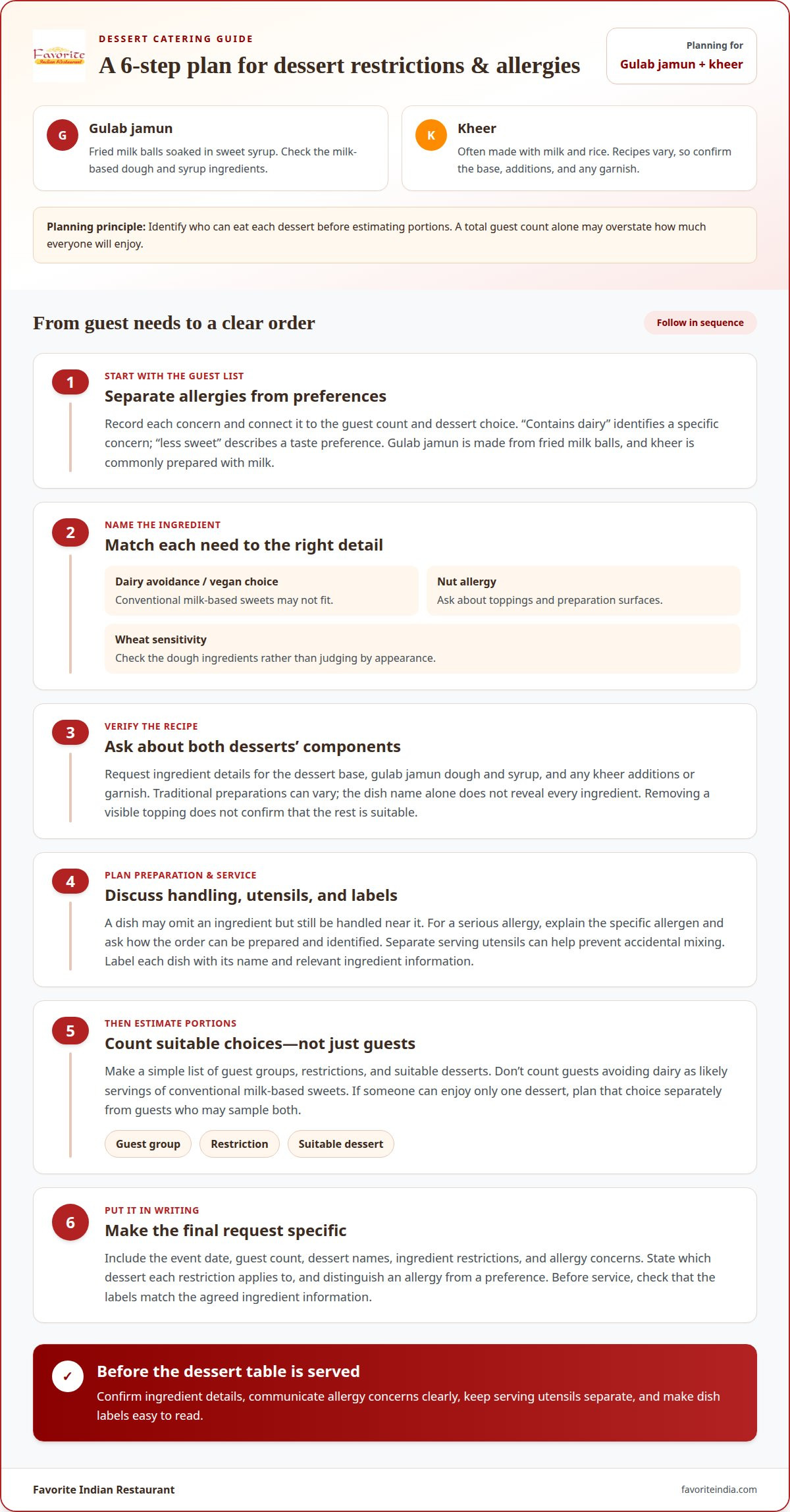
- List each guest’s restrictions before choosing desserts. Separate allergies from preferences, such as avoiding certain ingredients. For example, “contains dairy” communicates a specific concern, while “less sweet” describes a taste preference. Gulab jamun is a fried milk ball soaked in syrup, so dairy deserves attention. Kheer is commonly prepared with milk, making it important to review its ingredients, too. Keep each concern connected to the guest count and dessert choice. This creates a practical planning list instead of relying on assumptions about traditional recipes.
- Identify the ingredient behind each allergy or dietary choice. Dairy avoidance, vegan eating, and nut allergies require different decisions. A guest avoiding dairy may not be able to eat conventional gulab jamun or kheer. Someone avoiding nuts may need information about toppings and preparation surfaces. Wheat sensitivity calls for checking dough ingredients rather than judging the dessert by appearance. Write down the ingredient to avoid, the affected dessert, and whether the restriction is an allergy or a preference. Clear wording helps the person preparing the order understand the request accurately.
- Request ingredient details for both desserts, not just their names. Traditional preparations can vary, and a dish name alone doesn’t reveal every ingredient. Ask about the recipe components, including the dessert base, dough, syrup, and any garnish. For kheer, identify its base and added ingredients. For gulab jamun, clarify what goes into the fried dough and syrup. If a guest avoids an ingredient, compare that restriction with each component. Don’t treat removing a visible topping as proof that the remaining dessert is suitable.
- Discuss preparation and serving separately from the ingredient list. A dish may omit an ingredient but still be handled near it during preparation or service. For a serious allergy, explain the specific allergen and ask how the order can be prepared and identified. Separate serving utensils can help guests avoid accidentally mixing desserts at the table. Label each dish with its name and relevant ingredient information. For example, place a clear label beside the kheer rather than relying on guests to recognize it by appearance.
- Choose portions only after identifying which guests can eat each dessert. A total guest count alone can overstate how much everyone will enjoy. Make a simple table with guest groups, restrictions, and suitable choices. If some guests avoid dairy, don’t count them as likely servings of conventional milk-based sweets. If a guest can enjoy only one dessert, plan that choice separately from guests sampling both. This makes the serving plan more useful and reduces the risk of ordering portions that excluded guests cannot enjoy.
- Keep the final request specific and written. Include the event date, guest count, both dessert names, ingredient restrictions, and any allergy concerns. For an event in Union City, review the event catering details while organizing the wider meal. State which dessert each restriction applies to, and distinguish an allergy from a preference. Before service, make sure labels match the agreed ingredient information. Clear records help the host communicate accurately, while guests can make informed choices without guessing what each dessert contains.
Desserts kheer
- Choose the role kheer will play. Decide whether it is the only dessert or one choice among several. A chilled bowl of kheer offers a spoonable, creamy finish, while a piece of gulab jamun is richer and syrupy. If guests can choose between both, plan kheer as a separate option rather than assuming everyone wants a full portion of each. For a smaller dessert selection, kheer can stand on its own. This decision guides serving vessels, portion size, and how much variety the table needs.
- Think about the texture guests will enjoy. Kheer is a milk-based dessert often prepared with rice, then simmered until the mixture thickens. The grains give it a soft, gently textured feel, while the creamy base makes each spoonful satisfying. For example, a guest who prefers spoon desserts may choose kheer over fried sweets. Texture also affects presentation: serve it in a bowl or cup that allows guests to scoop easily. Decide whether the dessert should feel light and pourable or thick enough to hold its shape.
- Plan the flavor profile alongside the meal. Kheer’s mellow sweetness can balance a menu with savory dishes and warm spices. Consider the whole meal, not just the dessert table. After a substantial meal, a modest serving lets guests enjoy the creamy flavor without making dessert feel like another full course. If gulab jamun is also available, the contrast between spoonable kheer and syrup-soaked sweets creates two distinct choices. Think about whether guests are likely to sample both, then make serving portions reflect that plan.
- Review ingredients with the recipe in mind. Rice and milk are common kheer ingredients, while sugar adds sweetness. Some preparations also include nuts or fragrant spices, but recipes vary. Ask for the specific ingredients when planning the dish, particularly if guests have dietary restrictions. For example, someone avoiding nuts needs more than a visual check for toppings; the recipe and preparation details matter. A clear ingredient list also helps hosts describe the dessert accurately. Don’t assume every version of kheer uses the same ingredients or has the same texture.
- Consider nutrition through ingredients and portioning. Milk contributes to kheer’s creamy character, while sugar makes it sweet. Rice provides the dessert’s soft, grain-based body. Overall nutrition depends on the recipe and the amount served, so avoid treating every bowl as identical. For a practical option, offer a smaller scoop alongside other desserts rather than serving kheer only in a large bowl. Guests can then decide how much suits their appetite. If someone tracks a particular ingredient, share the recipe information instead of guessing from appearance.
- Arrange the serving station for easy choices. Keep kheer in its own serving dish, with a dedicated spoon and a label naming the dessert. If toppings are served separately, place them in individual bowls so guests can choose whether to add them. For example, keep chopped nuts apart from the main dish instead of mixing them throughout. Place cups or bowls nearby, and position the kheer where it won’t be confused with syrup-based sweets. These small details help guests serve themselves neatly and make the dessert table easier to navigate.
- Match the serving plan to the event. A seated meal and a casual gathering call for different serving setups. Individual cups can simplify distribution at a seated dinner, while a shared bowl may suit a self-serve table. For gulab jamun and kheer catering in Union City, decide whether guests will receive one dessert or choose between both. Then communicate the planned selection, guest preferences, and serving style as part of the event details. A thoughtful plan keeps the creamy kheer inviting and makes the final course feel considered.
Rather than a full portion, especially when guests have another dessert to sample, consider offering a smaller serving. Dishes of India’s Pista Kulfi is a traditional frozen Indian dessert with pistachio flavour. It can provide a distinct alternative for guests choosing between a creamy spoon dessert and a frozen one. Keep its role clear when arranging the dessert options, and offer portions that suit the appetite created by the meal. If both are available, let guests decide whether they want one or a taste of each. A smaller serving makes that choice easy without requiring a full bowl of every option.
Creamy kheer
- Describe the texture you want before choosing a preparation. “Creamy” can mean smooth and uniform, or soft with distinct grains. Those experiences aren’t identical. Tell the cook which you prefer instead of relying on a broad adjective. For example, describe whether you want each spoonful to feel silky or gently textured. A clear description makes it easier to choose a style that suits your gathering and avoids mismatched expectations when dessert arrives.
- Look for an even texture across the serving. A creamy finish should feel consistent from the first taste to the last. Notice whether one spoonful feels much thicker or grainier than another. If you’re sampling a preparation, taste a small amount from different areas rather than judging only the surface. This gives you a better sense of uniformity. Guests sharing a dessert course will appreciate a texture that feels deliberate, not unexpectedly different with each scoop.
- Decide how noticeable the grains should be. Some diners enjoy a smooth mouthfeel, while others like a gentle grain texture that makes each bite feel substantial. Choose the preference that fits your guests. For a mixed group, a balanced texture can offer character without feeling coarse. Avoid describing the dessert only as “thick,” since thickness doesn’t explain whether the texture should be smooth, grainy, or both. Specific sensory words make your preference easier to understand.
- Use a sample to align expectations. If you can taste the intended preparation, pay attention to how it feels after swallowing, not just your first impression. A creamy dessert should feel cohesive rather than watery in one bite and heavy in the next. Consider whether the texture suits the meal and the guests who’ll be eating it. A small sample can help you decide whether the style feels comforting and smooth or more textured and traditional.
- Tell the preparer which qualities matter most. Share a short description, such as “smooth, with a little texture,” rather than asking only for “creamy kheer.” Mention whether you want the grains to be subtle or clearly present. If your guests have different preferences, choose a middle-ground texture rather than trying to satisfy every palate separately. This gives the preparation clear direction and helps the dessert match the experience you have in mind.
- Check consistency between servings at the event. Before guests serve themselves, look at a few portions from different parts of the dish. Compare their appearance and texture, then make sure they seem alike. A noticeably uneven batch can leave one guest with a smooth taste and another with a much grainier one. Consistent servings make the dessert feel thoughtfully prepared. This check is especially helpful when the meal is served buffet-style and guests choose their own portions.
- Choose words that guide, not restrict, the final result. Describe the experience you want while leaving room for the cook’s judgment. “Creamy, not gluey” or “soft with visible grains” gives useful direction without demanding an exact formula. Avoid setting expectations based only on color or appearance, since those don’t fully reveal mouthfeel. A precise description helps you communicate your preference clearly and lets the finished dessert retain its own character.
Favorite Indian Restaurant’s Saturday Lunch Buffet
Favorite Indian Restaurant’s Saturday Lunch Buffet is a relaxed option when you’d like to enjoy a shared meal rather than plan dessert service for an event. The Saturday Lunch Buffet suits guests dining together, while Indian Food Catering is the relevant choice for a gathering elsewhere. For an evening meal, consider the Weekend Dinner Buffet or Live Indian Grill Experience. Choose based on whether you’re dining out or arranging food for guests. Explore the buffet details or visit Favorite Indian Restaurant’s website to plan your next meal.
Make the Dessert Plan Part of the Celebration
Let the final course reflect the kind of gathering you’re hosting. For gulab jamun and kheer catering in Union City, decide how dessert will fit into the meal and how guests will choose what they enjoy. A little planning around presentation and serving style can make the closing moments feel as considered as the rest of the occasion.
As you shape the menu, consider the atmosphere you want guests to remember: relaxed, festive, or centered on sharing. Favorite Indian Restaurant’s catering can be part of that plan. Explore the options and take the next step at Favorite Indian Restaurant.
Best Indian Food in Hayward, CA | Favorite Indian Restaurant | Indian Food near me for Catering
When your search for gulab jamun and kheer catering in Union City turns to planning the rest of the menu, Best Indian Food in Hayward, CA | Favorite Indian Restaurant | Indian Food near me offers Indian Food Catering and Banquet Services.
Add Indian sweets to a spread with options such as kebabs, naan, tandoori specialties, and Chef’s Signature Indian Curries. Favorite Indian Restaurant offers catering and banquet services for gatherings, with Indian dishes suited to a shared meal.
Frequently Asked Questions
Which caterers in Union City, California offer gulab jamun and kheer?
Favorite Indian Restaurant provides Indian Food Catering for Union City-area gatherings and lists Gulab Jamun among its desserts. Its catering service can help you plan an Indian meal, but don’t assume kheer is included alongside Gulab Jamun. Distinguish between sweets included in your planned menu and any dessert you specifically hope to serve. That keeps guest expectations clear while you plan the rest of the event food.
Can Union City caterers provide gulab jamun and kheer for weddings and parties?
Favorite Indian Restaurant provides Indian Food Catering for events, including weddings and parties. Gulab Jamun is identified among its desserts, but kheer should not be assumed as part of the same catering selection. For a wedding reception, consider how dessert fits the meal’s format: a seated dinner may suit individually served sweets, while a buffet lets guests choose their own portions. Plan the presentation around the dishes included in your event menu.
How many servings of gulab jamun and kheer should I order per guest?
Set the serving plan according to the number of desserts offered and how guests will choose them. If gulab jamun and kheer are both available, guests may sample each, while a single-dessert menu calls for planning around that one choice. Also consider whether dessert follows a full meal or a lighter gathering. Give Favorite Indian Restaurant your guest count and serving style, then plan the order around the portions needed for the event.
Do local caterers deliver gulab jamun and kheer in Union City, and what are the delivery fees?
Favorite Indian Restaurant offers online ordering for takeout and delivery, as well as Indian Food Catering for gatherings. Delivery fees depend on the order and delivery details, with the amount provided after a quote request. For dessert service, include the event location, meal format, and requested dishes in your planning information. Keep catering for a gathering distinct from an individual delivery order, since the arrangements and cost factors can differ.
Do Union City caterers offer trays or individual portions of gulab jamun and kheer?
For kheer, individual cups can simplify distribution at a seated dinner, while a shared bowl may suit a self-serve table.