The number on a buffet menu is only part of what makes dinner feel worthwhile. The weekend dinner buffet price in Hayward is easier to assess when you consider what the meal includes, how the food is served, and the atmosphere you’ll enjoy alongside it. A price alone doesn’t tell you whether a buffet suits a relaxed family meal, a gathering with friends, or a special evening out.
This guide explains how to compare the weekend dinner buffet price in Hayward with the food, service, and dining experience on offer. You’ll see why it helps to distinguish weekend dinner from Saturday lunch, what to look for in the dishes and serving style, and how a live grill can shape the meal. Use these details to compare options and decide what suits your plans in Hayward.
Key Takeaways
- Compare the full buffet bill, not just the listed price, by considering taxes, service charges, and gratuity.
- Assess the dinner experience by looking at the range of dishes and whether a live grill is part of the offering.
- Make holiday dining a separate comparison, since menus and pricing may differ from a regular weekend.
- Distinguish weekend dinner from Saturday lunch when choosing a buffet that suits your plans.
- Explore the Weekend Dinner Buffet and Live Indian Grill Experience at Favorite Indian Restaurant for a traditional Indian meal in Hayward.
3. Are taxes, service charges, or tips included in the buffet price?
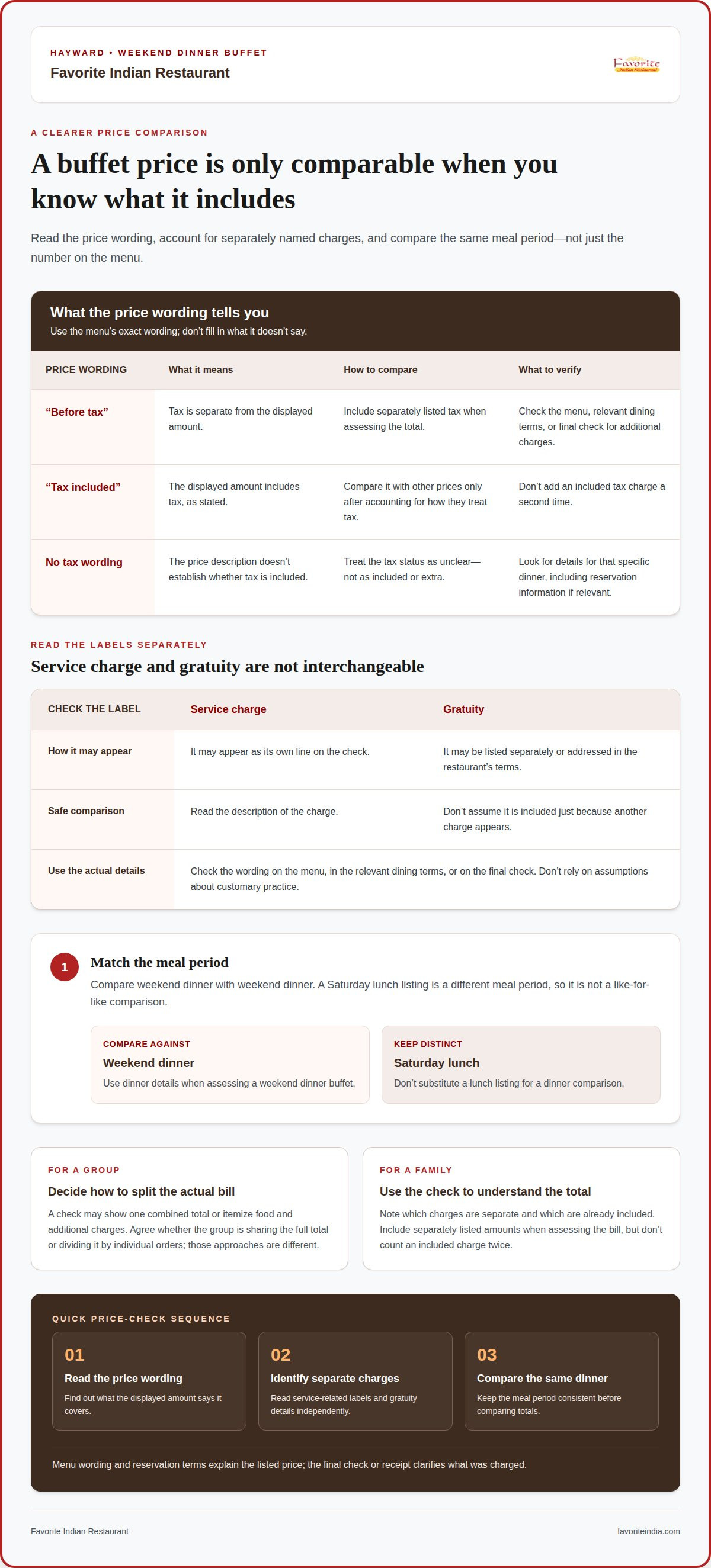
Not always. A buffet’s displayed price may cover the meal alone, or the restaurant may describe a broader total. For diners comparing buffet prices in Hayward, the key is how each restaurant presents its charges. Read the price wording and any related dining terms before comparing totals. Without that context, two menu prices may appear alike while describing different things.
Look for phrases such as “before tax” or “tax included” beside the listed amount. “Before tax” indicates that tax is separate; “tax included” means the displayed price includes it. If neither phrase appears, don’t assume either treatment. Review the details for that specific dinner, including reservation information if relevant. This keeps your comparison grounded in the restaurant’s wording rather than guesses based on another menu.
Service charges and gratuity need separate attention. A service charge may appear as its own line, while gratuity may be listed separately or addressed in the restaurant’s terms. The labels matter because one shouldn’t automatically be treated as the other. If a check includes a service-related charge, read its description before deciding whether gratuity is also included. Rely on the wording shown, rather than assumptions about customary practice.
To compare menus, note what the displayed amount covers, then identify any additional charges in the restaurant’s terms or final check. For example, one menu might say tax is extra, while another says tax is included. Those prices aren’t directly comparable until you account for the difference. Keep the meal period consistent, too: compare weekend dinner with weekend dinner, not with a Saturday lunch listing.
When dining with a group, understand how the final bill handles shared charges before splitting it. A check might show one combined total or itemize food and additional charges separately. If your group divides the bill, decide whether everyone is sharing the full total or paying for individual orders. Splitting one check evenly differs from dividing it according to each diner’s items. Follow your group’s arrangement and the actual check.
For families, the same distinctions help with planning. A displayed buffet price may not represent the complete bill if additional charges appear separately. Rather than estimating from the menu alone, note the price description and any itemized lines at payment. If the final check separates tax or service from the food charge, include those entries when assessing the total. If a charge is already included in the displayed amount, don’t add it again.
The buffet details page describes the meal offering. Use it to identify which meal you’re considering, and check the menu or final check for any details about charges. This distinction is useful when comparing Indian restaurants in Hayward, especially when menu wording differs.
Keep the comparison simple: read the price description, identify separately named charges, and make sure you’re comparing the same meal period. A receipt can clarify what was charged, while the menu or reservation terms explain what the displayed price means. Together, these details help you understand the bill without counting an included charge twice or overlooking one shown separately. The result is an informed comparison, not an assumption that every buffet handles charges the same way.
4. Which cuisines and dishes are included in each weekend dinner buffet?
Weekend dinner buffets in Hayward don’t all have the same menu. Each restaurant determines its cuisine, dishes, and serving format. Start by identifying the cuisine, then examine the actual menu rather than assuming every buffet offers the same spread. Two restaurants may both describe dinner as a buffet while serving very different regional food and dishes.
For an Indian buffet, distinguish broad Indian cuisine from a specific regional focus. Punjabi and North Indian cooking is associated with rich curries, breads, and tandoor-style preparations, but that description alone doesn’t confirm which dishes are on a particular buffet. Read the listed dishes and look for clear regional descriptions. This helps you decide whether the menu’s emphasis matches the flavors you hope to enjoy.
Dish names reveal more than a general cuisine label. A menu that names a curry, bread, or grilled preparation gives you a better sense of the meal’s style. Don’t assume that a dish on a restaurant’s general menu is included in its weekend buffet. Check whether the buffet description names it specifically. This matters when comparing a dinner spread with a full à la carte menu.
Look for variety across the menu’s categories, not simply a long list of dishes. A balanced spread may include several kinds of preparations, such as curries, breads, or grilled foods. The actual buffet list should show which categories are represented. A menu that names only curries, for example, tells you less about breads or grilled choices than one that clearly identifies each category. Compare what’s stated, not what you expect a buffet to contain.
Serving style shapes the meal, too. A buffet presents prepared dishes for guests to serve themselves, while a live grill emphasizes food cooked or finished at a grill. These formats offer different ways to explore a cuisine. If a menu mentions a live grill, look for the specific grill items it describes. Don’t assume the buffet and grill include identical dishes unless the restaurant presents them together.
Use a short menu-reading sequence before choosing:
- Identify the cuisine. Note whether the menu describes Indian food generally or names a regional style, such as Punjabi or North Indian.
- Read dish names. Separate specifically listed buffet dishes from items shown elsewhere on the restaurant’s menu.
- Check the format. Distinguish buffet selections from live-grill preparations or other dining options.
- Compare like with like. Match weekend dinner menus against other weekend dinner menus, not Saturday lunch offerings.
Avoid a common mix-up: a Saturday lunch buffet and a weekend dinner buffet are separate offerings. Don’t treat their menus as interchangeable unless the restaurant describes them that way. If a Saturday lunch page lists dishes, use those details for lunch rather than assuming they also apply to dinner. Matching the meal period keeps your comparison focused and useful.
If you have a particular preference, named ingredients and preparation terms can help narrow your choice. Look for an explicit tandoor reference if you’re seeking tandoor-cooked food, or check for named curry dishes if you’re interested in curries. These examples explain how to interpret menu language, not what a specific buffet includes. For an accurate list, rely on the dinner buffet’s own selections.
For a local example, explore buffet details and compare the cuisine description with the dishes listed for the meal period. That approach keeps the focus on confirmed menu information: cuisine, named dishes, and preparation style. It also helps separate a restaurant’s wider Indian menu from the specific choices included in its weekend dinner buffet.
5. Do buffet prices or menus differ on holidays and special occasions?
Holiday buffet prices and menus can differ from regular weekend service, but the date alone doesn’t determine what changes. A restaurant may offer its usual dinner format, present a special menu, or set separate event terms. Thanksgiving, Christmas, Diwali, and New Year’s are examples of dates diners may compare with an ordinary Saturday. Treat each as its own dining occasion and use the menu and terms published for that service.
Menu changes can affect how a holiday meal compares with a regular buffet. A special menu might highlight dishes suited to a celebration, while another service may retain its familiar selection. Don’t infer a dish from the holiday name. A Diwali buffet doesn’t automatically include a particular set of Indian sweets, and a Christmas dinner doesn’t establish which cuisine or dishes a restaurant serves. Rely on named selections, not assumptions tied to the calendar.
Compare holiday prices with the same care. A holiday listing may use different terms from a standard weekend listing, especially when it describes a special event rather than the usual buffet. Compare the meal period, the stated menu, and what the advertised amount covers. Don’t treat a Saturday dinner price as a holiday quote unless the restaurant applies it to that service. This keeps the comparison useful without assuming every special date brings a surcharge or discount.
For a family celebration, first identify the occasion and dining period, then match the menu to that date. A family choosing Saturday dinner for Diwali, for instance, should distinguish that service from a regular Saturday buffet before comparing details. If a group celebrates a birthday on a holiday weekend, separate the birthday plans from the calendar date. The meal’s listed terms, rather than the event label alone, show what applies.
Use these practical comparison points for Thanksgiving, Diwali, or another special date:
- Date and meal period: Match the listing to the exact holiday and dinner service.
- Menu: Compare named dishes and any stated differences from regular weekend selections.
- Price terms: Read whether the listed amount applies to that event or another service.
- Group arrangements: Note any separate booking or seating terms presented for the occasion.
These details also help distinguish a restaurant buffet from banquet dining. A buffet is a serving format; a banquet is arranged for a specific gathering. A wedding reception, birthday dinner, or workplace celebration may involve different arrangements from an ordinary weekend meal. Don’t assume buffet pricing or menu choices automatically apply to a banquet. Compare details according to the event type, meal period, and terms stated for the occasion.
Holiday menus can shape the atmosphere of a meal, too. A named seasonal dish or celebratory selection may give dinner a different character, while the usual buffet may suit guests seeking familiar dishes. The important difference is the menu presented for that date. If a listing names special dishes for New Year’s, compare them with the regular weekend menu. If it describes the standard buffet, don’t infer an additional holiday menu.
Before making plans, use the same sequence for every occasion: identify the date, find the corresponding dinner listing, read its named dishes, and compare its stated terms with regular weekend service. This avoids relying on a generic holiday assumption. For dining details that help frame your plans, browse the restaurant’s current information and use the occasion-specific description as your reference.
Best Indian Food in Hayward, CA | Favorite Indian Restaurant | Indian Food near me: Weekend Dinner Buffet
Favorite Indian Restaurant is an option for diners exploring weekend buffet choices in Hayward. Its Weekend Dinner Buffet offers a way to enjoy Indian cuisine, while the separate Saturday Lunch Buffet suits a different meal period. The Live Indian Grill Experience is another option for guests drawn to freshly grilled flavors.
Choose the dinner buffet when you want a shared meal with a range of Indian dishes, or try the live Indian grill for a meal centered on grilled specialties. For a group celebration beyond dining in, Favorite Indian Restaurant also provides Indian food catering. These options keep lunch, dinner, and catering distinct for Hayward diners.
For help choosing an option for your gathering, contact Favorite Indian Restaurant.
Choose the Dinner That Fits Your Plans
Let your plans shape the final choice. A relaxed meal with friends, a family gathering, and a special occasion can call for different dining experiences, even on the same weekend. Consider what your group values most: a shared table, a chance to explore Indian cuisine, or a setting that makes the occasion feel distinct. That perspective can help you choose a weekend dinner in Hayward based on what matters to your group.
Favorite Indian Restaurant in Hayward offers options for different dining plans. Choose the experience that feels right for your gathering, then make the next step easy.
Explore Favorite Indian Restaurant and plan a welcoming meal to look forward to.