Don’t assume plates and utensils are included with every catering order. List them as a separate requirement unless your order specifies otherwise. For weekly corporate lunch catering in Union City, the budget depends on factors such as group size, meal selections, and service needs.
Planning a regular office lunch means balancing good food with a practical setup. You want a spread that suits the team, fits the budget, and works for the occasion, whether it’s a meeting or a shared meal at the office.
This guide explains what shapes catering costs, how to plan within a budget, and how to choose meal combinations for different group sizes. It also covers practical details, including plates and utensils, to help you organize lunch with fewer last-minute surprises.
Key Takeaways
- Estimate a lunch budget by weighing group size, menu choices, and the service setup together.
- Match the meal format to the occasion, whether it’s a focused meeting or a shared team lunch.
- Choose meal combinations that make serving straightforward while giving the group a satisfying selection.
- Plan recurring office lunches around a dependable format, with enough flexibility to keep each meal enjoyable.
- Account for setup details, including plates and utensils, as part of the overall catering plan.
Catering prices and budget-friendly options
For weekly corporate lunch catering in Union City, budget for the full order, not just the food. Catering costs depend on group size, menu selections, serving format, and delivery or setup needs. Favorite Indian Restaurant provides pricing after a quote request, based on the event details. Include the workplace location, meal schedule, and preferred format to give your request a clear scope.
Start with the lunch routine. A team ordering a similar meal each week can simplify planning by sticking to a consistent format. Decide whether employees will receive individual portions or share dishes at a conference table. Then list what the meal should include and which serving supplies the office already has. These choices clarify the order before you request a quote.
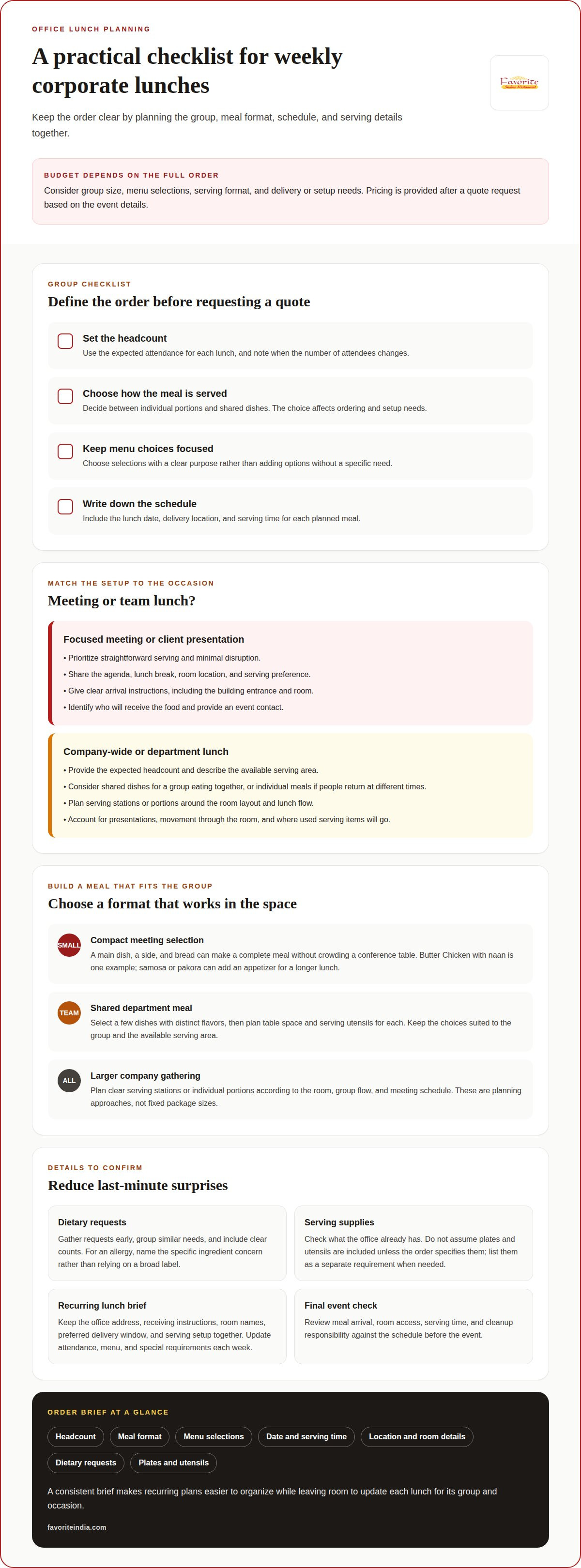
- Set the headcount: Use the expected attendees for each lunch, then note when attendance changes.
- Choose the format: Individual servings and shared dishes create different ordering and setup needs.
- Keep selections focused: A concise menu can make ordering easier than adding options without a clear purpose.
- Plan the schedule: List the lunch date, delivery location, and serving time for each planned meal.
Budget-friendly planning means matching the order to the occasion. For a short working meeting, a straightforward meal may work better than a broad spread. For a longer team lunch, shared dishes can make the meal feel relaxed and communal. Decide what matters most, such as variety, easy serving, or a filling menu, and prioritize those needs.
Use a simple order brief to keep the details consistent from week to week. Include the expected headcount, meal format, selected dishes, and serving requirements. Describe a client meeting and a regular team lunch separately, even if attendance is similar. The occasion can affect the menu and setup. Clear details give your quote request a practical basis.
For a clearer starting point, organize menu preferences and event details through Indian catering details. Keep the final plan specific: state whether the lunch is recurring, describe the group, and outline the desired meal format. That makes it easier to shape a budget around real workplace needs rather than assumptions or a one-size-fits-all order.
Corporate lunch catering for meetings and company-wide lunches
A focused meeting and a company-wide lunch need different meal plans. For a working session, prioritize simple serving and minimal disruption. For an all-hands gathering, plan for varied preferences and a shared meal. Start with the agenda, room layout, attendee count, and lunch window. These details help determine the menu format and delivery instructions.
For a client presentation, choose dishes that are easy to serve while people remain seated. Specify where the food should go, who will receive it, and when the meeting allows a break. Give the catering team clear arrival instructions, including the building entrance and room location. Include an event contact so delivery doesn’t interrupt the presentation.
A company-wide lunch needs a different flow. Map the serving area before choosing a format. A central table can work for shared dishes, while individual meals may suit a team returning to work at different times. Plan how employees will move through the room, where used serving items will go, and whether lunch overlaps with presentations. A clear layout helps prevent crowding and delays.
- For a meeting: Share the agenda, lunch break, room location, and serving preference.
- For an all-hands lunch: Provide the expected headcount and describe the room’s serving area.
- For recurring lunches: Keep a standard schedule, then communicate changes to attendance or format.
- For mixed preferences: Gather dietary requests early and include them with the order details.
Handle dietary needs systematically rather than guessing at the last minute. Collect requests through the meeting organizer, group similar needs, and include clear counts with the meal plan. For an allergy, share the specific ingredient concern instead of relying on broad labels. This helps the food team understand the request and plan accordingly. Limit sensitive details to the people organizing lunch.
For weekly corporate lunch catering in Union City, use repeatable event details to keep plans consistent. Maintain one document with the office address, receiving instructions, room names, preferred delivery window, and serving setup. Update the attendance, menu, and special requirements each week. This concise brief helps Favorite Indian Restaurant follow your routine while tailoring each lunch to its meeting.
Before the event, review the final plan against the schedule: meal arrival, room access, serving time, and cleanup responsibility. A short message to attendees can explain when lunch begins and where it will be served. These steps help a boardroom lunch run smoothly and a larger team meal feel welcoming, without making the break another meeting task.
Catering combos for different group sizes
A suitable lunch combination depends on headcount, serving space, and meeting format. A small working group may prefer a compact selection that’s easy to serve. A department gathering may need shared dishes with variety for different appetites. For a company-wide meal, plan clear serving stations or individual portions. These are planning approaches, not fixed package sizes.
For a small meeting, keep the menu focused. A main dish, a side, and bread can make a complete meal without crowding a conference table. Butter Chicken with naan, for example, pairs a familiar entrée with bread. Samosa or pakora can add an appetizer to a longer lunch. Choose based on the agenda and available serving space.
A department lunch can use shared dishes when employees are eating together. Select a few dishes with distinct flavors, then plan the serving utensils and table space for each. For example, curry with naan and an appetizer creates a varied spread. Share the headcount and preferred format together so the order suits both the group size and the way people will eat.
A larger company gathering needs a serving plan as well as a menu. Decide whether employees will line up at a central table or receive individual meals. For shared dishes, group items by course and place breads near the main dishes. For staggered breaks, individual portions may make distribution easier. Attendance matters, but so do room layout and lunch timing.
- Small meeting: Choose a concise meal combination that fits the table and meeting break.
- Department lunch: Use shared dishes when colleagues can gather and serve themselves.
- Company-wide event: Decide between a central serving area and individual portions.
- Mixed preferences: Share dietary requests and meal counts in the same order brief.
For recurring lunches, keep a flexible template instead of repeating the same combination. Record the usual serving format, then vary the dishes for each meeting. One week might feature curry and naan; another might include samosa or pakora as an appetizer. A familiar structure makes planning easier while letting each meal suit that week’s gathering.
Use the same planning sequence for lunch or dinner: confirm attendance, choose the serving style, select dishes, then match the setup to the room. Don’t treat headcount as the only deciding factor. A seated meeting, buffet-style gathering, and staggered office breaks each call for a different approach. Clear details help the catering plan fit the group.
Catering experience
A memorable catered meal is more than a collection of dishes. Flavors, textures, and presentation shape how colleagues experience the gathering. Consider whether the menu relies on similar rich flavors or offers contrasting tastes. A thoughtful mix can make the meal feel complete, while a coherent theme keeps the choices connected.
Think about the first impression. A well-presented meal can invite people to pause, gather, and enjoy the moment. At a team celebration, for example, an orderly spread feels more welcoming than dishes placed without a plan. Consider how colors and textures work together and whether the presentation suits the atmosphere you want.
Variety doesn’t mean adding every possible choice. A balanced meal can pair familiar flavors with something less expected, giving colleagues room to explore without making the menu feel scattered. Consider contrasting textures, such as creamy and crisp, or a gently seasoned dish alongside a more aromatic one. These differences add interest across the meal.
The order of the meal also shapes the experience. An appetizer can mark the start of a shared occasion, a satisfying main course can anchor it, and a sweet finish can bring it to a graceful close. This simple progression can make a celebratory office lunch feel intentional, even when the gathering is relaxed.
- Build a flavor story: Choose dishes that complement one another rather than competing for attention.
- Balance textures: Pair contrasting qualities so each part of the meal feels distinct.
- Keep the occasion in mind: A casual team meal and a formal recognition lunch call for different moods.
- Invite shared enjoyment: Choose a menu that gives colleagues a reason to gather and talk.
For recurring lunches, create variety by changing the flavors rather than redesigning the whole experience. One week might feel comforting and familiar; another can bring brighter, more layered tastes. A consistent sense of occasion, paired with thoughtful variation, keeps regular meals appealing and gives the team something fresh to anticipate.
After the gathering, note which parts sparked conversation or drew interest. Colleagues may have lingered over a particular flavor, or the meal’s progression may have made the event feel celebratory. Keep those observations in mind for future occasions. The goal isn’t to make every lunch elaborate, but to serve a considered, generous, enjoyable meal.
Office lunches
An office lunch can offer a welcome pause in the workday, especially when it feels different from eating at a desk. Make it a shared moment rather than another meeting. Keep the lunch hour free of agenda items, status updates, and presentation slides, so colleagues can enjoy the food and each other’s company without dividing their attention.
Give the meal a social purpose. Welcoming a new team member, marking a project milestone, or showing staff appreciation can make an ordinary workday feel more communal. A short introduction or toast may suit a celebration, while an informal conversation starter can help colleagues from different teams connect. Keep it relaxed, so lunch still feels like a break.
Consider how the office’s daily habits shape the meal. Some teams gather naturally in a shared space, while others tend to return to their desks. Invite colleagues to step away together when possible, and make the lunch area distinct from their workstations. A clean table, comfortable seating, and a pause from screens can create a more welcoming atmosphere.
- Set a shared purpose: Tie lunch to a welcome, milestone, or simple team gathering.
- Protect the break: Keep work updates and meeting agendas off the lunch table.
- Encourage conversation: Invite colleagues across teams to sit together.
- Make it feel special: Add a warm welcome or brief recognition for the occasion.
For recurring office meals, vary the reason for gathering as well as the dishes. One lunch might welcome a new colleague; another could recognize a completed project. A simple theme gives employees a fresh point of connection without turning each meal into a major event. Keep the focus on time together rather than elaborate activities.
After lunch, consider whether the atmosphere matched the purpose. Did new team members have an easy way to join conversations? Did colleagues get a genuine pause from work? Use those observations to shape the next gathering. A simple shared meal can feel more meaningful when the host makes room for conversation, appreciation, and enjoyment.
For a flavorful meal to bring colleagues together, explore Favorite Indian Restaurant as you plan your next office gathering.
Best Indian Food in Hayward, CA | Favorite Indian Restaurant | Indian Food near me: Saturday Lunch Buffet
Best Indian Food in Hayward, CA | Favorite Indian Restaurant | Indian Food near me provides Indian food catering for office teams and meetings. It’s a natural option for a shared meal shaped around your group and occasion. For a relaxed team outing, the Saturday Lunch Buffet offers another way to eat together. The Weekend Dinner Buffet and Live Indian Grill Experience suit gatherings outside work hours, with a range of Indian flavors to share.
For a Union City office lunch, choose catering when you need food at the workplace. The buffet is a separate option for a Saturday meal at the restaurant. Match your choice to the team’s schedule and plans. Contact Best Indian Food in Hayward, CA | Favorite Indian Restaurant | Indian Food near me to discuss your gathering.
Make the Next Lunch Easier to Plan
A regular team lunch can become a welcome pause in the workweek, not just another calendar item. For weekly corporate lunch catering in Union City, consider what would make the meal meaningful for your team, from welcoming new colleagues to marking a shared milestone. A little intention can turn lunch into something people look forward to.
Let each gathering reflect the people around the table. A relaxed lunch can invite conversation across departments, while a milestone meal gives colleagues a chance to celebrate together. Keep the atmosphere warm and unhurried, and make the food part of a shared experience rather than another work task.
When you’re ready to plan a gathering, contact Best Indian Food in Hayward, CA | Favorite Indian Restaurant | Indian Food near me. Give your team a flavorful reason to step away and enjoy lunch together.
Frequently Asked Questions
Are plates and utensils included in my catering order?
Don’t assume plates and utensils are included in every catering order. List them separately in your order details, along with the number of people who need them and the serving format. Individual meals may need different supplies than shared dishes. A clear list helps the catering plan account for how your team will eat and serve the meal.
How far in advance can I place my order?
Order timing depends on the event date, group size, menu choices, and delivery details. For a scheduled office lunch, share the date and meal requirements as early as your planning allows. For several lunches, provide the recurring schedule and note what may change. These details give the catering team a clearer picture of the request and its logistics.
How much does corporate lunch catering in Union City cost per person?
The per-person price depends on group size, menu selections, serving format, and event needs. Favorite Indian Restaurant provides pricing after a quote request based on those details. For a useful estimate, say whether the lunch is individual or shared, name the dishes you’re considering, and provide expected attendance. Changes to the headcount or menu can affect the overall quote.
How far in advance must weekly corporate lunch orders be placed or changed?
There isn’t one timing rule for every recurring order. The schedule, menu, attendance, and delivery arrangements all affect coordination. Share the regular lunch dates, then send updates as soon as a date, headcount, or meal selection changes. Flag a meeting-day shift separately from a routine attendance adjustment so the new details are clear.
Do Union City corporate caterers accommodate vegetarian, vegan, gluten-free, halal, and allergy-sensitive diets?
Include dietary requests and specific allergy concerns with the meal plan so the food team can plan accordingly.