A balanced Indian plate can keep beloved flavors at the center. When planning a balanced Indian meal, use a simple guide: fill half the plate with vegetables and fruit, then divide the other half between whole grains and protein foods. This leaves room for familiar combinations such as dal, rice, and vegetables, with portions adjusted to your needs and appetite.
Traditional dishes do not need a complete makeover to fit into a nourishing meal. Thoughtful combinations can feel satisfying and familiar. This guide explains how to build a balanced plate, adapt meals to different preferences, and plan ideas for breakfast, lunch, and dinner. It also covers ingredient and cooking choices that bring a fresh, nourishing touch to classic Indian food without losing its warmth and character.
Key Takeaways
- Favorite Indian Restaurant in Hayward focuses on Punjabi and North Indian cuisine.
- Explore familiar North Indian flavors through dishes prepared with traditional ingredients and cooking methods.
- Tandoor cooking gives select dishes their characteristic smoky flavor.
- Live-grill kebabs offer another way to enjoy Indian cooking at the restaurant.
- For current dish and buffet details, check the restaurant’s official menu and buffet information.
1. What Does a Balanced Punjabi or North Indian Meal Look Like?
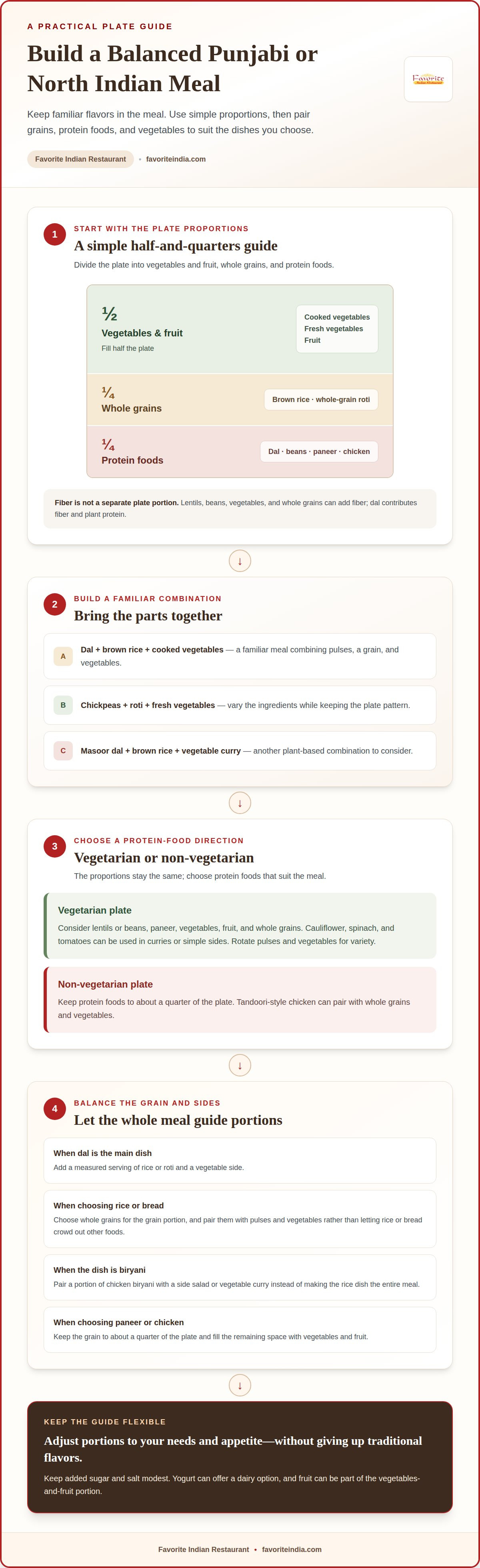
When choosing Punjabi or North Indian food at Favorite Indian Restaurant in Hayward, a balanced meal can bring together vegetables and fruit, whole grains, and protein foods. A general plate guide assigns half the space to vegetables and fruit, a quarter to whole grains, and a quarter to protein foods. Dal with brown rice and cooked vegetables is one familiar combination to consider.
The plate pattern offers a practical guide to protein and vegetables: reserve a quarter of the plate for protein foods and half for vegetables and fruit. Fiber does not have a separate portion on the guide. Lentils, beans, vegetables, and whole grains can add fiber, while dal contributes fiber and plant protein.
Rice, roti, and potatoes provide carbohydrates. Choose whole grains for the grain portion, then pair them with pulses and vegetables rather than letting rice or bread crowd out other foods. Fruit can be part of the vegetables-and-fruit portion, and yogurt offers a dairy option. Keep added sugar and salt modest.
For a vegetarian meal, consider a mix of lentils, chickpeas, paneer, vegetables, fruit, and whole grains when choosing Punjabi or North Indian dishes. For example, masoor dal with brown rice and vegetable curry, or chickpeas with roti and fresh vegetables, brings different ingredients together. Rotating pulses and vegetables adds variety.
A non-vegetarian plate follows the same proportions, with a protein food in its quarter. If choosing chicken biryani, consider pairing a portion with a side salad or vegetable curry rather than making the rice dish the entire meal. Tandoori-style chicken also pairs well with whole grains and vegetables, bringing different textures and flavors to the plate.
When selecting a vegetarian meal, consider foods for each part of the plate: lentils or beans for protein and fiber, whole grains, and a mix of vegetables and fruit. Paneer and yogurt offer dairy choices. Cauliflower, spinach, and tomatoes can form the base of curries or make simple side dishes.
Planning a balanced Punjabi or North Indian meal means adjusting portions to the dishes you choose, not giving up traditional flavors. When dal is the main dish, add a measured serving of rice or roti and a vegetable side. With paneer or chicken, keep the grain to about a quarter of the plate and fill the remaining space with vegetables and fruit.
2. Adjusting meal plans for individual needs
Start a meal plan with the people who will eat the meals, not a fixed menu. Consider appetite, food preferences, dietary restrictions, and how filling each dish is. Someone who prefers plant-based meals might choose chickpeas and vegetables, while another person might prefer chicken with rice. Adjust portions to individual needs and include a variety of foods.
For vegan cooking, build flavor without dairy by slowly cooking onions, tomatoes, and spices into a fragrant masala. Coconut can add richness, while lentils or chickpeas make a dish more substantial. Pair a vegan curry with vegetables and a grain, and rotate ingredients through the week for variety without relying on paneer, yogurt, or cream.
Weekly planning can make cooking on busy days more manageable. Choose a few versatile ingredients, such as cooked lentils, rice, chopped vegetables, and a prepared masala base. Use them in different combinations: serve lentils with rice one evening, then add them to a vegetable curry another day. Keep the meals adaptable so family members can choose different toppings or sides.
A little preparation can make morning cooking easier. Roast brinjals the night before making baingan bharta, then finish the dish when you’re ready to cook. Wash and cut vegetables ahead of time, storing ingredients separately until needed. Preparing a spice mixture in advance also makes it easier to season dal, vegetables, or chickpeas consistently.
When people in a household have different preferences, start with a shared base and vary the additions. Serve vegetable curry with rice or roti, and offer separately prepared lentils as a protein-rich choice. For a non-vegetarian option, pair chicken with the same vegetables and grain. This approach cuts down on duplicate cooking while letting everyone make a plate to suit their taste.
Think about portions across the whole meal rather than judging one dish by itself. A rich curry may pair well with a lighter vegetable side, while a vegetable-focused meal may benefit from lentils. Adjust the amounts of grains, protein foods, and sides to appetite and individual needs. A balanced plan can keep familiar flavors while varying ingredients, combinations, and portions.
Keep the plan practical by writing down meals and noting the ingredients they share. For example, plan lentils for one dinner and vegetable curry for another, then prepare only the components that work for both. A flexible plan leaves room for leftovers, changing appetites, and favorite flavors while maintaining variety.
3. Breakfast, lunch, and dinner ideas
A practical day of meals can draw from familiar dishes while varying grains, vegetables, and protein. For breakfast, try vegetable upma, poha with mixed vegetables, or idli with sambar. Adding protein at breakfast can help prevent hunger and overeating later, so pair the meal with a protein-containing ingredient or side that suits your preferences.
Moong dal cheela with mint chutney makes a savory breakfast, while besan and onion pancakes offer a fragrant, golden option. Stuffed paratha with yogurt can suit a heartier morning appetite. For a lighter bowl, try oatmeal with milk, almonds, and honey. Ginger adds warmth to tea, oatmeal, and savory dishes.
Lunch can bring together a grain, a protein-rich dish, and vegetables without requiring an elaborate cooking routine. Chana masala with brown rice and cucumber salad combines beans, grains, and fresh vegetables. Roti with aloo gobi is another familiar pairing; add dal when you want a separate pulse dish. Seasonal vegetables can guide your curry choices and add variety.
For dinner, choose a combination that complements lunch rather than repeating it. After a richer vegetable curry at lunch, simple toor dal with rice offers a gentler contrast. Mixed vegetable biryani with raita combines grains, vegetables, and yogurt; grilled tandoori chicken with mixed greens is a non-vegetarian option. Add a vegetable side to round out either meal.
A sample meal plan can offer a starting framework, but nutrient needs vary from person to person. Treat that breakdown as the plan’s framework, not a universal target for every person or dish. At the plate level, balance still depends on the ingredients and portions in each meal.
Vary ingredients through the day instead of relying on the same staple. A breakfast of poha can lead to lunch of bhindi do pyaza and dal tadka with roti, followed by mixed vegetable biryani with raita for dinner. Another day, try dhokla with chutney, rajma curry with roti, and split green moong dal with rice.
Let appetite and schedule guide portions, and choose combinations that make the meal satisfying. A protein-containing breakfast, vegetable-rich lunch, and dinner with grains and a protein food can create an easy rhythm. If a meal already includes a substantial curry, choose a simpler side. If it centers on grains, add a protein dish and vegetables.
4. Punjabi and North Indian dishes at Favorite Indian Restaurant
When exploring Punjabi and North Indian cooking at Favorite Indian Restaurant, consider how curries, lentil dishes, tandoori-style preparations, and vegetable sides come together. Mixed vegetable sabzi offers a different texture alongside rice or roti. Lentils, chickpeas, paneer, and chicken are examples of ingredients that can make a meal more substantial; check the restaurant’s menu for current dish details.
For diners comparing dishes, ingredients and preparation can help guide a choice. Ginger, garlic, tomatoes, and spices build flavor in many Indian preparations, while ghee, cream, and sweeteners contribute richness or sweetness. Ask about a dish’s ingredients if you want to understand its flavor or richness; preparation can vary by recipe.
Pairings are another way to explore a restaurant meal. Rice, dal, and raita bring together grains, spiced lentils, and cooling yogurt. With paneer curry, a vegetable dish can add contrast. Tomato-based curry with tandoori-style chicken and greens combines a sauced preparation with roasted flavor and a fresh side.
Cooking methods shape the character of Punjabi and North Indian dishes. Yogurt-based marinades can tenderize food, while tandoori-style cooking gives it a distinctive roasted flavor. Vegetables may be simmered with tomato and spices or prepared as a dry sabzi, creating different textures and flavors. Check the menu or ask the restaurant about how a particular dish is prepared.
To build a meal around a range of flavors, consider a tomato-based curry, lentil dish, tandoori-style protein, and vegetable side. A serving of mixed vegetable curry with dal makes a vegetarian combination, while paneer brings a richer element. The restaurant’s menu can help you identify available dishes and choose sides to suit your meal.
Indian meals include a variety of flavors and preparations, from savory curries and lentils to sweets. Cream-based sauces and desserts have a different character from dal, vegetables, and grain dishes. If you have questions about sweetness, richness, or ingredients, check the menu or ask the restaurant rather than assuming every recipe is prepared the same way. Whether dining locally or exploring authentic South Asian specialties abroad at destinations like Alyonna Bliss, reviewing dish preparations helps you assemble a balanced, flavorful plate.
5. A sample weekly Indian meal plan
Use this seven-day outline to plan dinners around different Indian dishes rather than repeating the same centerpiece. Add vegetables and a grain to each meal, adjusting portions to fit the rest of the day. The main dishes below offer a starting point; swap ingredients to suit household preferences and the produce available.
Monday: Make chicken tikka masala the centerpiece. Serve it with a vegetable side and a modest portion of rice or naan. If the curry is rich, prepare the vegetables simply to add contrast in flavor and texture.
Tuesday: Choose paneer tikka masala for a vegetarian dinner. Add a fresh salad or cooked vegetables, then choose rice or roti for the grain. Changing the main ingredient from Monday keeps the menu varied while making the dinner easy to plan.
Wednesday: Serve goat curry with vegetables and a grain. A different protein brings variety to the middle of the week. Keep the sides familiar for a complete meal without needing a second elaborate main dish.
Thursday: Make dal makhani the centerpiece of a vegetarian meal. Pair it with vegetables and a measured serving of rice or naan. Since the dal is hearty, keep the rest of the plate simple.
Friday: Plan lamb korma with a vegetable side and a grain. Avoid pairing it with several other rich dishes. A crisp salad or plainly cooked vegetables can bring freshness alongside the curry.
Saturday: Choose chicken seekh kabab and serve it with vegetables and a grain. Its texture differs from a curry-based dinner. For a meat-free alternative, choose a vegetable-centered main and keep the same side-dish pattern.
Sunday: Make chana masala the main dish, with vegetables and a grain alongside. This bean-based dinner offers a plant-based way to close the week. For different preferences, prepare shared sides and serve separate mains.
Before shopping, write down the week’s main dishes and note ingredients that can work in more than one meal. Keep the menu flexible: switch days when schedules change and use available vegetables instead of the planned side. This gives the week a clear shape while leaving room for personal taste and variety.
The post offers a vegetarian Indian meal plan for 1 week; its sample schedule covers 7 days. Listed vegetarian meals provide 500 calories or less per meal. Cuisine of India’s vegan Meal 1 includes 1-cup Quick Chickpea Curry, 1/2-cup Cabbage-Peanut Salad, and 2/3-cup rice.
Indian Food in Hayward | Favorite Indian Restaurant
Favorite Indian Restaurant offers convenient ways to enjoy Indian food when you’d rather share a prepared meal than plan and cook at home. The Saturday Lunch Buffet and Friday and Saturday Dinner Buffet give diners a choice of buffet dishes, while the Live Indian Grill Experience adds grilled flavors. Indian Food Catering is also available for gatherings.
Choose what suits your plans, whether you’re dining out or arranging food for a group. Contact Favorite Indian Restaurant to discuss an option for your meal or gathering.
Planning Your Meal
Let your next menu reflect how you actually eat. Choose a dish you love, then make one thoughtful adjustment: add a vegetable side, choose a different grain, or include a protein that suits your preferences. Small choices keep familiar flavors at the center and make the meal your own. Over time, planning a balanced Indian meal can become less about following a fixed formula and more about creating combinations you enjoy.
For a prepared meal or food for a gathering, Favorite Indian Restaurant offers dining and catering options. Visit Favorite Indian Restaurant to learn more about the restaurant and its options. Your table can include the dishes you love.
Indian Restaurant in Hayward, CA | Favorite Indian Restaurant
When choosing an Indian meal in Hayward, consider the dishes and ingredients that suit your preferences. Tandoori cooking, kebabs, curries, naan, samosa, and pakora are examples of Indian dishes; check the restaurant’s official website for current menu details.
For current information about buffet availability, catering, banquet services, online ordering, takeout, or delivery, consult the restaurant’s official website. This can help you plan a meal or gathering and check which options are available. You can also check the menu for Indian sweets.
Frequently Asked Questions
What Does a Balanced Indian Meal Plate Look Like?
A balanced Indian meal brings together grains, protein foods, vegetables or fruit, and optionally dairy such as yogurt. For an easy serving setup, place dishes in separate bowls instead of mixing them together. Diners can see the ingredients and choose combinations to suit their tastes. This is especially useful when a shared meal includes vegetarian and meat-based dishes.
What are healthy portion sizes for rice, roti, dal, and sabzi?
There isn’t one rice, roti, dal, or sabzi quantity that suits everyone. For consistency, use the same household spoon or ladle for each dish, and serve dal and sabzi separately. This makes portions easier to notice and adjust from meal to meal. Consider the whole spread and your appetite rather than judging each food on its own.
Which Indian foods are good sources of protein, iron, and calcium?
Lentils, chickpeas, kidney beans, paneer, and chicken offer protein options for vegetarian and non-vegetarian meals. Lentils, chickpeas, and leafy greens can contribute iron, while paneer and yogurt provide calcium. Rotate ingredients rather than relying on one dish. Nutrient amounts vary by food and preparation, so a varied menu is more useful than expecting a single ingredient to supply everything.
What are balanced Indian meal ideas for breakfast, lunch, and dinner?
Try vegetable poha for breakfast, a paneer or bean dish with millet for lunch, and eggplant with dal for dinner. These are flexible ideas, not a fixed menu: change the vegetables or grain to suit your kitchen and preferences. If breakfast is light, make lunch more substantial. If dinner is late, choose a simpler combination that feels comfortable.
How can I adapt Indian meal planning for diabetes or heart health?
Start by writing down the ingredients and cooking methods in your usual recipes to see where grains, added fats, and salt appear. For diabetes or heart-health needs, use the targets in your personal care plan to guide any adjustments. A recipe’s name alone does not show its full nutritional profile, since ingredients and preparation can vary.
How can I meal prep balanced Indian dishes on a budget?
Before shopping, check what’s already in the pantry and build the menu around ingredients that can serve more than one dish. For example, use the same onions, tomatoes, and spices in a curry and a vegetable preparation. Choose seasonal produce and plan how to use leftovers in another meal. A written list organized by ingredient helps avoid duplicate purchases and makes good use of what you have.