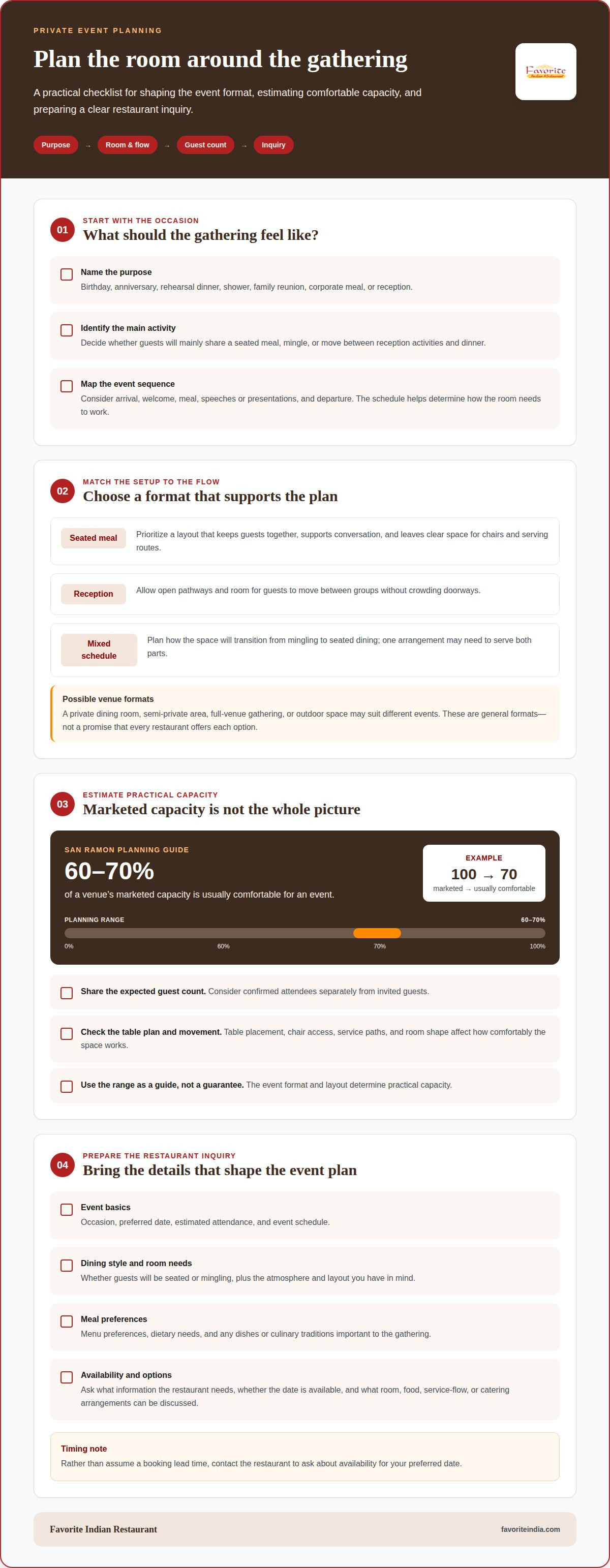
Rather than assume six to twelve weeks for weekend events or two to four weeks for weeknight bookings, contact the restaurant to ask about availability for your preferred date.
It makes sense to think first about the date, guest list, and meal, since each shapes the kind of gathering you can host. A restaurant can help bring those pieces together, from choosing a suitable setup to discussing chef proposals and catering.
This guide covers the information a restaurant needs to shape an event plan. It also explains what to discuss about the setup, menu, and catering so the meal suits your occasion.
Key Takeaways
- Match the event setup to its purpose, guest list, and the kind of gathering you’re planning.
- Think beyond a venue’s advertised capacity; comfortable seating and the room layout shape how the event feels.
- Share your event details early so the restaurant can discuss suitable arrangements and chef proposals.
- Coordinate the menu and catering around the event’s format and guests’ needs.
- For San Ramon events, confirm availability and booking timing directly with the restaurant.
What types of events do you host?
Restaurants can host celebrations, receptions, family gatherings, and business dinners when the setting, service style, and meal suit the occasion. Choose a venue based on what guests will do, not just its advertised seating capacity.
Event Type Matching
Match the gathering’s purpose with its pace, privacy, and dining experience. A birthday dinner may call for a shared table and relaxed conversation, while a business reception may need space to mingle before sitting down. Identify the main activity, then consider how the layout and meal service will support it.
Suitable Events and Spaces
Restaurants can be considered for birthdays, anniversaries, rehearsal dinners, showers, family reunions, corporate meals, and receptions. Possible arrangements include a private dining room, a semi-private area, a full-venue gathering, or an outdoor space. These are general venue formats, not a promise that every restaurant offers each option. Match the format to the event’s privacy and flow.
For a seated dinner, prioritize a layout that keeps guests together and makes conversation easy. A reception with mingling calls for open pathways and room to move between groups. A shared table can make the meal central to a family celebration, while a quieter setting may suit a work gathering or presentation.
Plan the evening in sequence: arrival, welcome, meal, speeches or presentations, and departure. A reception with a short program needs a different layout from a dinner centered on conversation. The activities should guide the room choice, whether you want a casual outdoor setting or a defined indoor space.
For a business meal, separate the event plan from its tax treatment. The Internal Revenue Service says the deduction for business meals is generally limited to 50% of the unreimbursed cost. That rule concerns tax deductions, not the restaurant’s event arrangements. A company planning a client dinner can consider both the gathering’s format and its own expense records.
- Celebration: Choose a layout that brings friends or relatives together around dinner.
- Reception: Consider guest movement, mingling, and the transition to seated dining.
- Business event: Prioritize conversation, the meeting format, and expense documentation.
Before choosing a venue format, describe the occasion, planned activities, and atmosphere you want. This makes it easier to decide between a focused dining room, an open reception arrangement, or an outdoor setting.
Private dining room configurations and capacities
A room’s layout affects guest comfort, movement, and the pace of dining. In San Ramon, comfortable event capacity is usually 60 to 70 percent of a venue’s marketed capacity.
Dining Room Configurations
Configuration means how tables, chairs, and open areas are arranged. A seated dinner may use grouped tables, while a cocktail reception needs clear pathways for mingling. Consider where guests will eat, talk, and move between activities. The room should support the event’s flow, not simply fit in the chairs.
Guest Capacity
Marketing capacity and comfortable guest capacity are not the same. A San Ramon venue marketed for 100 guests is usually comfortable for 70. The difference matters because dining tables, service paths, and space for arrivals take room. Use the expected guest count as a starting point, then consider whether the event includes seated dining, a cocktail period, or both.
For a seated meal, ask how the table plan accommodates guests and serving routes. Aisles between tables make it easier for guests and staff to move. A group spread across several tables may need a different layout from a single long-table dinner, so consider seating style when estimating practical capacity.
A cocktail reception needs room for guests to circulate, greet one another, and approach food or drinks without crowding doorways. If the event shifts from mingling to seated dining, the layout must support both phases. Discuss the sequence to determine whether one arrangement will work throughout.
Separate invited guests from confirmed attendees when estimating attendance. Share the expected count and seating preference with the venue. A larger group can affect the table plan, while a change from dinner to a standing reception makes open floor space more important.
- Seated dining: Focus on table placement, chair access, and clear service paths.
- Cocktail format: Prioritize circulation and space for conversation.
- Mixed schedule: Plan the transition between standing and seated portions.
Also consider the character of the meal. A Mediterranean-style dinner, for example, may involve shared dishes that benefit from accessible table space. The menu and serving style can therefore influence how tables are grouped, even when the guest count stays unchanged.
Use the 60 to 70 percent capacity range as a planning guide, not a seating guarantee for every layout. A venue’s room shape and event format determine how that space works in practice. For Banquet Services, the arrangement should reflect the expected attendance and the way guests will use the room.
How to discuss private event bookings and chef proposals
A clear event brief can help you discuss a workable dining plan with a restaurant. For a wedding reception, for example, you could share the date, guest count, schedule, and meal preferences and ask whether the restaurant can consider these details when discussing food options.
When you make an inquiry, consider sharing the occasion, expected attendance, preferred date, and whether guests will sit for dinner or move between reception activities. You can ask which details the restaurant needs to assess your request and discuss options for the room, food, and service flow.
- Share the event details. Provide the occasion, date, attendance estimate, event schedule, and preferred dining style, and ask what information the restaurant needs.
- Discuss the meal. Ask whether you can share menu preferences, dietary needs, and any dishes or culinary traditions important to the gathering.
- Ask about a proposal. You can ask whether the chef may consider food selections and serving formats suited to the event’s timing and atmosphere.
- Review possible arrangements. Before making plans, ask what menu, room arrangement, and event sequence the restaurant can accommodate.
If the restaurant is able to offer a chef proposal, you can ask how it might connect the food to the event rather than simply list dishes. A couple planning a wedding might want a shared meal that encourages conversation, while a corporate dinner may call for a more structured pace. These details can help guide a discussion about possible menu and serving options.
You can ask how a proposed menu might fit the schedule. A reception might begin with guests arriving and greeting one another, followed by dinner and speeches. Discuss when food could be served and how each course might fit around those moments, so service can support the gathering instead of interrupting it.
Specific preferences can make the discussion more productive. Organizers can share favorite flavors, dishes to avoid, dietary considerations, and the tone they hope to create. A family celebration centered on familiar shared dishes differs from a formal wedding reception. Clear input can help the restaurant understand what you have in mind and discuss whether it can accommodate your preferences.
Before accepting a proposed plan, review the event details with the restaurant. Ask whether the menu aligns with the schedule, the service style suits the guests, and the room arrangement supports the planned activities. If attendance or timing changes, let the restaurant know and ask whether the proposal can be reassessed. Thoughtful coordination can help the occasion feel welcoming and well paced.
Planning private event bookings and asking about catering
For a private event, confirm directly with the restaurant which arrangements it offers before planning the food schedule. Ask about the booking, menu, serving format, and timing so you know what can be accommodated for a corporate gathering or family celebration.
Start with one event brief that includes the occasion, date, location, expected attendance, and schedule. A reception followed by dinner has a different food timeline from a meeting built around one seated meal. Keeping these details together can help you explain your needs when you contact the restaurant.
Ask about menu options and service style. A seated dinner may suit dishes served course by course, while a more informal party may call for food guests can enjoy while mingling. Confirm which options the restaurant offers, and discuss preferences, dietary needs, and dishes that matter to the celebration. This helps establish whether the available menu can fit the event.
The schedule may affect your plans. Note when guests will arrive, when food should be ready, and whether speeches or presentations affect service. A planned presentation at a corporate dinner, for example, may influence when the meal begins. Share the sequence with the restaurant and confirm what timing it can accommodate.
Prepare these details before asking about event arrangements:
- Event format: Describe whether guests will be seated, mingling, or moving between activities.
- Food preferences: Share cuisine preferences, dietary needs, and dishes that are important to the group.
- Service timing: Outline arrival, meal, speeches, and other scheduled moments.
- Attendance updates: Ask when to provide revised guest estimates, so you can confirm whether the food plan reflects the latest count.
If you are considering an event away from the restaurant, ask whether catering at that location is available. A workplace celebration may have a different serving area from a family party at a private venue. Confirm any arrangements directly rather than assuming the restaurant serves off-site events.
Before making plans, confirm the menu, guest estimate, service format, location, and schedule with the restaurant. Ask specifically whether delivery or on-site arrangements are available; do not assume they are part of the service. Changes to the venue, attendance, or program may affect what can be arranged. Keep the details the restaurant confirms in one written plan for your corporate gathering or family celebration.
How restaurants recommend a booking lead time for private events
The six-to-twelve-week and two-to-four-week booking windows mentioned here are not verified recommendations from Best Indian Food in Hayward, CA | Favorite Indian Restaurant | Indian Food near me. Do not rely on them as the restaurant’s booking guidance. For a private event, share your preferred date and a basic outline of the gathering to discuss availability and planning details.
A restaurant’s recommended timeline depends on more than the day of the week. Season, preferred date, guest count, room arrangement, and food requirements all affect planning. A Saturday wedding reception during a busy season may need earlier coordination than a smaller weeknight dinner. A detailed schedule or menu discussion may add planning steps.
For a weekend event, start with the date and event outline. These details help organize the booking discussion and identify the decisions that need attention first. Planning leaves time to discuss the guest estimate, room arrangement, and menu direction, especially when the event includes a reception, seated meal, and scheduled remarks.
A weeknight event may involve different planning needs from a weekend gathering. Share the occasion, expected attendance, meal style, and schedule, and communicate any changes as they arise. Ask the restaurant about availability and its recommended planning timeline.
- Weekend gathering: Ask Best Indian Food in Hayward, CA | Favorite Indian Restaurant | Indian Food near me about availability and planning needs.
- Weeknight gathering: Confirm the date and event format with the restaurant.
- Detailed event: Allow time to discuss the menu, room setup, and schedule.
- Changing attendance: Send updated guest estimates as the event takes shape.
The calendar is only one part of the decision. A recommendation from Best Indian Food in Hayward, CA | Favorite Indian Restaurant | Indian Food near me reflects how the date, event size, and requested arrangements fit together. A weekend reception with a seated dinner, for example, needs coordination across the room plan, kitchen preparation, and serving sequence. A simpler weeknight meal may involve fewer planning details.
Once you choose a date, keep the planning details in one concise event brief. Include the occasion, preferred schedule, expected guest count, seating format, and menu priorities. If a wedding reception changes its timing or attendance grows, communicate the update promptly so the team at Best Indian Food in Hayward, CA | Favorite Indian Restaurant | Indian Food near me has the latest details.
To book a private event, share the date and gathering format and ask about availability and planning arrangements. Start planning your private event with the details that will guide its timing and arrangements.
Best Indian Food in Hayward, CA | Favorite Indian Restaurant | Indian Food near me
Favorite Indian Restaurant is a natural next step when you’re shaping an event around a shared meal. Its Indian Food Catering can bring a Punjabi and North Indian dining experience to your gathering, while the Saturday Lunch Buffet, Friday and Saturday Dinner Buffet, and Live Indian Grill Experience offer other ways to enjoy the cuisine.
Share your event’s purpose, preferred format, and food priorities to guide the planning discussion. Catering suits a private event held elsewhere, while a buffet or grill experience may fit a gathering at the restaurant. Each format creates a different feel for the occasion.
To discuss your event, contact Favorite Indian Restaurant.
Shape the Gathering You Want to Remember
As you plan booking a restaurant for a private event in San Ramon, consider how you want guests to feel when they leave. A warm, easygoing celebration has a different rhythm from a polished business gathering. Let that atmosphere guide the evening’s flow and the moments you want guests to share.
Identify the event’s centerpiece, such as a toast, a family tradition, or time around the table. Sharing that intention helps focus the planning conversation and gives the occasion a personal touch beyond logistics.
Favorite Indian Restaurant in Hayward can be part of planning a gathering centered on a shared meal. If you’re ready to discuss your event, contact Favorite Indian Restaurant. May your plans lead to a welcoming table and a celebration your guests remember fondly.
Frequently Asked Questions
How can a restaurant help determine when to book a private event?
The planning window depends on the event date, season, format, and arrangements. Share any fixed date first, then explain whether the occasion includes a seated meal, reception, or scheduled program. For a San Ramon event, ask the restaurant about availability well in advance, especially for a weekend. If your date is flexible, discussing alternatives can help you prioritize the event details.
What should I ask about on-site event coordination?
Before booking a private event at Favorite Indian Restaurant in Hayward, check the official website or contact the restaurant to confirm what arrangements are available. Ask about the schedule, meal format, and key moments, such as a toast or presentation. If you are planning an event elsewhere, confirm whether catering is available for your location. The right option depends in part on where the event will take place.
What deposit, cancellation, and payment policies do San Ramon restaurants require?
Deposit, cancellation, and payment terms depend on the restaurant and booking agreement. Before accepting an agreement, review when any deposit is due, how cancellations are handled, when the remaining balance is payable, and how guest-count changes affect the booking. Keep the terms in writing with the event details for easy reference if plans change.
How can I find private event packages or catering menus in San Ramon?
Check each restaurant’s official website or contact the restaurant directly to confirm whether it offers private event arrangements or catering for your location. For an off-site event, ask whether catering is available; for an event at a restaurant, confirm what options it provides for hosting guests there.
Which restaurants are a good fit for birthdays, business events, or wedding receptions?
Choose a restaurant based on the event location, desired atmosphere, and meal format, rather than a universal ranking. Confirm directly with Favorite Indian Restaurant which options, if any, are available for your event location. A birthday hosted elsewhere may call for catering, while a gathering at a restaurant may require different arrangements. Match the option to where you plan to host.