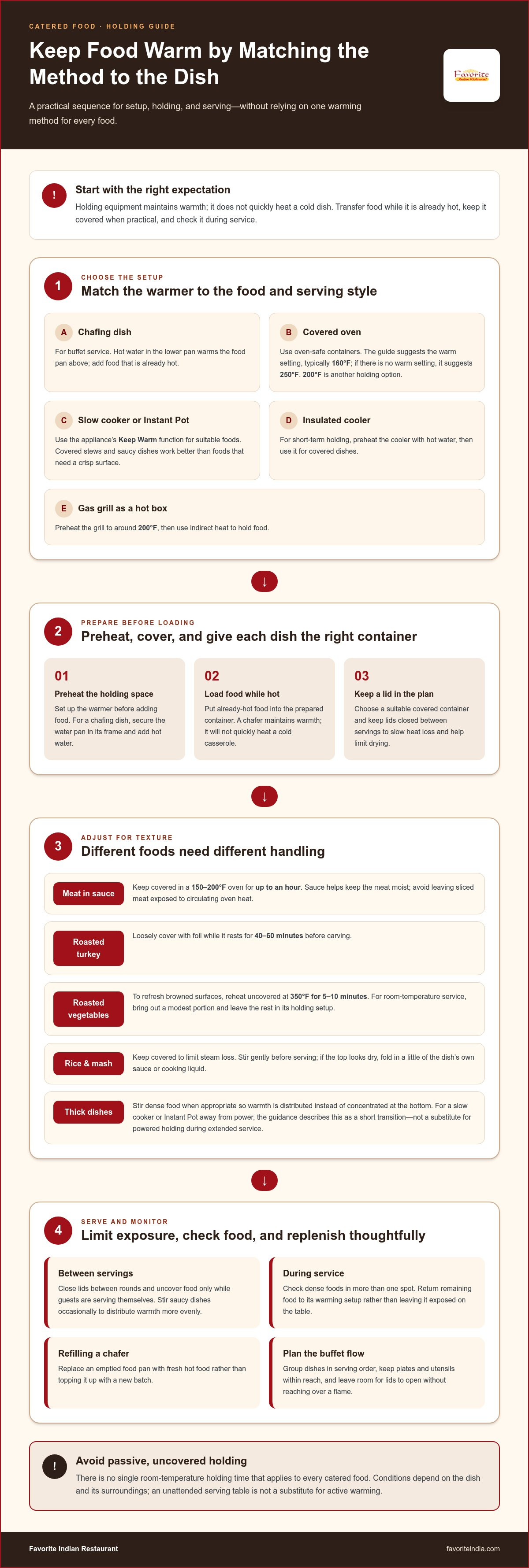
A single warming method rarely suits every dish. The practical answer to how to keep catered food warm is to match the setup to the food: use chafing dishes for buffet service, a slow cooker’s keep-warm setting for suitable dishes, an insulated cooler for short-term holding, or a grill set around 200 degrees as a hot box. Keep lids closed between servings to slow heat loss.
It’s easy to focus on equipment and overlook the details that help a meal stay inviting: preheating the holding space, choosing the right container, and limiting how often food is uncovered. This guide explains how to use each method, what it suits best, and where its limits matter, so you can plan a warm, appealing spread from setup through serving.
From buffet-ready chafers and oven holding to slow cookers, insulated coolers, and grills, there are practical options for different dishes and event setups. Learn how to keep serving smooth while preserving the texture and flavor that make a shared meal memorable.
Key Takeaways
- Choose a warming method that suits the dish and serving style, such as chafers for a buffet or a slow cooker for dishes suited to covered holding.
- Set up chafing dishes so hot water in the lower pan warms the food above, and keep lids closed between servings.
- Use a slow cooker’s keep-warm setting for suitable foods, and plan around how long the appliance will remain powered.
- Preheat an insulated cooler with hot water before using it to hold covered dishes for short-term serving.
- Turn a gas grill into a hot box by preheating it around 200 degrees, then use its indirect heat to hold food.
1. Chafing dishes for buffet-style meals
For a buffet, a chafing dish keeps food warm by heating water in its lower pan. The water transfers heat to the food pan above, helping maintain a steady serving temperature. Set the stand on a level, heat-resistant surface, then secure the water pan in the frame before adding hot water.
Next, fit the food pan above the water and add food that is already hot. A chafing dish maintains warmth, but it won’t quickly heat a cold casserole. Keep the lid closed between servings to slow heat loss, uncovering the pan only when guests are serving themselves. Stir saucy dishes occasionally to distribute warmth more evenly.
Choose pan capacity to match the food and buffet layout. A listed chafer set contains four 9-quart dishes, while a soup chafer holds 11 quarts. Smaller pans can make sense for a side dish that needs less serving space; separate pans also keep distinct dishes from sharing one crowded container. Leave room around each stand so lids can open without disrupting nearby serving utensils.
Chafing-dish and warming-equipment rental costs vary with the equipment type, quantity, rental duration, and local arrangements. Compare these details when estimating your setup, since no single price applies to every buffet.
For Sterno fuel, place the can in its designated holder beneath the water pan, then light it according to the can’s instructions. A listed disposable Sterno set includes six-hour fuel, but that stated duration doesn’t guarantee every dish will stay equally warm throughout. Keep the water pan filled as directed, monitor the food during service, and extinguish the flame according to the fuel instructions when finished.
Plan the buffet flow before lighting the fuel. Group dishes in serving order, put plates and utensils within easy reach, and position lids so guests can lift them without reaching over a flame. For longer service, replace an emptied food pan with fresh hot food rather than topping it up with a new batch. These steps keep the serving area orderly and limit unnecessary lid-opening and heat loss.
The listed disposable buffet set includes six pans measuring 10 by 12 inches and contains 33 pieces. The Sterno disposable set includes 6-Hour fuel and 10 pieces. Round dishes are 6 quarts each, made of 304 steel, and have glass lids; the electric dish has 9.5-quart capacity.
2. How to Keep Food Warm for Hours?
Keeping food warm for hours requires steady heat, suitable covered containers, and attention to each dish’s texture. There’s no single room-temperature holding time that applies to every catered food; conditions depend on the dish and its surroundings. Don’t treat an unattended serving table as a substitute for active warming, especially for moist dishes that cool as heat escapes.
A low oven can hold covered food between serving waves. Use the oven’s warm setting, typically 160°F; if it doesn’t have one, the guidance suggests setting it to 250°F. A 200°F oven is another option for holding food. Place dishes in oven-safe containers, keep them covered, and check the food itself as service continues.
Meat baked in sauce can stay covered in a 150–200°F oven for up to an hour. The sauce helps keep the meat moist, while the cover limits surface drying. Avoid leaving sliced meat exposed to the oven’s circulating heat. For a roasted turkey, loosely cover it with foil while it rests for 40–60 minutes before carving.
Vegetables need a different approach. Reheat roasted vegetables uncovered at 350°F for 5–10 minutes to help preserve their browned surfaces. If you’re serving vegetables at room temperature, bring out a modest portion and leave the rest in its holding setup. That way, the full batch isn’t left cooling while guests serve themselves.
Keep rice and mashed potatoes covered, since escaping steam can dry their surface. Stir gently before serving to distribute warmth. If the top looks dry, fold in a little of the dish’s own sauce or cooking liquid. Avoid vigorous stirring, which can make mashed potatoes heavy and pasty.
Fondue pots can keep smaller servings of soup, dips, or suitable warm drinks accessible at the table. Stir thicker dips to prevent them from settling against the heated base, and use the appliance as directed. A fondue pot helps with serving, but it doesn’t replace keeping the main batch properly warm.
Reheating and holding food can create problems if heat reaches only the edges, or if a dish stays exposed long enough to dry or scorch. Check dense foods in more than one spot and stir when appropriate. Keep serving portions covered between rounds, and return the remaining food to its warming setup rather than leaving it on the table.
3. Using a slow cooker or Instant Pot on the keep-warm setting
A slow cooker’s Keep Warm setting can hold suitable dishes after cooking, while its lid helps retain heat and moisture. Transfer food while it’s already hot, close the lid, and use the appliance’s intended setting. This holds food warm but doesn’t replace cooking or reheating. A slow cooker on Warm can keep food warm for an hour or more, depending on the appliance guidance and the dish.
An Instant Pot may also have a Keep Warm function. Follow the appliance’s instructions and keep the inner pot covered between servings. Thick stews and saucy dishes suit this method better than foods that need a crisp surface. Stir dense food before serving so warmth is distributed instead of concentrated at the bottom.
If you need to move a slow cooker or Instant Pot away from power, the cited guidance says it should keep food warm for at least an hour. Treat this as a short transition, not a substitute for powered holding during extended service. Keep the lid closed, minimize movement, and serve promptly after unplugging.
A rice cooker can hold cooked rice on its Warm function. Fluff the rice, close the lid, and avoid lifting it repeatedly, since escaping steam can dry the top layer. Follow the cooker’s instructions for holding rice and check its texture before serving. For dishes that don’t suit a rice cooker, a thermos can hold a small portion: preheat it with hot water, empty it, then add hot food and seal it.
Warming trays suit several serving dishes arranged on a flat surface; insulated carriers are more useful for transporting food. Chafing dishes work well for buffets with separate pans. The right choice depends on the dish, serving layout, and whether the food will stay in one place. For extended service, powered equipment or chafers provide a different setup from a sealed carrier designed for transport.
A Keep Warm display alone doesn’t show whether every part of a dish is evenly warm. Stir dense foods before serving, and check the center as well as the edges. If food has cooled, reheat it thoroughly before returning it to the appliance; don’t rely on a warming setting to heat a cool dish. Keep serving portions covered between rounds.
4. An insulated cooler for short-term warming
An insulated cooler can bridge the gap between the kitchen and the serving table when powered warmers aren’t available. It’s best treated as short-term holding, not as a replacement for active heat throughout a long meal. Guidance ranges from about 30 minutes to a couple of hours, depending on the cooler and how it’s used.
Preheat the cooler before packing it. Pour hot water inside, close the lid, and leave it for 15–20 minutes. Empty the water, dry the interior, then place covered, already-hot food containers inside. This warms the cooler’s interior first, so its cold surfaces don’t immediately draw heat from the containers.
Use containers with secure lids and arrange them upright to reduce spills during transport. A covered casserole or tightly sealed pot is easier to handle than an open serving pan. Keep the cooler closed after loading. Each time you open it, warmth escapes, so gather plates, serving spoons, and other supplies before lifting the lid.
For a buffet, keep the food in the cooler until the serving area is ready. Take out one container at a time, then close the lid while arranging the rest. If the meal includes rice, a saucy entrée, and vegetables, pack each dish separately. This lets you retrieve one without exposing the others to cooler air.
Don’t rely on an insulated cooler to reheat food. Add food while it’s hot, and use the cooler to slow cooling during a short transfer or wait. A cooler can hold casseroles and other hot foods for a couple of hours under suitable conditions, but another guidance estimate is about 30 minutes. The difference underscores why a cooler’s insulation, the food’s starting warmth, and repeated lid opening matter.
For longer service, transfer food to equipment designed for active warming once you reach the venue. A cooler has no heating element; it retains the warmth already inside. Keep the main containers closed and bring out smaller portions for serving to limit exposure of the stored food.
Use the cooler as a practical buffer between cooking, travel, and setup. Preheat it for 15–20 minutes, load hot food in covered containers, and keep the lid shut until serving. For a meal that needs warmth beyond short-term transport, plan a powered holding method instead of stretching the cooler’s role.
5. Using a grill as a hot box
A gas grill can serve as a makeshift hot box when an indoor oven isn’t practical. Preheat it to around 200 degrees, then use the grill’s enclosed space to hold covered, already-hot food. This method is for keeping food warm, not cooking it further. Keep the food away from direct flame so its edges don’t continue browning while the center waits to be served.
Set up the grill before bringing dishes outside. Clear the cooking surface, check that the grill is stable, and arrange covered containers nearby. Once the grill is preheated, place heat-safe containers inside and close the lid. The enclosed space helps retain warmth, while repeated lid-lifting releases it. Keep utensils and plates ready so guests can serve without long pauses.
Indirect heat is preferable for holding food because it limits direct exposure to the burner. On a gas grill, place containers away from the lit burner, not over its flame. If the grill has multiple burners, arrange them to create a cooler holding area. Don’t use a container that isn’t designed for heat, and follow the container maker’s instructions.
Choose foods that benefit from covered holding, such as a saucy entrée or casserole. A crisp dish may soften in the grill’s enclosed warmth, while a covered, moist dish is less exposed to drying air. Keep each dish in its own container, and stir a thick entrée before serving to distribute warmth throughout. The grill can’t compensate for food that wasn’t hot when placed inside.
An electric grill isn’t automatically interchangeable with a gas grill. The specific instructions and controls differ, so use only a holding setup suited to that appliance. Don’t assume the gas-grill guidance of around 200 degrees applies to an electric model. Keep food covered, monitor its warmth, and avoid placing containers where heating elements contact them.
For a planned meal, use the grill as a temporary holding space between the kitchen and serving table. Keep the lid closed until guests are ready, then bring out only the dish being served. If food needs to stay warm during extended service, equipment designed for holding offers more control than a grill used as a hot box. A grill works best as a practical bridge, not a substitute for dedicated warming equipment.
Favorite Indian Restaurant: Saturday Lunch Buffet
Favorite Indian Restaurant’s Saturday Lunch Buffet is a convenient choice for guests who want to enjoy a prepared meal without managing warming equipment at home. The Weekend Dinner Buffet is another option for an evening meal. For a gathering, Indian Food Catering can save you from preparing and holding every dish yourself.
Choose the option that fits your occasion: enjoy the Saturday Lunch Buffet, visit for the Weekend Dinner Buffet, or choose catering for an event. The Live Indian Grill Experience is another way to enjoy Indian grill dishes.
Contact Favorite Indian Restaurant to discuss catering or plan a visit for the buffet.
Plan the serving flow before the day begins
A relaxed meal starts with a clear serving plan. Before the event, map out when dishes will leave the kitchen, where they’ll wait, and who will bring each one to the table. This helps you choose equipment around the meal instead of improvising as guests arrive. It also clarifies whether preparing food at home or choosing a catered meal better suits the occasion.
For a gathering where you’d rather spend less time managing the kitchen, explore the food options at Favorite Indian Restaurant. Planning how to keep catered food warm is one part of hosting; choosing a meal that fits your gathering can shape the rest of the experience. Explore Favorite Indian Restaurant’s offerings and take the next step toward a welcoming meal with family and friends.
Frequently Asked Questions
How to Keep Food Warm for Hours?
Choose equipment that provides steady heat for the length of service, then organize dishes according to their serving needs. Chafing dishes suit buffet pans, while a slow cooker works for appropriate moist foods. Keep each dish covered between servings and monitor the food itself, not just the appliance setting. For a staggered meal, bring out smaller portions as needed instead of exposing every dish at once.
How to keep catered food warm without drying it out?
Keep moisture-sensitive dishes covered and away from intense, direct heat. To keep catered food warm without drying it out, choose a covered vessel and the gentlest suitable warming method. For sliced meat, a little accompanying sauce can help maintain moisture. Check the dish periodically, and serve crisp foods separately if trapped steam would soften them.
How to keep catered food warm in the oven safely?
Use an oven-safe covered dish, and check the food’s temperature with a food thermometer instead of relying on the oven dial. Keep the dish away from direct contact with heating elements, and stir dense foods before serving to check warmth throughout. Don’t put plastic containers in the oven unless the manufacturer specifically labels them oven-safe. If the food cools, reheat it thoroughly rather than expecting a holding setting to reheat it.
How to transport catered food while keeping it hot?
Pack hot dishes in covered, heat-safe containers and keep them stable during the trip. Arrange them in serving order so the first dish is accessible without unpacking everything. Limit stops and avoid opening containers en route. At your destination, move the food promptly into its serving setup, then keep backup portions covered until needed. This reduces handling and helps preserve warmth and presentation.
How to keep different catered foods warm, including meat, sides, and sauces?
Give each food its own covered container and warming method. Keep sauced meat with some sauce, hold rice or mashed potatoes covered, and avoid trapping steam around roasted vegetables if crisp edges matter. Warm sauces separately so they’re easy to stir and serve without disturbing other dishes. Use separate serving utensils for each container, and bring out delicate sides in smaller batches to protect their texture.
How long can catered food safely sit out at room temperature?
There’s no single room-temperature holding time for every catered food; it depends on the dish and its surroundings. Use active warming instead of leaving food unattended on a serving table.
What are the food-safety risks of reheating or holding catered food at warm temperatures?
Food left in the 40–140°F range can cool, and an unattended serving table is not a substitute for active warming. Holding time varies by dish and surroundings, so keep food in a suitable warming setup and check it during service.