A pre-wedding meal should welcome every guest, not just look beautiful on the table. With pre-wedding event catering in Dublin, share allergies and dietary needs early so the caterer can plan suitable menu choices and service together.
It’s understandable to want everyone to enjoy the food without making the celebration feel complicated. Clear details about allergies, intolerances and dietary preferences help shape the menu. Be specific about what guests need and share the information while discussing dishes.
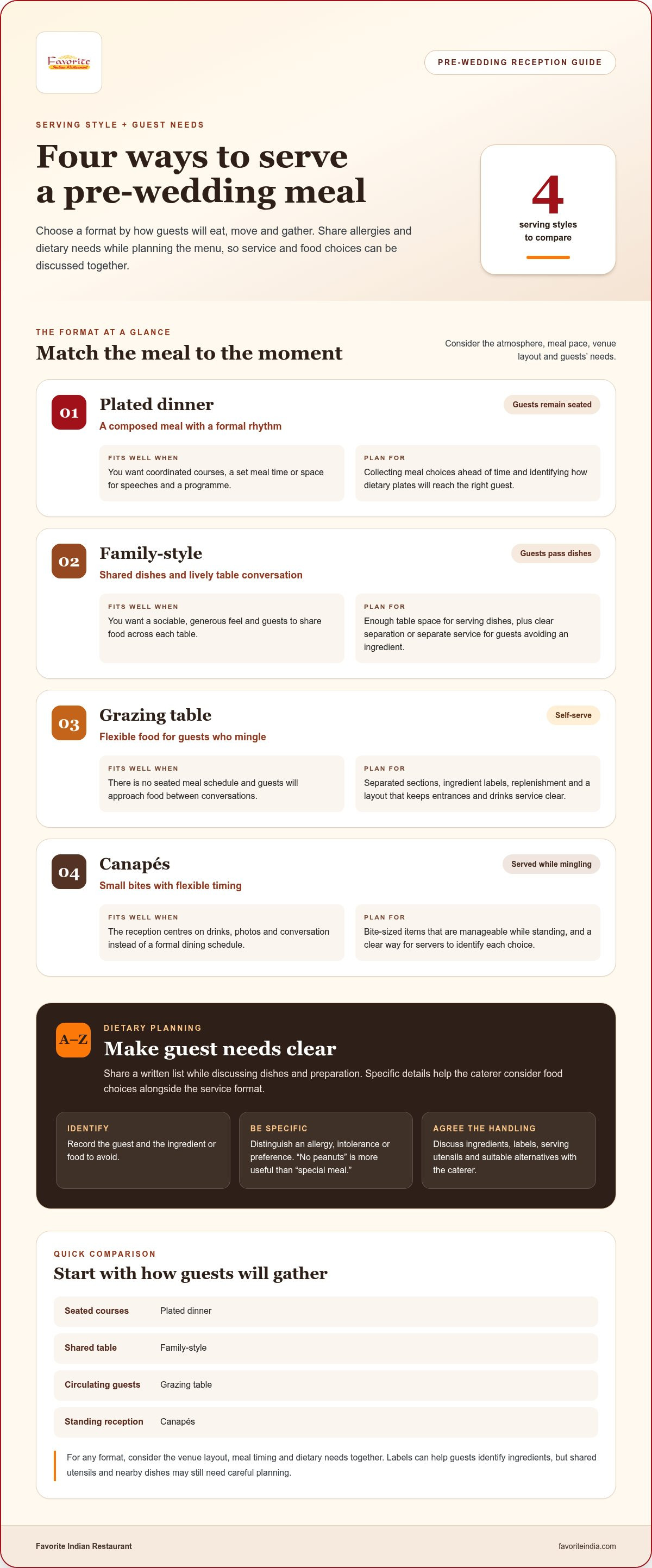
Serving style shapes the gathering, too. Plated dinners create a formal rhythm, family-style meals invite sharing, grazing tables encourage mingling, and canapés suit a relaxed reception. Compare these four formats to choose an approach that fits your event, guests and preferred atmosphere.
Key Takeaways
- Share guests’ allergies and dietary needs clearly during menu planning so they can be considered alongside the dishes and serving format.
- Compare plated dinners, family-style meals, grazing tables and canapés by the atmosphere and pace each creates.
- Choose a serving style that suits how guests will gather, dine and move through the celebration.
- Think through dietary needs and event flow together to make the meal feel welcoming as well as well organised.
Plated dinners, family-style meals, grazing tables and canapes
Serving style affects how guests eat, move and interact at a pre-wedding reception. Plated dinners give the meal a formal rhythm, while family-style dishes encourage conversation across each table. Grazing tables and canapés suit celebrations where guests mingle rather than remain seated. For an event in Dublin, California, consider the venue layout, meal timing and guests’ dietary needs before choosing.
Plated dinners: a composed, elegant meal
With plated service, each guest receives a prepared dish at their seat. This works well when hosts want a coordinated meal, clear courses and a set time for speeches. Guests can remain seated as courses arrive, keeping attention on the couple or programme. Collecting meal choices in advance also helps match each guest with their selected dish, such as a vegetarian entrée.
Ask how dietary meals will be identified and served. A seating plan or meal marker can help staff bring the right plate to each guest. Share specific allergy details, not just broad labels: “contains tree nuts” gives more useful direction than “special diet.” Discuss ingredients and preparation with the caterer so any alternative suits the guest’s needs and the kitchen’s process.
Family-style meals: shared dishes at the table
Family-style service places serving dishes on each table for guests to pass around. It creates a generous, sociable atmosphere, especially when relatives and friends are meeting before the wedding. Guests might share vegetable sides, bread and main dishes, choosing their own portions. This is less formal than plated service, but tables need enough space for both place settings and serving dishes.
Dietary needs call for thoughtful placement and clear separation. A guest avoiding an ingredient may need a separately served dish rather than a shared platter. Tell the caterer which guests have allergies or dietary restrictions, and discuss how dishes will be labelled and handled. Shared utensils can make it harder to avoid ingredients, so arrange the table to make suitable dishes easy to identify and reach.
Grazing tables: flexible food for mingling
A grazing table makes food part of the reception setting. Guests can approach it between conversations, making this option useful when there’s no seated meal schedule. Arrange clearly separated sections, such as fruit, savoury bites and breads, and place ingredient labels beside each dish. Plan the layout around the venue’s flow, leaving room for guests to gather without blocking entrances or drinks service.
Grazing suits informal celebrations, but needs active organisation. Replenishment, serving utensils and tidy presentation matter as guests return to the table. Labels alone may not address cross-contact from shared utensils or nearby dishes. Discuss ingredients, handling and suitable alternatives with the caterer before finalising the display, so guests can find relevant information without guessing what a dish contains.
Canapés: small bites, flexible timing
Canapés are bite-sized items served while guests stand or mingle. They suit receptions built around drinks, photos and conversation, especially when hosts want food available without a formal dining schedule. Consider how guests will eat each item: a one-bite canapé is easier to manage while standing than food requiring a knife and fork. Ask how servers will identify the different choices.
For a practical comparison, match the format to the event’s priorities:
- Choose plated dinners for seated courses and a structured programme.
- Choose family-style service for shared dishes and lively table conversation.
- Choose grazing when guests will circulate and serve themselves.
- Choose canapés for a standing reception with food served in small portions.
Whichever style you select, give the caterer a written list of allergies, intolerances and dietary preferences. Name the affected guest where appropriate, identify the ingredient, and discuss what service arrangement would help them choose safely. For broader event planning, align the catering options with the chosen format and guests’ needs. A clear plan helps the meal feel natural, whether it serves guests at a table or follows them through the reception.
Your wedding
For pre-wedding event catering in Dublin, California, start with the celebration’s purpose, guest list and venue. An engagement gathering, rehearsal dinner and welcome reception each have a different pace. Decide whether guests will sit for a meal, circulate between conversations or follow a set programme. That choice shapes the menu discussion, room layout and service plan.
Map the venue before finalising details. Note the entrance, dining area, kitchen access, nearby power outlets and places guests may gather. A private room has different movement patterns from a home or outdoor space. Share practical details with the caterer, including setup access and any restrictions the host has been given. This helps align preparation and service with the setting.
Build the guest count from confirmed invitations and keep a record of changes. Attendance affects food quantities, seating, table arrangements and staffing. Make a separate note of children, older relatives and guests who may need easier access to food or seating. For example, a long buffet queue could be inconvenient for someone using a mobility aid, so consider the layout alongside the menu.
Collect dietary information in a consistent format. Record the guest, the ingredient or food to avoid, and whether the concern is an allergy, intolerance or preference. “No peanuts” is more actionable than “special meal.” Share details directly with the caterer while discussing dishes and preparation. For allergies, discuss how ingredients and serving utensils will be identified, then share the agreed plan with the event coordinators.
Fit the meal into the event schedule before fixing speeches or other formal moments. If guests arrive for drinks before dinner, account for that transition in the service plan. A rehearsal dinner may need a different sequence from a welcome reception, particularly when guests arrive at different times. Share the run of show with the catering team, including arrival, meal service and when the venue needs clearing.
Clarify what the catering arrangement covers. Wedding catering in Dublin, California, can include food preparation, setup, serving staff and cleanup. Ask for each element to be described in the proposal so everyone knows who handles table setup, service coordination and clearing. Confirming responsibilities helps prevent assumptions, such as expecting venue staff to manage tasks assigned to the caterer.
Wedding catering costs in Dublin, California, depend on guest count, menu and service type. A larger guest list affects ingredient quantities and staffing needs; a more involved menu can affect preparation. Service style also influences how food reaches guests and what coordination the event requires. Compare proposals using the same details, rather than focusing on a total without reviewing what each arrangement includes.
Use this planning sequence to keep decisions connected:
- Set the event’s purpose, date and venue.
- Estimate attendance and record access or seating considerations.
- Gather allergies, dietary needs and meal preferences.
- Discuss menu choices, service responsibilities and setup details.
- Share the schedule and final event information with everyone coordinating.
Start planning a few weeks in advance to allow time to discuss the menu and confirm staff. Keep one current event document with the guest count, venue details, dietary notes and schedule, and update it when details change. This gives the host and caterer a shared reference, helping the meal fit the celebration rather than interrupt its flow.
Best Indian Food in Hayward, CA | Favorite Indian Restaurant | Indian Food near me: Saturday Lunch Buffet
Best Indian Food in Hayward, CA | Favorite Indian Restaurant | Indian Food near me offers a Saturday Lunch Buffet for guests gathering over Indian food in Hayward. If you’re planning a pre-wedding celebration locally, it can be a relaxed way to share a meal before the wedding day. For an event menu, explore the Indian food catering option and consider how it fits your gathering and guests’ dietary needs.
The Weekend Dinner Buffet and Live Indian Grill Experience offer other ways to enjoy a shared meal. Each suits a different occasion, from an informal get-together to a lively evening featuring freshly prepared grill dishes. Favorite Indian Restaurant also provides Indian food catering and banquet services for celebrations. For events in Dublin, California, discuss the location and event arrangements as part of planning.
Visit favoriteindia.com to explore the options or contact Favorite Indian Restaurant.
Shape a celebration that feels like yours
Before confirming the menu, decide what you want guests to remember about the gathering. It might be a relaxed evening of conversation, a polished reception or a meal that brings both families together. Use that intention to guide choices about presentation, timing and the overall dining experience. A clear direction helps the food feel connected to the occasion, not like a separate detail.
For pre-wedding event catering in Dublin, assign one person to gather updates and share final decisions with the caterer. This can reduce crossed messages as plans develop. Leave room for the menu to reflect your preferences and the character of the celebration, while keeping guests’ needs at its centre.
If Indian food would suit your gathering, explore Favorite Indian Restaurant’s Indian food catering and dining options. Visit Favorite Indian Restaurant to explore the possibilities and take the next step toward a celebration that feels warmly your own.
Frequently Asked Questions
Can caterers handle allergies and dietary needs?
Yes, caterers can plan menus around guests’ dietary needs. Give one event organiser responsibility for sharing sensitive details with the catering team. This keeps medical information off general guest lists and table plans. The organiser can relay agreed meal arrangements discreetly to each guest, without making dietary needs a focus of the celebration.
How far in advance should I book catering for an event?
Start the booking conversation once your event date and venue are set. Those details let you discuss whether the proposed arrangement fits the location and the event itself. For pre-wedding event catering in Dublin, California, include the occasion and the planned flow of the gathering in your initial enquiry. If plans are still developing, distinguish confirmed details from estimates so the proposal reflects what you know.
Is there a minimum spend for event catering?
Some catering arrangements may include a minimum spend, so review the written proposal for its terms. Check whether any stated threshold applies to food alone or to the full event arrangement. Look for how the proposal treats applicable taxes or service charges, too. These details help you compare the commitment accurately, without mistaking a food subtotal for the final amount.
What does event catering cost in Dublin, California?
There isn’t one standard catering price for every event in Dublin, California. Request a quote based on the gathering you’re planning, then review the proposal’s scope. A per-person food figure may not cover every part of the arrangement. Comparing the same inclusions helps clarify what each quoted amount covers and supports an informed decision.
What are typical catering prices per person in Dublin for engagement parties, rehearsal dinners, and hen parties?
There isn’t a single per-person rate for engagement parties, rehearsal dinners and hen parties in Dublin, California. The occasion alone doesn’t define the food or service arrangement. Request a quote for your specific gathering and review the proposed menu and service. This gives you an estimate relevant to your event instead of a generic figure that may not match your plans.
Can Dublin caterers accommodate vegan, vegetarian, gluten-free, halal, and allergy-friendly diets?
Caterers can plan menus for different dietary requirements, but each needs distinct consideration. Vegan and vegetarian meals are not interchangeable, and gluten-free preferences differ from allergy-related needs. Halal is a separate dietary requirement. For a gathering in Dublin, California, describe needs accurately in your planning notes and consider how guests will identify suitable choices when the meal is served.