The tandoor isn't just an oven; it's a 5,000 year old culinary time machine that uses three types of heat to create flavors modern technology cannot replicate. You might think tandoori cooking is simply another version of standard BBQing, but the reality is far more sophisticated and sensory. It's a method where radiant heat, convection, and smoke work in harmony to produce that signature charred exterior and succulent interior. Understanding this ancient craft changes how you appreciate every bite of your meal.
If you've ever felt uncertain about which dishes truly shine when pulled from the clay walls or struggled to find genuine Punjabi methods in the East Bay, you're not alone. This guide explores the fascinating mechanics of clay oven cooking and helps you identify iconic staples like pillowy Naan and spiced Seekh Kababs. You'll discover the rich history behind these flavors and learn about a beloved Hayward restaurant that has shared this authentic expertise for over 25 years. Get ready to experience the warmth and tradition of the live Indian grill.
Key Takeaways
- Understand why temperatures exceeding 900°F are essential for achieving the distinct, smoky flavor profile unique to tandoor cooking.
- Explore the art of the marinade and the specific spices required to master iconic dishes like Paneer Tikka and Seekh Kababs.
- Learn the "sizzle test" and other expert markers to help you distinguish authentic Punjabi methods from standard restaurant offerings.
- Discover a premier destination on Mission Blvd in Hayward where traditional clay ovens have been the heart of the kitchen since 1998.
- Uncover the technique behind perfect, pillowy naan baked directly on the searing clay walls for an unmistakable texture.
The Ancient Legacy of the Tandoor: More Than Just a Clay Oven
The tandoor is a testament to culinary endurance, serving as the heartbeat of North Indian kitchens for millennia. At its simplest, it's a cylindrical clay or metal oven designed to reach scorching temperatures using charcoal or wood fuel. Its story begins nearly 5,000 years ago within the Indus Valley Civilization, where archaeologists discovered early versions of these ovens. From those ancient settlements to the opulent royal kitchens of the Mughal Empire, this unique cooking vessel has evolved into a global symbol of artisanal craftsmanship.
In the villages of Punjab, this oven was more than a tool; it was a communal hearth. It served as a gathering point where neighbors shared stories while baking their daily bread. This tradition of shared meals and open-fire cooking remains a core value at Favorite Indian Restaurant, where we've honored these authentic Punjabi methods in Hayward since 1998. The smoky aroma that greets you is a direct link to those ancient village squares.
Origins and Etymology of the Word
Language reflects the long journey of this cooking style across borders. The word's roots trace back to the Persian tanur and the Sanskrit kundu, illustrating how the design migrated across Central Asia into Northern India. A Tandoor oven traditionally relies on thick clay walls to retain intense heat, a design that hasn't changed much since its inception. A pivotal moment in its cultural history occurred during the time of Guru Nanak Dev Ji, who promoted the Sanjha Chulha, or common oven. This practice encouraged people of all backgrounds to cook together, transforming the oven into a powerful symbol of equality and community hospitality.
The Evolution of the Modern Punjabi Tandoor
While early versions were often underground pits, the modern Punjabi style is an above-ground cylinder that allows for greater control and versatility. During the 20th century, Punjabi chefs brought these ovens to global fame, sparking a worldwide obsession with charred meats and pillowy breads. Today, you'll find a few key differences in construction:
- Traditional Clay: These offer the most authentic flavor due to the minerals in the clay and the way they absorb smoke over time.
- Modern Stainless Steel: These are often used in commercial settings for durability, though they still require clay liners to maintain the necessary heat retention.
At our location on Mission Blvd, we believe the best results come from respecting these traditional roots. Our live Indian grill experience showcases the same expert craftsmanship that has defined Punjabi cuisine for generations. It's a connection to the past that you can taste in every bite of our hand-crafted specialties.
The Science of Sizzle: How Tandoor Cooking Works
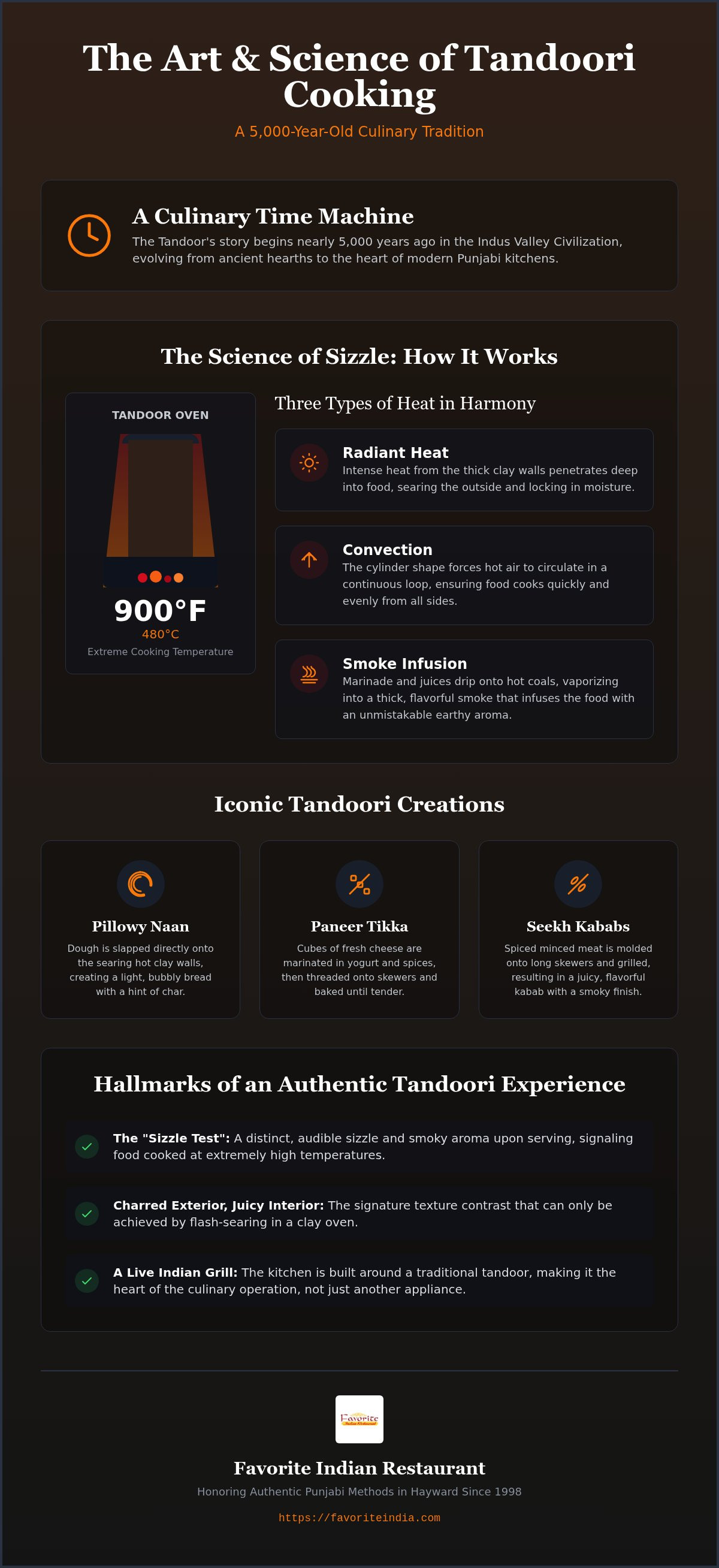
The magic of a tandoor lies in its ability to harness three distinct types of heat simultaneously. While a standard backyard grill relies primarily on direct heat from below, this clay cylinder creates a high-pressure environment that mimics a convection oven, a grill, and a smoker all at once. Temperatures inside can easily exceed 900°F (480°C). This extreme heat is what creates the "sizzle" that diners love. It flash-sears the outside of meats and breads, locking in juices before they can evaporate, resulting in a texture that's crispy on the outside and incredibly tender within.
Clay is the secret weapon in this process. Unlike metal, which reflects heat harshly, clay absorbs it and releases it slowly and evenly. This porous material also maintains a specific level of humidity inside the chamber. As fats and marinades drip from the skewers onto the glowing charcoal at the base, they vaporize instantly. This creates a thick, flavorful smoke that circulates through the oven, infusing the food with that unmistakable earthy aroma that defines Punjabi cuisine.
Radiant vs. Convection Heat
The thick clay walls act as a massive heat reservoir, providing intense radiant heat that penetrates deep into the center of thick cuts of meat. At the same time, the narrow top of the oven forces hot air to circulate in a continuous loop. This convection effect ensures that a Seekh Kabab cooks as quickly from the top as it does from the bottom. This environment is particularly vital for Naan. The dough is slapped directly onto the searing clay walls, where it sticks through conduction, bubbles up from the radiant heat, and browns from the circulating air.
The Importance of Traditional Seasoning
An authentic tandoor isn't ready for use the moment it's built. It requires a meticulous seasoning process to prevent the clay from cracking and to ensure the bread releases properly from the surface. Chefs often use a paste made of spinach, mustard oil, and yogurt to coat the interior walls. This ritual creates a natural non-stick surface and begins the oven's "flavor memory."
Over decades of service, the clay absorbs the essences of thousands of marinades and spices. A veteran oven, like those found in our live Indian grill in Hayward, produces a depth of flavor that a brand-new oven simply cannot match. This seasoned environment is why a meal prepared by experienced hands tastes so much more complex than a standard home-grilled version. It's a culinary legacy built one meal at a time.
Iconic Dishes: Exploring Tandoori Specialties and Breads
The tandoor transforms raw ingredients into masterpieces of texture and flavor. Mastering Tandoori Chicken requires a deep understanding of marination. We use a thick base of spiced yogurt to tenderize the meat, infusing it with ginger, garlic, and a proprietary blend of aromatic spices like cumin and coriander. The high heat of the clay oven then creates that iconic charred crust while keeping the inside incredibly moist. This delicate balance is the hallmark of authentic Punjabi cooking that we've shared with the Hayward community for decades.
Vegetarian diners find equally satisfying options in this ancient oven. Paneer Tikka features cubes of fresh cheese marinated in robust spices, resulting in a smoky, creamy delight. Roasted vegetables also benefit from the intense heat, which caramelizes their natural sugars and adds a layer of complexity that standard roasting simply can't achieve. These dishes prove that the clay oven is as versatile as it is traditional.
The Secrets of Perfect Tandoori Naan
No North Indian meal is complete without bread baked in the tandoor. The process is a physical art form. Our chefs hand-stretch the dough and slap it directly onto the searing inner clay walls of the oven. Because the oven is so hot, the dough bubbles instantly. This creates the characteristic airy pockets and those beautiful, charred "leopard spots" on the bottom. It's a texture that combines a soft, pillowy top with a crisp, smoky base. You can explore our authentic Naan and Tandoori menu to see the full variety of flavors we offer, from classic butter to garlic-infused specialties.
Sizzling Kebabs and Halal Specialties
Precision is the defining trait of a great kebab. For our Chicken Seekh Kabab, minced meat is expertly molded onto long metal skewers. These skewers conduct heat into the center of the meat, ensuring even cooking while the radiant heat of the oven crisps the outside. We take immense pride in our Halal Indian Grill options, maintaining the highest standards of preparation for our community.
A perfectly cooked kebab should reveal a juicy interior the moment you bite into it, contrasted by a smoky, charred exterior. Whether you're enjoying our lamb specialties or our signature chicken dishes, each piece is a result of over 25 years of refined technique. The "sizzle" isn't just a sound; it's the sign of a meal prepared with genuine care and tradition in the heart of Hayward.
The Diner's Guide: How to Spot an Authentic Tandoori Experience
Identifying a genuine Punjabi experience requires more than just looking for a name on a menu. You want to see the tandoor in action. Transparency in the kitchen is the first sign of quality. At Favorite Indian Restaurant, our open approach allows you to witness the expert craftsmanship of our live Indian grill that has defined our kitchen since 1998. When your platter arrives, listen for the "sizzle test." Authentic tandoori meat should arrive at your table piping hot, still crackling from the intense radiant heat of the clay oven. This sound is your guarantee that the food was prepared fresh to order, not reheated in a microwave.
Longevity serves as a powerful marker of mastery in the culinary world. With over 25 years of serving the Hayward community, our chefs have refined the art of the clay oven to perfection. While the smoky, charred flavors of the grill are exceptional on their own, they truly shine when combined with a rich sauce. We recommend pairing your tandoori specialties with our Chef’s Signature Indian Curries to create a balanced, multi-dimensional meal. The contrast between the dry, smoky kababs and a velvety butter chicken or spicy lamb korma is a hallmark of a professional North Indian feast.
What to Look for in a Tandoori Menu
A truly authentic tandoor menu focuses on specific Punjabi and North Indian regional recipes rather than generic offerings. Look for a robust variety that includes both Halal meat options and vegetarian staples like Paneer Tikka. Freshness is the ultimate indicator of quality. You should be able to tell the difference between a freshly slapped Naan, which boasts irregular bubbles and charred spots, and a uniform, pre-packaged alternative. If the bread doesn't have that signature smoky aroma from the clay walls, it isn't the real thing. Our menu emphasizes these artisanal details, ensuring every guest experiences the depth of our culinary heritage.
The Best Way to Feast: Buffets vs. A La Carte
If you're new to these flavors or want to explore the full range of our grill, a buffet is the ideal choice. Our Saturday Lunch Buffet, served from 11:30 AM to 2:30 PM, offers a fantastic opportunity to sample multiple tandoori items in one sitting. For a more celebratory family gathering, our Weekend Dinner Buffet on Friday and Saturday evenings from 5:00 PM to 9:30 PM provides an abundant spread of traditional favorites. Whether you prefer the curated experience of a la carte or the variety of an all-you-can-eat feast, you'll find the same commitment to quality in every dish. Discover why diners from Castro Valley and San Leandro visit our Indian restaurant in Hayward for an unforgettable meal.
Experience the Live Indian Grill at Favorite Indian Restaurant
Stepping into our dining room at 24052 Mission Blvd is an invitation to witness a legacy of fire and flavor. The tandoor isn't hidden away in a back kitchen; it's the glowing heart of our establishment. For over 25 years, we've remained dedicated to the artisanal methods that make Punjabi food so distinctive. Our expert chefs use traditional clay ovens to ensure that every skewer of meat and every piece of bread carries the authentic smoky essence of North India. It's a sensory experience that brings the community together over shared plates and sizzling platters. You can Book a table for our Live Indian Grill experience to see this ancient art for yourself.
25 Years of Culinary Tradition in Hayward
Our journey began in 1998 with a simple mission: to act as a proud cultural ambassador for authentic North Indian flavors. Over the decades, Favorite Indian Restaurant has grown into a neighborhood staple. We serve guests from San Leandro, Castro Valley, Fremont, and Union City with the same warmth we'd offer in a Punjabi village. This commitment to high-quality hospitality is why families have celebrated their milestones with us for a generation. We don't believe in shortcuts. We believe in the patience required to season a clay oven and the skill needed to balance complex spice blends.
From Weekend Buffets to Private Banquets
Whether you're looking for a casual lunch or a grand celebration, we offer versatile ways to enjoy our craft. Our Live Indian Grill experience features continuous tableside service of our finest skewers. For those seeking Halal Indian food, we provide Zabiha Halal options prepared with the utmost integrity. If you're planning a wedding or corporate event, our Banquet Services provide an elegant space and a customized menu to impress your guests.
We also make it easy to bring the taste of the tandoor to your own table through our Online Ordering system for takeout and delivery. From our Friday and Saturday dinner buffets (5:00 PM to 9:30 PM) to our Saturday lunch buffet (11:30 AM to 2:30 PM), we're here to share the richness of our heritage with you. Our doors are always open to the East Bay community, offering a reliable and sophisticated space for everyone to enjoy the true art of Punjabi cooking.
Savor the Legacy of the Clay Oven
The journey through the history and science of the tandoor reveals a culinary tradition that is as much about community as it is about flavor. You've discovered how this ancient vessel uses radiant heat and convection to create textures that modern ovens simply can't replicate. From the charred perfection of a Seekh Kabab to the pillowy softness of freshly slapped Naan; every dish tells a story of artisanal skill and cultural pride. Recognizing these authentic markers ensures that your next meal is more than just dinner; it's a sensory connection to a 5,000 year old heritage.
Favorite Indian Restaurant has proudly served as a cultural ambassador in Hayward since 1998. Our kitchen remains dedicated to the authentic Live Indian Grill experience, featuring a Halal-friendly North Indian menu that honors the traditional recipes of Punjab. Whether you're joining us for a celebratory weekend buffet or an intimate dinner; you'll find a space that is both sophisticated and heart-centered. We invite you to gather your friends and family to experience the warmth of our hospitality firsthand.
Taste the Art of the Tandoor: Visit Our Hayward Location Today!
Frequently Asked Questions
What is the difference between a tandoor and a regular grill?
A tandoor uses a combination of radiant heat, convection, and smoke within a clay cylinder, while a regular grill typically relies only on direct heat from below. The clay walls of the oven retain moisture and reach temperatures over 900°F, flash-searing meats and breads. This creates a unique smoky flavor and tender texture that a standard BBQ grill cannot replicate, making it the superior choice for authentic Punjabi specialties.
Is tandoori chicken always spicy?
Tandoori chicken is known for its vibrant red color and aromatic profile, but it doesn't have to be overwhelmingly spicy. The heat level depends on the specific blend of Kashmiri chili and spices used in the yogurt marinade. While it carries a robust flavor from ginger, garlic, and garam masala, the spice level is often balanced by the cooling effect of the yogurt. You can request a milder preparation when ordering a la carte.
Does Favorite Indian Restaurant offer Halal tandoori options?
Yes, Favorite Indian Restaurant provides authentic Zabiha Halal options for our guests in the East Bay. We maintain high standards of preparation for our Halal Indian grill, including popular items like our Chicken Seekh Kababs and Tandoori Chicken. Our commitment to serving the diverse community in Hayward and surrounding areas like Union City and Fremont means we prioritize ingredient integrity and traditional Punjabi methods across our entire menu.
Can I order tandoori naan for takeout or delivery in Hayward?
You can easily enjoy our fresh tandoori naan at home through our online ordering platform. We offer convenient takeout and delivery services for residents in Hayward, Castro Valley, and San Leandro. While naan is best enjoyed fresh from the tandoor walls, our packaging helps maintain its pillowy texture and smoky aroma during transit. It remains the perfect accompaniment to our signature curries and grilled kebabs for a cozy night in.
What are the best tandoori dishes for beginners to try?
For those new to clay oven cooking, we recommend starting with Tandoori Chicken or Chicken Seekh Kababs. These dishes showcase the classic smoky flavor and tender texture that the tandoor provides. Vegetarian beginners often love our Paneer Tikka, which features marinated cubes of fresh cheese charred to perfection. Pairing these with a basket of garlic naan allows you to experience the full spectrum of traditional North Indian flavors in a single meal.
When is the best time to visit the Indian buffet at Favorite Indian Restaurant?
The best time to visit depends on whether you prefer a mid-day feast or an evening celebration. Our Saturday Lunch Buffet runs from 11:30 AM to 2:30 PM, offering a wide variety of fresh specialties. If you're looking for a weekend dinner, we host our buffet on Friday and Saturday evenings from 5:00 PM to 9:30 PM. These times are perfect for sampling our live Indian grill items alongside our signature Punjabi curries.