A memorable catered event depends less on an oversized menu than on a plan that fits your guests, occasion, and venue. If you’re wondering how to host a successful catered event, start by estimating attendance, identifying guest needs, and checking what the venue can accommodate. Those details help you make practical choices before event-day pressure sets in.
You don’t need every detail settled before contacting a caterer. A preferred date, approximate guest count, venue information, meal timing, and a few menu preferences are enough to begin a useful conversation. Share any known dietary requests early, and ask which details the caterer needs before confirming arrangements.
This guide walks through the planning sequence, from shaping the guest list and menu to choosing a service style and coordinating event-day details. You’ll find questions to ask so expectations are clear on both sides. If Punjabi and North Indian cuisine suits your gathering, tandoori specialties, curries, and naan are examples to discuss. Confirm current catering-menu options and arrangements directly with the caterer.
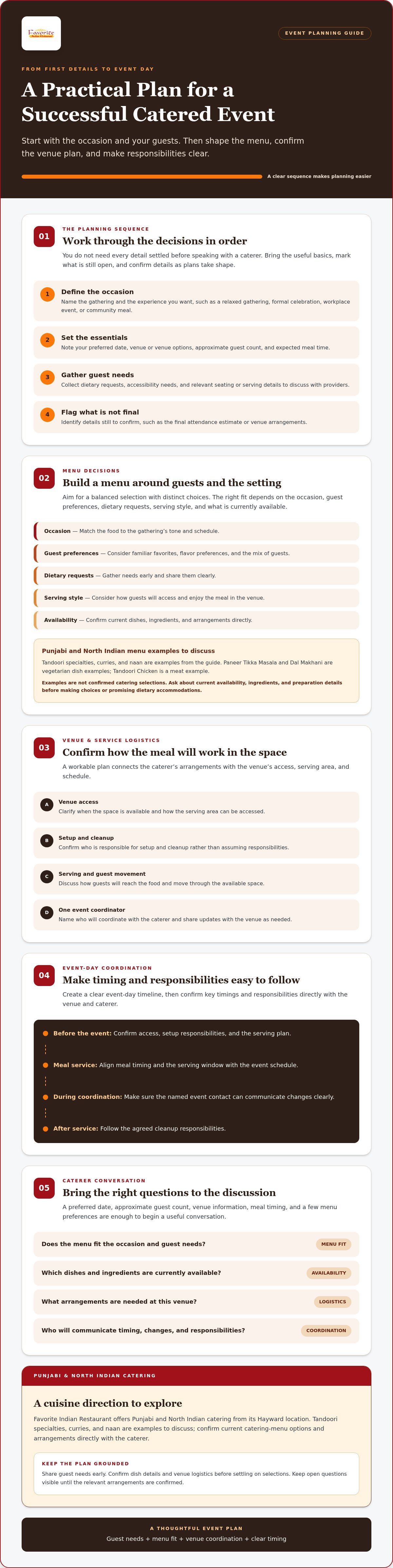
- To plan how to host a successful catered event, work through the decisions in sequence, from the occasion and guest needs to the menu and logistics.
- Use a menu checklist to compare guest preferences, dietary requests, serving style, and current dish availability before settling on selections.
- Before confirming arrangements, clarify venue access, setup and cleanup responsibilities, serving plans, and who will coordinate with the caterer.
- Build a clear event-day timeline and confirm key timings and responsibilities directly with the venue and caterer.
- Ask about menu fit, event arrangements, current availability, and communication. Favorite Indian Restaurant offers Punjabi and North Indian catering from its Hayward location.
How to Host a Successful Catered Event: Start With the Occasion and Guests
To plan how to host a successful catered event, define the occasion, likely guest count, venue, meal timing, dietary needs, and key logistics before confirming arrangements. You don’t need every detail finalized before speaking with a caterer, but an early estimate and a realistic venue plan make the conversation more focused. They also help you ask whether the menu and serving approach suit the people attending and the space available.
Start with this simple sequence:
- Name the occasion and experience. Decide whether you’re planning a relaxed gathering, formal celebration, workplace event, or community meal.
- Set the basics. Note your preferred date, venue or venue options, approximate guest count, and expected meal time.
- Gather guest needs. List dietary requests, accessibility needs, and any seating or serving details to discuss with providers.
- Identify open questions. Flag details that still need confirmation, such as the final attendance estimate or venue arrangements.
This preparation gives a caterer useful context without locking you into choices too early. For a general overview of the service, Catering describes the range of ways food may be prepared and provided for events.
What should you decide before contacting a caterer?
Bring the occasion, preferred date, venue, approximate guest count, and meal timing into the first conversation. Then describe the atmosphere you want. A formal celebration may call for a different menu and serving plan than a casual family gathering; exploring seasonal offerings and special culinary features at venues such as Nara Thai Kitchen can provide inspiration for an elevated event experience. Share dietary requests and practical needs, including access to the serving area, seating arrangements, and how guests will move through the space. These details help providers suggest relevant options instead of guessing at your priorities.
How do event type and guest list shape the plan?
Different gatherings have different planning priorities. Weddings and religious celebrations call for thoughtful attention to guest needs, meal timing, and coordination among family members or organizers. For corporate and school events, identify the decision-maker, schedule, and serving window so food fits the program. Birthdays and family gatherings may need flexible seating and dishes suited to a mix of ages. Community celebrations benefit from clear attendance estimates and a named event coordinator.
Build your estimate from the people you’ve invited and the responses you’ve received, then update it as plans firm up. Pair that estimate with the venue plan: where food can be served, when the space is available, and what arrangements still need confirmation. Together, these basics help you compare options and move into menu planning with a clearer picture of the gathering you’re creating.
Choose a Catered Event Menu That Fits Guests and the Occasion
A thoughtful menu suits the occasion, gives guests meaningful variety, and works with the serving setup. Before settling on dishes, use this checklist to guide the conversation with your caterer:
- Occasion: Match the food to the gathering’s tone and schedule.
- Guest preferences: Consider familiar favorites, flavor preferences, and the mix of guests.
- Dietary requests: Ask guests about relevant needs, then share them clearly with the caterer.
- Serving style: Consider how guests will access and enjoy the meal in your venue.
- Availability: Confirm current dishes, ingredients, and arrangements directly before making selections.
Variety doesn’t mean offering something for every possible preference. Aim for a balanced selection with distinct choices, and make sure guests can understand what’s being served. For hosts coordinating their own drinks to complement the menu, sourcing bottles through an AAPI owned wine club is an easy way to discover curated pairings for your gathering. Ask how dishes and ingredients will be identified, especially when you’re communicating dietary requests. Don’t assume a dish is suitable for a particular need without confirming its ingredients and preparation details with the caterer.
How can you balance vegetarian, meat, and dietary preferences?
Collect dietary requests early and pass them along accurately. For a Punjabi or North Indian menu, Paneer Tikka Masala and Dal Makhani are examples of vegetarian dishes, while Tandoori Chicken is a meat example. These are illustrations, not confirmed catering selections. Ask whether each dish is currently available for catering, what it contains, and whether it suits the needs guests have shared. Don’t promise accommodations until the caterer confirms them.
What should hosts consider when choosing Indian catering?
Think about how the meal’s textures and serving style will work together. Naan, curries, and grilled specialties are examples of Punjabi and North Indian cuisine, but confirm current catering-menu availability before planning around specific dishes. Tandoori cooking uses a traditional clay oven, a method associated with the cuisine; learn more about the art of tandoori cooking. Hosts considering this cuisine can review the catering menu from Favorite Indian Restaurant and confirm selections directly.
As you compare options, check that the menu fits both your guests and the venue’s serving setup. That practical balance is central to how to host a successful catered event: choose food guests can enjoy, then verify the details that make it work for your gathering. For more about Punjabi and North Indian cuisine in Hayward, visit the restaurant’s website.
Compare Catering and Venue Logistics Before You Confirm
A menu can be a good fit and still create a difficult event if the venue, access, and responsibilities aren’t clear. Before booking, compare hosting at a restaurant with catering at an outside venue. Neither arrangement automatically includes particular equipment, setup, serving, or cleanup. Confirm the details with the provider and venue, and record who is responsible for each task.
| Planning detail | Restaurant banquet setting | External venue with catering |
|---|---|---|
| Venue access | Ask what areas and arrival times are available for your event. | Confirm when the caterer can enter and when the venue must be vacated. |
| Serving arrangements | Ask how the meal will be served and what arrangements are available. | Confirm where food can be served and what the venue permits. |
| Setup responsibilities | Clarify what the restaurant handles and what the host must arrange. | Ask who brings, places, and prepares any agreed serving equipment. |
| Cleanup | Confirm which cleanup tasks, if any, fall to the host. | Check requirements with both the caterer and venue. |
| Points of contact | Identify the person coordinating event details. | Choose a lead contact and confirm how updates reach both parties. |
What logistics should you confirm with the venue and caterer?
Ask about access times, the food-serving area, available equipment, and venue-specific restrictions. Then clarify who coordinates delivery, setup, serving, and cleanup. Don’t assume any of these tasks are included. Give the venue and caterer one primary contact for updates and day-of decisions, and make sure that person knows whom to reach if plans change.
When might a restaurant banquet setting suit the event?
A restaurant setting may suit a gathering where guests value coming together around a shared meal in one place. Ask directly about current banquet arrangements, capacity, and availability rather than assuming a room or particular setup is included. Favorite Indian Restaurant offers catering and banquet services in Hayward; its banquet services page is a relevant place to explore, then confirm the details that fit your event.
For an outside venue, make sure the caterer and venue agree on timing and responsibilities before you confirm. Clear answers now help prevent last-minute confusion and keep attention on welcoming your guests. You can also explore event catering with Favorite Indian Restaurant.
Build an Event-Day Timeline and Communicate Changes Clearly
A clear run sheet helps the host, venue, and caterer work from the same plan. To understand how to host a successful catered event, don’t rely on assumed service timelines. Confirm each milestone and responsibility with the people handling it. The sequence below is a framework, not a schedule. Add actual times only after the venue and caterer confirm them.
What belongs on a catered event run sheet?
Keep the document concise and make the latest version easy for relevant coordinators to find. Include:
- Final confirmation: Record the confirmed guest count, menu, dietary-request summary, meal timing, and any agreed arrangements.
- Venue access: Note when access begins, where food will be served, and any venue instructions that affect the plan.
- Setup and arrival: List the agreed setup milestones and identify who is responsible for each one.
- Guest arrival and meal service: Add the planned guest arrival and meal-serving times, along with the contact coordinating each transition.
- Wrap-up: Document the confirmed cleanup responsibilities and who will handle final venue coordination.
Beside each task, name the responsible person or organization, such as the host, venue contact, or caterer. Share the current guest count, schedule, contact list, and dietary summary with the parties who need them. Avoid circulating multiple drafts without marking which one is current.
How should hosts manage last-minute changes?
Choose one primary decision-maker and agree on a reliable way to reach them before event day. If timing or guest information changes, notify the caterer and venue promptly, then record what was requested and what each party confirmed. A message sent isn’t the same as an approved change, so wait for a clear response before updating the run sheet or informing guests.
For example, if the program shifts and the planned meal time may be affected, contact both parties with the new information and ask what adjustments are possible. Don’t promise guests that a change can be accommodated until the provider confirms it. Keep the updated plan in one place so the host and coordinators aren’t working from conflicting details.
Before the event, review the run sheet with the venue and caterer. Confirm who will handle delivery or arrival, setup, serving, and cleanup, as applicable to your arrangements. Then share the final version with the people responsible for carrying it out. For information about catering and event options, explore Favorite Indian Restaurant.
Select a Caterer and Make the Next Steps Easy
A useful caterer conversation should leave you with clear answers about fit, availability, responsibilities, and how updates will be handled. As you decide how to host a successful catered event, compare providers against the needs of your gathering rather than relying on assumptions about what catering includes. Keep a list of open questions, and ask for agreed details in writing before you confirm.
What questions should you ask before choosing a caterer?
- Event fit: Does the provider handle your type of event and the location you have in mind?
- Availability: Is the provider available for your preferred date and meal timing? Confirm this directly.
- Menu: What dishes are currently offered for catering, and can the provider clarify ingredients and guest suitability?
- Responsibilities: Who handles delivery, setup, serving, and cleanup? Which tasks, if any, remain with the host or venue?
- Communication: Who is the main contact, how should changes be shared, and how will confirmations be documented?
Share your guest estimate, dietary requests, event schedule, and venue information so the provider can respond to your actual plans. If you’re comparing Indian catering, the Indian catering planning guide offers a deeper framework for assessing cuisine and provider fit. Don’t assume an unlisted service or accommodation is included. Ask, then keep the provider’s confirmation with your event notes.
How can a local Indian caterer fit an East Bay event?
Favorite Indian Restaurant is based at 24052 Mission Blvd, Hayward, and has served Punjabi and North Indian cuisine since its establishment in 1998. The restaurant provides catering for weddings, corporate events, birthdays, family gatherings, religious celebrations, school events, and community events. Its cuisine is one option for hosts considering a shared meal for a private or public gathering. Confirm the current menu, event arrangements, availability, and location details directly with the restaurant before planning around specific selections.
For hosts planning events in Ashland, Fairview, Cherryland, Hayward, Castro Valley, Union City, Fremont, San Leandro, San Lorenzo, San Ramon, Oakland, Dublin, Pleasanton, San Francisco, Livermore, Milpitas, or San Jose, contact the restaurant to confirm whether its catering arrangements fit the event location.
The restaurant identifies as a provider of Halal Indian food. If guests have specific requirements, ask the restaurant directly about the dishes and details relevant to them rather than assuming every item will meet those needs.
Once you’ve gathered your questions, share the basics of your event and clarify what still needs confirmation. For a welcoming start to the conversation, discuss your catered event with Favorite Indian Restaurant and verify current arrangements directly.
Bring Your Event Plan Together
Knowing how to host a successful catered event comes down to a few clear choices: shape the plan around your guests and occasion, confirm that the menu fits their needs, and agree on venue responsibilities and event-day timing in advance. A current guest estimate, written confirmations, and one point of contact can help everyone work from the same plan.
For hosts considering Punjabi and North Indian cuisine, Favorite Indian Restaurant is a Hayward-based option for catering at private and public functions. Established in 1998, the restaurant has served the East Bay for over 25 years. Discuss your event details directly and confirm current menu options, availability, and arrangements before making plans.
Discuss your catered event with Favorite Indian Restaurant. With thoughtful preparation and clear communication, you can focus on welcoming your guests and sharing a meal together.
Frequently Asked Questions
How far in advance should I book catering for an event?
Start contacting caterers once you know your preferred date, venue, approximate guest count, and event type. Ask each provider about current availability and any planning deadlines, since timing can vary by caterer and occasion. Share dietary requests and service needs early, then confirm agreed details in writing. There isn’t one standard booking lead time that applies to every event, so check directly with the provider you’re considering.
What information should I give a caterer when requesting event catering?
Share the event date, venue, occasion, estimated guest count, meal timing, and service style you’re considering. Include known dietary requests and identify the main contact for decisions. Ask whether the provider can serve your location, what additional information is needed, and which details are still subject to confirmation. This gives the caterer a useful starting point without assuming a particular menu or service is available.
How do I choose a menu for a catered event?
Choose a menu by considering the occasion, guest preferences, dietary requests, and event schedule. Review the caterer’s current offerings and ask about ingredients or suitability if guests have specific needs. For Indian catering, curries, naan, and tandoori specialties are examples you might discuss. Confirm which dishes are currently available for catering before planning around them, and avoid assuming a dish suits every guest.
Can a caterer accommodate vegetarian or other dietary requests?
Ask the caterer directly about each request, including vegetarian preferences, allergies, or other dietary needs. Share accurate details early and confirm what the provider can accommodate, how dishes will be identified, and whether any limitations apply. Don’t treat a general cuisine description as a guarantee. Favorite Indian Restaurant identifies as a provider of Halal Indian food; guests with specific requirements should ask the restaurant directly whether its options meet their needs.
What is the difference between restaurant banquet service and off-site catering?
Restaurant banquet service takes place at the restaurant, while off-site catering serves food at another event venue. The available arrangements and responsibilities can differ, so ask the provider what it currently offers. Confirm venue access, setup, serving, and cleanup with both the restaurant and venue before deciding. Favorite Indian Restaurant offers catering and banquet services, but you should verify the arrangements, availability, and details for your event directly.
How can I keep catered event plans organized on the day?
Prepare a concise run sheet with the schedule, venue access details, key contacts, guest information, and confirmed food-service responsibilities. Share the latest version with the people coordinating the event, and choose one person to communicate changes and decisions. Confirm updates with the caterer and venue rather than assuming they’ve received them. These steps help make how to host a successful catered event easier to manage on the day.