The right custom Indian catering menu in Union City starts with your guests, your family’s traditions, and the kind of gathering you’re hosting. Shape the selections around preferred flavors, dietary needs, and a comfortable balance of dishes, so the meal feels personal as well as generous.
Planning a wedding or family function means bringing different tastes and expectations to one table. For a custom Indian catering menu in Union City, tailor the dishes to the occasion, organize choices for a varied group, and discuss menu preferences and event details early.
A few thoughtful decisions can make the meal feel seamless and memorable, from the celebration’s style to how guests will enjoy the food. Consider which dishes suit your gathering, how to communicate your priorities, and what practical details to discuss as you plan.
Key Takeaways
- Start planning around the occasion, guest preferences, and the style of meal you want to serve.
- Personalize the menu by balancing familiar favorites with dishes that reflect your family’s tastes and traditions.
- Discuss whether a tasting is available and how much advance notice your event requires as you plan.
- Explore regional flavors and dish styles that suit your gathering, while considering guests’ dietary needs.
- Use your expected guest count and serving preferences to shape the order, then clarify minimums and portions during planning.
Catering for weddings and family functions
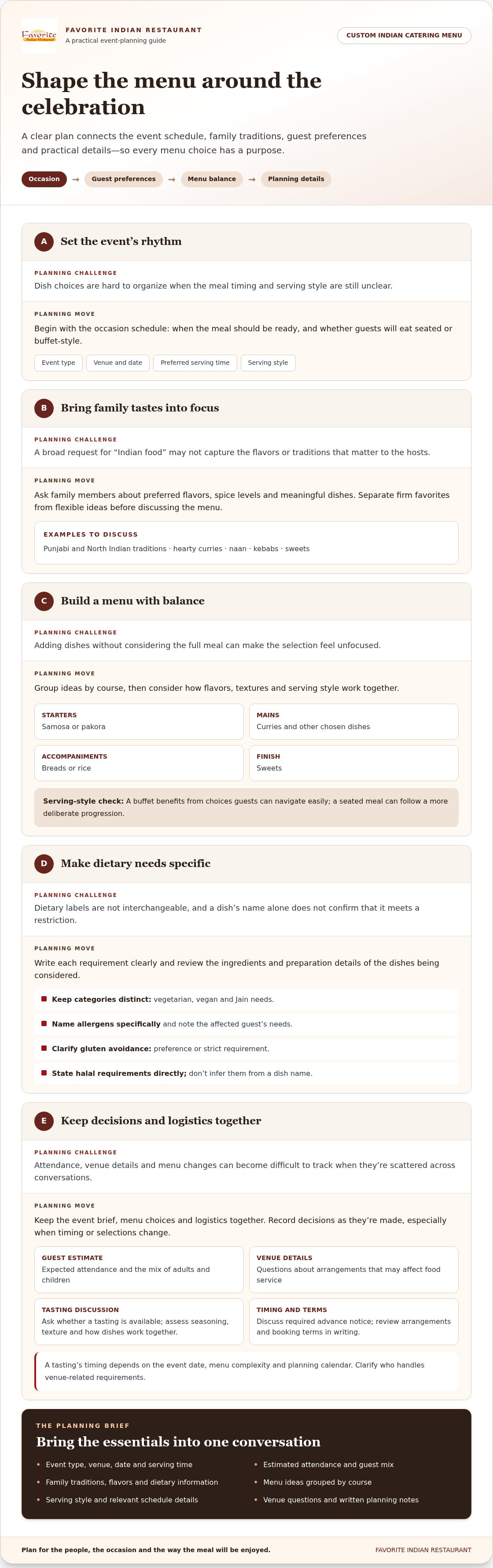
For a Union City wedding or family function, start with the schedule, guest preferences, and serving style. Note when the meal should be ready and whether guests will eat seated or buffet-style. These details give the menu discussion a useful frame and help connect food choices with the rhythm of the celebration.
Gather family preferences before settling on dishes. A wedding menu might reflect Punjabi and North Indian traditions, while a family gathering could feature recipes chosen for their personal meaning. Ask relatives which flavors and spice levels they enjoy, and which dishes they hope to share. A written list keeps those priorities visible during planning.
Think about the meal in courses. You might plan a starter, main dishes, breads or rice, and a sweet finish. The right mix depends on the occasion and serving format. A buffet calls for choices guests can navigate easily, while a seated meal can follow a more deliberate progression. Consider how each dish fits the full menu.
Prepare a concise event brief before discussing dishes. Include:
- Event type, venue, date, and preferred serving time.
- Estimated attendance and the expected mix of adults and children.
- Family traditions, preferred flavors, and dietary information.
- Serving style and any schedule details relevant to the meal.
- Questions about venue arrangements that may affect food service.
How do customer reviews compare for Indian caterers serving Union City? Compare reviews that describe events similar to yours, focusing on details about food quality, communication, and how well the menu matched the occasion. Specific comments about wedding catering are more relevant to a wedding plan than general feedback about a restaurant meal.
What food safety, permit, and cancellation policies apply to Indian catering in Union City? Food-handling and permit details relate to the event and venue, while cancellation and change terms depend on the booking. Before finalizing, clarify who handles venue-related requirements and review the arrangements and terms in writing.
Keep the event brief, menu choices, and logistics together as planning moves forward. Record decisions when they’re made, especially if the serving time or selections change. A catering menu overview can help organize dish ideas for the conversation. With the occasion and priorities clearly described, hosts can focus on shaping a meal that belongs at their celebration.
Personalized catering menus
A personal menu reflects the flavors hosts value and the choices guests can comfortably enjoy. Begin with the dishes and traditions that matter to your gathering, then organize ideas around the flow of the meal.
Cuisines and Regional Dishes
Indian cooking includes varied regional traditions, so describe the flavors you hope to serve rather than asking for a broad category alone. Punjabi and North Indian dishes can include hearty curries, naan, kebabs, and sweets. Consider whether your gathering calls for familiar flavors, a family tradition, or a mix. Seasoning, texture, and cooking style make those preferences specific.
A menu can balance different textures and flavors. You might pair a saucy curry with naan and include a crisp starter, such as samosa or pakora. Sweets can provide a traditional finish. These are ideas for discussion, not a required menu formula. Choose dishes that suit your gathering and the tastes you want to bring together.
For a custom Indian catering menu in Union City, note the dishes your family considers meaningful. Separate firm favorites from flexible suggestions, then decide how much variety feels right. This keeps menu planning focused instead of adding dishes simply to lengthen the list.
Dietary and Allergy Accommodations
Can Union City Indian caterers accommodate vegetarian, vegan, Jain, halal, gluten-free, or allergy-sensitive diets? Options vary, and these needs aren’t interchangeable; a dish’s name alone doesn’t establish its suitability. Ingredients and preparation details for each selected dish determine whether it fits a particular restriction.
Write each guest’s needs in clear, specific language. Distinguish a vegetarian preference from vegan or Jain restrictions, and name an allergy rather than writing only “food allergy.” Keep halal requirements separate from general preferences. This helps organize requests without assuming one dietary label covers another.
A planning list can help keep those details clear:
- Identify vegetarian preferences separately from vegan or Jain restrictions.
- Name specific allergens and the affected guest’s needs.
- State whether gluten avoidance is a preference or a strict requirement.
- Describe halal requirements directly, without inferring them from a dish name.
Group proposed dishes by course, such as starters, mains, breads, and sweets. Then review the menu as a whole for variety. Samosa, curry, naan, and sweets, for instance, bring different textures and courses to the table. Familiar dish names and concise descriptions also help guests understand each selection.
Keep the written menu aligned with the dishes under consideration. Label each accurately, record relevant ingredient details, and avoid calling a dish suitable unless those details support the description. This gives hosts a clearer basis for organizing preferences and sharing menu information with guests.
Tasting availability and advance notice
A tasting can help hosts assess seasoning, texture, and how selected dishes work together. If a tasting is part of planning, bring a short list of menu priorities instead of treating it as a general meal. The event date, menu complexity, and planning calendar all shape how much preparation time the process needs.
Use tasting notes to make decisions, not just to record whether a dish tastes good. Compare a curry’s richness with its accompaniment, consider whether the spice level suits the intended guests, and assess how grilled items complement saucier dishes. Tasting a proposed kebab alongside a curry, for example, can help you judge whether the meal offers enough contrast.
A focused tasting checklist might include:
- Seasoning and heat level for each selected dish.
- Texture, including how breads pair with curries.
- Flavor balance across starters, mains, and sweets.
- Any changes needed to match family preferences.
Record specific observations right away. “Too spicy” is less useful than noting which dish needs gentler seasoning. “Add variety” is less actionable than identifying a missing texture or course. Clear notes keep preferences consistent as the menu develops, especially when several family members contribute ideas.
Advance notice gives planning room to take shape. The time needed depends on the menu, venue schedule, and how many decisions remain. A wedding with several courses or distinct dietary requirements can involve more coordination than a smaller, simpler gathering. Share the event date early to discuss the menu and align it with the occasion.
Keep a simple planning record as decisions develop:
- Mark which dishes are settled and which remain under consideration.
- Save tasting notes beside the relevant dish names.
- Record menu changes and the reason for each change.
- Keep the latest version easy to distinguish from earlier drafts.
A written record matters when a tasting leads to a substitution. Replacing a rich curry with a lighter choice, for example, may affect the meal’s balance. Review the full selection after each meaningful change rather than judging a new dish in isolation. This helps preserve variety across courses and keeps the menu aligned with your preferences.
Plan the tasting and advance notice as connected parts of decision-making. A tasting can inform flavor choices, while a clear timeline helps you settle the menu and track changes. Keep notes specific, share decisions with everyone involved, and leave enough planning time for the event’s requirements.
What Indian cuisines and regional dishes can Union City caterers include in custom menus?
Indian catering menus can draw from regional traditions, including Punjabi, Gujarati, South Indian, Bengali, and Hyderabadi cooking. Since the choices depend on the caterer’s cuisine and menu, start by identifying the flavors and dishes your gathering should represent.
Punjabi and North Indian selections often bring hearty gravies, breads, and tandoor-style cooking to a celebration. A menu might pair a lentil dish with naan or balance a creamy curry with a brighter, tomato-forward preparation. Kebabs add grilled flavor and a distinct texture. Consider whether your gathering calls for familiar comfort foods, a specific family tradition, or both.
Other regional traditions offer different ways to shape a meal. Gujarati cooking is known for varied sweet, savory, and spiced flavors. South Indian menus may include dishes such as dosa or idli, while Bengali cooking is associated with fish and mustard-based flavors. Hyderabadi cuisine is often linked with biryani and layered seasoning. These examples are starting points, not a promise that every caterer serves each cuisine.
To choose a regional direction, consider these menu questions:
- Does your family want dishes tied to a particular region or heritage?
- Should the menu focus on one tradition or combine several?
- Do guests prefer grilled, saucy, crisp, or rice-based dishes?
- Would a familiar selection or a less common regional dish suit the occasion?
A useful menu balances regional character with variety across the meal. If a main course features rich gravy, for example, choose an accompaniment with a different texture or a lighter flavor. Rice can complement a curry, while bread offers another way to enjoy it. A crisp starter can contrast with soft, slow-cooked dishes. This approach makes the meal feel considered without making every course taste alike.
Dish names alone may not explain a flavor to every guest. Add a short description for unfamiliar selections, such as “spiced rice with layered seasoning” for biryani or “lentils simmered with spices” for dal. Describe the heat level plainly and distinguish grilled items from curries. These notes help guests make informed choices and give you a clearer picture of the menu’s overall balance.
For a Union City celebration, write down the regional dishes that matter most, then group them by course and cooking style. Keep the list focused: a few meaningful choices can express your family’s tastes more clearly than a long menu spanning unrelated traditions. This gives the planning discussion a strong starting point while leaving room to refine the final selection.
What are the minimum guest counts and order sizes for Indian catering in Union City?
There is no single guest minimum or order size for every Indian catering request in Union City. Requirements depend on the ordering format, selected dishes, and whether the meal is individually portioned or served in shared trays. Ask for the minimum in the same terms you plan to order.
Guest count and order quantity are related, but they aren’t identical. A guest estimate describes attendance; an order specifies the food and quantities being prepared. A gathering may have a confirmed headcount but still need decisions about how many dishes to serve, which items guests share, and whether children need separate portions.
Before requesting a quote, organize the details that shape the order:
- Expected attendance, including adults and children.
- Serving style, such as buffet service or individually portioned meals.
- Selected starters, mains, breads, rice, and sweets.
- Dietary requirements that affect which dishes guests can eat.
- Event timing and the venue’s arrangements for receiving food.
Ask whether the minimum applies to the total order, each dish, or a particular service format. Ordering rules may differ for trays and individual meals. Knowing which threshold applies helps a small event avoid ordering more variety than it can serve, and a larger gathering avoid overlooking a dish’s required quantity.
Portion planning also depends on the menu mix. A spread with several mains gives guests options, while a focused menu may require more servings of each dish. A vegetarian entrée, a curry, naan, and rice serve different roles, so quantities should reflect expected demand for each rather than dividing the guest count evenly.
For a family gathering with a changing attendance estimate, separate confirmed guests from tentative guests before discussing quantities. For a wedding, coordinate the headcount with the venue schedule and meal format. If the event includes a tasting or final menu adjustment, label the order draft clearly so an older estimate doesn’t become the working version.
Before finalizing, request a written summary of the agreed dishes, serving format, quantities, and any minimum-order terms. Compare it with the latest guest estimate and dietary notes. If attendance changes, revise the estimate and menu together, since a changed headcount can affect both portions and the balance of dishes.
Share your event size and preferred menu through Favorite Indian catering details to begin organizing the order discussion.
Best Indian Food in Hayward, CA | Favorite Indian Restaurant | Indian Food near me: Saturday Lunch Buffet
Best Indian Food in Hayward, CA | Favorite Indian Restaurant | Indian Food near me offers Indian food catering for hosts planning a Union City wedding or family gathering. Once you’ve considered menu preferences, event timing, and order size, discuss how catering can fit your celebration.
For a meal with a range of dishes, the Saturday Lunch Buffet or Weekend Dinner Buffet lets you enjoy Indian flavors in a restaurant setting. The Live Indian Grill Experience is another way to explore grilled specialties. These options can help you consider the flavors and cooking styles you may want for your event.
To discuss Indian food catering for your gathering, contact Best Indian Food in Hayward, CA | Favorite Indian Restaurant | Indian Food near me.
Shape a menu that feels like your celebration
A thoughtful menu can be more than a collection of dishes. It can reflect the people gathering, the traditions they share, and the atmosphere you want guests to remember. As you plan a custom Indian catering menu for a Union City celebration, let those priorities guide your choices.
Turn your ideas into a clear event brief: describe the occasion, explain the flavors that matter to your family, and note the practical details that will shape service. A focused conversation can help you move from inspiration to a personal, purposeful menu plan.
Best Indian Food in Hayward, CA | Favorite Indian Restaurant | Indian Food near me offers Indian Food Catering for celebrations, along with dining experiences that can help you explore its food and cooking styles. If you’re ready to discuss your gathering, contact Best Indian Food in Hayward, CA | Favorite Indian Restaurant | Indian Food near me and share what you have in mind.
May your planning bring together the flavors you love and the people you’re happiest to celebrate with.
Frequently Asked Questions
What menu packages and catering options do Indian caterers in Union City offer?
Options vary by caterer, but Indian catering can include a selection of starters, curries, breads, grilled dishes, and sweets. For example, Best Indian Food in Hayward, CA | Favorite Indian Restaurant | Indian Food near me lists samosa, pakora, Butter Chicken, Dal Makhani, fresh naan, and Gulab Jamun among its menu specialties. Choose dishes around your event style and guests’ preferences, then balance textures and flavors rather than relying on a preset package name.
How far in advance should I book custom Indian catering in Union City?
Start planning as soon as you know your event date, especially for a wedding with a venue schedule or several menu decisions. There isn’t one lead time that fits every gathering. Share the date, venue, estimated attendance, and serving time first. Then provide your preferred dishes and dietary requirements so you can discuss the menu alongside event details before finalizing your plans.