A plated dinner isn’t automatically the easiest choice for a large celebration. The benefits of a buffet for a large party include letting guests choose what and how much to eat, encouraging mingling, and serving a crowd without assigning every guest a plated meal. It’s often a practical fit when a wedding reception, corporate gathering, or family celebration calls for a relaxed flow and plenty of choice.
That flexibility comes with trade-offs: guests may queue, and a buffet can feel less formal than plated service. Family-style dining offers another shared experience, with platters passed around the table, while plated meals create a more structured setting. The right choice depends on your seating plan, the atmosphere you want, and how guests will move through the meal.
This guide compares buffet, plated, and family-style service, explains how menu variety and dietary preferences can shape the decision, and covers ways to organize serving stations for a large group. You’ll come away with a clearer sense of which format suits your event and why.
Key Takeaways
- Match the meal format to your seating plan and the atmosphere you want, from relaxed mingling to a more structured dinner.
- Build a buffet menu around dishes guests can combine, with a balance of hearty choices and fresh options.
- Weigh buffet flexibility against the shared-table feel of family-style service and the structure of plated meals.
- Plan clear vegetarian, vegan, and gluten-free choices so guests can navigate the spread more comfortably.
- Arrange serving stations around guest flow and menu variety to help prevent bottlenecks as the meal begins.
1. Choosing a party format based on seating and guest count
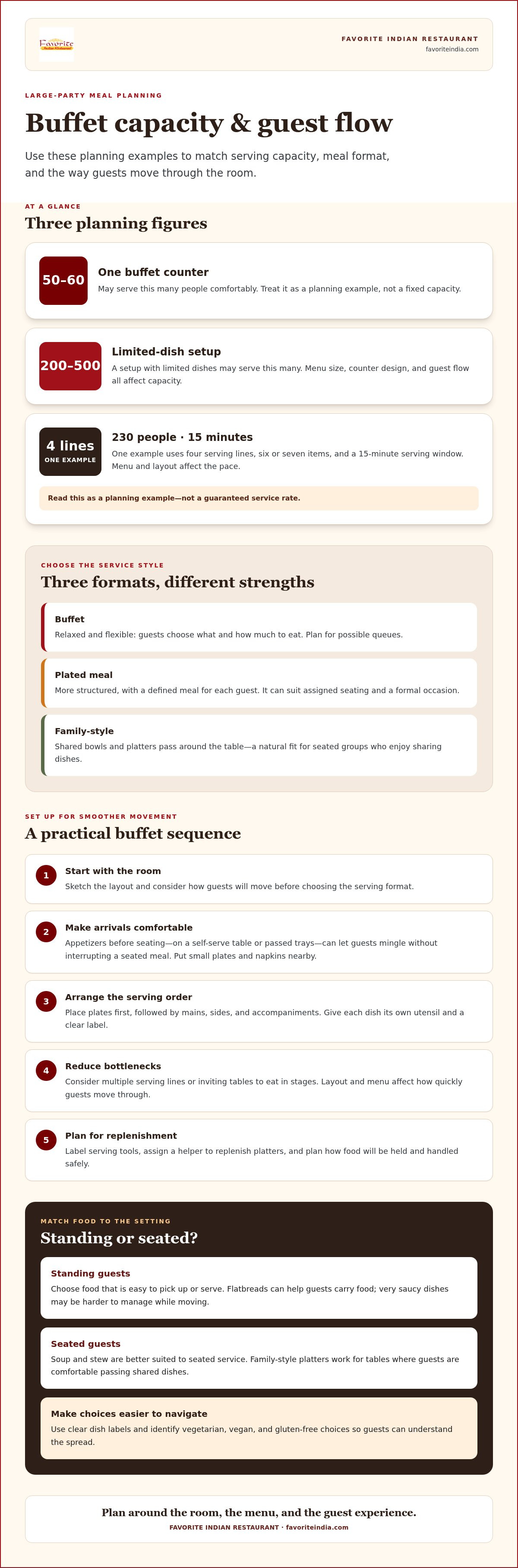
Start with the room layout, then choose a meal format that fits how guests will move. A buffet suits a large party when people need room to mingle and serve themselves. One buffet counter may serve 50-60 people comfortably, while a setup with limited dishes may serve 200-500. Treat these as planning examples; menu size, counter design, and guest flow all affect capacity.
For weddings, work gatherings, and family parties, consider serving appetizers before guests sit down. A self-serve table or passed trays lets arriving guests mingle, including latecomers, without interrupting a seated meal. Place napkins and small plates beside the appetizers, and choose portions that are easy to take while standing. Samosas or pakoras can work as familiar examples when they’re part of the menu.
Standing guests need food they can manage without balancing a full dinner plate. Choose items that are easy to pick up or serve, and avoid dishes so saucy that they drip while guests talk or move. Naan and other flatbreads can help guests carry food, while soup and stew are better suited to seated service. A fork buffet works best when each portion needs no knife.
Seating can help guide the decision. A smaller gathering with assigned places may suit plated service, especially for a formal occasion where everyone should receive a defined meal. A buffet feels more relaxed and gives guests control over their selections. Family-style service places shared bowls and platters on the table, making it a natural fit for seated groups that enjoy passing dishes.
Before setting out serveware, sketch the table arrangement and place a sample platter on it. This reveals whether guests can reach serving spoons without crowding. For a large group, provide at least one serving platter or bowl for every item on each table. Match plate size to the food: a stand-up gathering calls for manageable portions, while seated guests can use larger plates.
Prepare ahead by chopping vegetables, marinating meat, and pre-cooking dishes that reheat well. Set out labeled serving tools and ask a helper to replenish platters, so the host isn’t tied to the table. A written sequence for warming, plating, and serving helps volunteers know what to do as guests arrive.
Buffet food safety depends on careful handling, clean serving utensils, and appropriate temperature control. Plan how food will be held and replenished, and follow applicable food-safety guidance for serving and storage.
To prevent long lines, use multiple serving lines or stagger when tables are invited to eat. One planning example has four lines serving 230 people in 15 minutes with six or seven items; menu and layout affect the pace. For more details on buffet service and seating, see buffet service details.
2. Menu variety and mix-and-match dishes
A buffet lets guests build a plate around their appetites and preferences. One person might pair a curry with rice, while another chooses bread, vegetables, and a lighter side. That freedom makes variety useful, but a spread works best when each dish belongs to a clear menu rather than competing for attention.
How much food should you plan per guest for a buffet? There’s no single portion amount that fits every menu. Decide whether the buffet is a full meal or a reception spread, then plan portions around the dishes’ roles, expected guest preferences, and how long serving lasts. A menu with several filling mains needs a different balance from one built around appetizers.
To create a cohesive menu, choose a central theme, then select dishes that complement it. For an Indian-inspired meal, pair a rich curry with rice or flatbread, and add a fresh, crisp option for contrast. A familiar flavor profile can help guests mix dishes confidently without making every choice taste alike.
Balance matters as much as selection. Combine hearty mains with lighter sides, such as shaved raw vegetables, cooked grains, or lentils. A salad with contrasting textures can brighten a table of warm, savory dishes. Include different flavor intensities too, so guests can choose a gentler plate or combine bolder flavors.
Theme planning should account for the event, season, weather, and guest expectations. A lively family celebration may suit colorful, shareable dishes, while a formal gathering may call for a more restrained presentation. For an outdoor summer event, fresh, crisp choices can offset rich foods. Let the occasion guide the menu without forcing every dish into a decorative theme.
Lay out dishes in a useful order. Place plates first, followed by mains, sides, and accompaniments, so guests can assemble a meal without backtracking. Give each dish its own serving utensil and a clear label describing its contents. Labels help guests decide what to try and make unfamiliar ingredients easier to navigate.
Variety doesn’t mean offering a little of everything. Too many unrelated dishes can make the menu harder to understand and the serving tables feel crowded. Choose a focused selection with distinct roles: a main, a complementary side, a fresh option, and accompaniments. That structure allows guests to combine flavors while keeping preparation and replenishment manageable.
Before finalizing the menu, review every dish beside the others. Ask whether it adds a new texture, flavor, or useful choice. Remove duplicates, then confirm that the remaining dishes work together as a satisfying meal or a clearly defined appetizer spread.
A cuisine guests may enjoy. Build-your-own food bars can accommodate dietary preferences, while buffet guests can combine dishes in any order rather than follow traditional courses.
3. Comparison of buffet, plated, and family-style meals
Choose service by the atmosphere you want and how guests should experience dinner. A buffet encourages movement: guests leave their seats, select food, and have more opportunity to mingle. Plated service keeps everyone seated and creates a more formal, structured occasion. Family-style dining sits between them, with shared bowls and platters passed around the table.
For a wedding reception or a large family celebration, buffet service can suit guests who prefer different dishes or portion sizes. Guests choose what they want and how much to take, then return to conversation at their own pace. That flexibility is among the benefits of a buffet for a large party. It also means the host has less table-waiting to manage than with a meal served course by course.
A plated dinner offers a different kind of coordination. Each guest receives a prepared plate, which helps create a consistent presentation and a defined meal sequence. That structure can feel fitting for a formal celebration, where speeches or a planned program shape the evening. The trade-off is less freedom to choose portions, and the kitchen must serve each guest rather than letting several guests serve themselves.
Family-style service works well for a casual gathering around a few dining tables. Place shared dishes in the center, then let guests pass them and serve themselves. This can make a close-knit birthday dinner feel convivial, especially when conversation matters as much as presentation. Choose dishes that are easy to share with one serving utensil, and avoid items that require guests to assemble complicated individual portions.
Each format also changes how food reaches the table. With family-style service, dishes arrive together and can be served hot and fresh, but platters must fit between plates and glasses. A buffet keeps serving dishes on a separate table, though guests may need to wait during a busy moment. Plated meals avoid a serving line, but offer less choice once plates have been prepared.
What are the disadvantages or risks of buffet catering for a large party? Guests may queue, and self-serving makes portions harder to predict, so hosts can struggle to estimate what will be eaten. A crowded buffet can also interrupt conversation; separate serving lines and clear dish labels help guests move through more smoothly.
Think about the full meal, too. A buffet lets guests combine mains, salads, sides, and dessert in their preferred order. Family-style service makes shared food the centerpiece, while plated service can present each course with more formality. For a relaxed reception, buffet service may fit; for a seated dinner with a planned program, plated service may be more appropriate. The best match is the format that supports the occasion rather than competing with it.
4. Providing vegetarian, vegan, and gluten-free choices
A buffet can make dietary variety easier to present because guests choose dishes that suit their preferences. Plan vegetarian, vegan, and gluten-free options as distinct categories, not interchangeable labels. For example, a vegetable dish may contain dairy, while a lentil-based dish may be prepared with ingredients that need checking. Clear descriptions help guests make informed choices themselves.
Begin with the guest list. Ask invitees to share dietary needs with the host before the menu is finalized. Then sort planned dishes into vegetarian, vegan, and gluten-free groups, noting where a dish fits more than one. This simple step helps identify gaps, such as a menu with vegetarian choices but few vegan selections.
Build a satisfying plate around complementary options. A menu might pair a vegetable dish with rice, lentils, and a fresh salad, while offering other mains separately. For vegan guests, identify dishes prepared without animal-derived ingredients. For gluten-free needs, review each dish’s ingredients and accompaniments rather than relying on its name or appearance.
Labels matter. Give each platter a concise card with the dish name and relevant dietary description. Avoid broad labels when a specific ingredient description is more useful. For instance, indicate that a dish contains dairy rather than labeling it only “vegetarian.” Keep cards beside the matching platters, so guests don’t have to guess as they move along the buffet line.
Serving tools need thoughtful placement, too. Provide a separate utensil for each dish, and arrange platters so guests can reach them without moving tools between foods. This organization encourages guests to serve themselves efficiently and helps reduce accidental mixing at shared tables. If dishes are replenished, return each serving utensil to its matching platter.
Variety should feel generous without making the menu confusing. Include a few clearly distinct options, such as a vegetable-based main, a lentil dish, and fresh salad. Then decide which sides complement several dishes. Rice or other suitable accompaniments can help guests assemble different plates, while separate sauces let them personalize flavor.
For a large event, use the same dish names and dietary labels across menu cards and buffet signage. A host or server can direct guests to the correct platters and answer ingredient questions using the menu information. This is especially helpful when several tables or buffet lines serve the same spread.
Finally, review every label against the actual ingredients before serving. Recipes and packaged ingredients can vary, so avoid promising that a dish meets a dietary need unless its ingredients and preparation support that description. Accurate labels, considered choices, and well-arranged platters make the buffet more welcoming for guests with different needs.
5. How many buffet serving stations are needed for a large party?
Choose station count by considering guest flow, menu length, and the time available for serving. A single line can become congested when guests reach for the same dishes, while multiple lines let people serve themselves in parallel. The goal is to reduce waiting without crowding the room or spreading the menu across too many tables.
One planning example shows four buffet lines serving 230 people in 15 minutes, with six or seven different items. Treat that as an example, not a universal capacity: the number of dishes, serving speed, and layout affect how quickly guests move. If the menu has several items, duplicate popular dishes across lines so guests don’t all stop at one point.
A sample layout uses six serving tables arranged in two rows of three. Each line is 24 feet long, made from three 8-foot tables. For two buffet lines, the recommended minimum width is 13 feet when tables are no more than 18 inches wide. The example places 5 feet 6 inches between table rows; allow at least 27 inches of clearance on each side, with 36 inches preferred.
Sketch the room before setting the tables. Mark entrances, seating, and the direction guests will approach, then place the lines where people can join without blocking doorways or dining areas. Keep plates at the start of each line and group complementary dishes together. For example, place a main beside its relevant sides, so guests don’t need to backtrack across the serving area.
Menu duplication can matter more than adding another full station. If several lines offer the same core dishes, guests can spread out instead of waiting for one particular platter. Keep serving utensils with their dishes and leave room for guests to reach them. If a live counter is part of the plan, account for its space and any power, electricity, running water, or fire-protection needs.
Before the event, walk through the layout as a guest would. Carry a plate from the entrance through each line, then check whether people can pass behind those serving. Adjust the table positions if queues would block seats or intersect with another line. This quick rehearsal reveals pinch points that a floor plan alone can miss.
For a large celebration, choose the station arrangement around the menu and room rather than guest count alone. Explore buffet options as you plan the meal format and serving setup.
Buffet service can use multiple buffet lines to accommodate guests quickly and efficiently. Choose this approach when the room and menu support parallel serving, and keep each line straightforward for guests to follow. The aim is to make serving feel orderly while helping guests move through the meal without unnecessary delays.
Best Indian Food in Hayward, CA | Favorite Indian Restaurant | Indian Food near me: Saturday Lunch Buffet
Best Indian Food in Hayward, CA | Favorite Indian Restaurant | Indian Food near me offers a Saturday Lunch Buffet that gives diners a relaxed way to enjoy a meal without organizing buffet service themselves. The Weekend Dinner Buffet is offered on Friday and Saturday evenings, providing a separate option for dinner plans. For guests drawn to freshly grilled flavors, the Live Indian Grill Experience features kebabs prepared at the grill.
Choose the buffet that fits your occasion, or explore the live grill for a meal centered on grilled Indian specialties. To learn more or plan your visit, contact Best Indian Food in Hayward, CA | Favorite Indian Restaurant | Indian Food near me or visit favoriteindia.com.
Turn Your Meal Plan Into a Welcoming Gathering
The most memorable meal format is the one that lets the event feel like itself. Before settling on a final plan, picture the moment guests arrive, where conversation gathers, and how the meal should fit around the celebration. That scene can help you decide whether flexibility or a more guided dining experience matters most.
Use the benefits of a buffet for a large party as a planning lens, not a rule. Your room, menu, and guests’ needs should shape the details. A clear plan for service and movement gives hosts more space to enjoy the occasion alongside everyone else.
If an Indian meal suits your gathering, explore Favorite Indian Restaurant’s offerings as you consider the next step. Choose the experience that feels right for your guests, and let the planning lead toward a warm, shared celebration.
Frequently Asked Questions
What are the benefits of a buffet for a large party?
A buffet can make it easier to welcome guests with different appetites and dining rhythms. It also gives people the chance to try a small taste of an unfamiliar dish before choosing more. For a reunion where guests may not have seen one another recently, this flexible flow can leave hosts freer to greet arrivals and enjoy conversation instead of coordinating each plate.
How does buffet service compare with plated meals for large events?
Consider how closely the meal needs to follow the event schedule. A plated dinner can be coordinated around a shared start time, which may help at a reception with a formal program. Buffet service gives guests more control over when they begin eating, which can suit an open-ended gathering. Think about whether the event’s speeches, activities, or arrival pattern calls for one coordinated meal or a looser dining window.
How can a buffet accommodate guests with dietary restrictions and allergies?
Ask guests to describe their dietary needs clearly during event planning, including specific allergens and ingredients they must avoid. Share that information with the food provider early, then discuss ingredient and preparation details for the planned dishes. This gives the host a practical basis for planning suitable choices. Don’t assume a dish is safe for an allergy based only on its name or general dietary category.