You can't replicate the soul of true Punjabi cuisine with a standard kitchen stove, no matter how high you turn the dial. It's a hard truth for many home cooks who find their grilled meats lacking that elusive smoky depth and their naan turning out more rubbery than radiant. If you've ever wondered why your kitchen creations don't quite match the charred perfection of a professional kitchen, the answer lies in the ancient, intense embrace of the tandoori oven.
We understand the frustration of trying to recreate that signature restaurant char only to end up with lackluster results. This article will show you the secrets behind the 900-degree heat and unique clay textures that define authentic Indian cooking. We'll explore the fascinating mechanics of these traditional vessels, help you identify a truly artisanal live grill experience, and celebrate the incredible heritage of this ancient craft that has defined flavor for generations. Discover why this timeless technique remains the heartbeat of every great Indian meal.
Key Takeaways
- Discover why temperatures topping 900°F are essential for creating the signature textures that modern kitchen appliances simply can't match.
- Learn how a traditional tandoori oven uses radiant heat to produce perfectly blistered naan and succulent, vertically roasted kebabs.
- Explore the deep cultural roots of the Punjabi clay hearth and its role as the heart of authentic North Indian culinary traditions.
- Find out what to look for when seeking a genuine experience, including the theatrical "Live Grill" where artistry meets intense fire.
- Appreciate the decades of skill needed to manage these ancient vessels to deliver consistent, mouthwatering results every time.
What is a Tandoori Oven? Discovering the Heart of Punjabi Cuisine
At the heart of every authentic North Indian kitchen sits a cylindrical powerhouse that defies modern convection technology. While most contemporary appliances rely on circulating fans or electric coils, the tandoori oven remains a masterclass in ancient engineering. Traditionally crafted from thick clay or reinforced metal, this vessel acts as a high-heat sanctuary where baking, roasting, and grilling happen simultaneously. To truly understand What is a Tandoor Oven, you've got to look beyond its simple shape and see it as the communal hearth of the Punjab region. Unlike a standard kitchen range, the heat source lives at the bottom, fueled by glowing charcoal or fragrant wood. This unique setup allows it to function as a three-in-one culinary tool: a searing grill, a high-speed convection chamber, and a specialized bread oven.
The Anatomy of a Traditional Clay Hearth
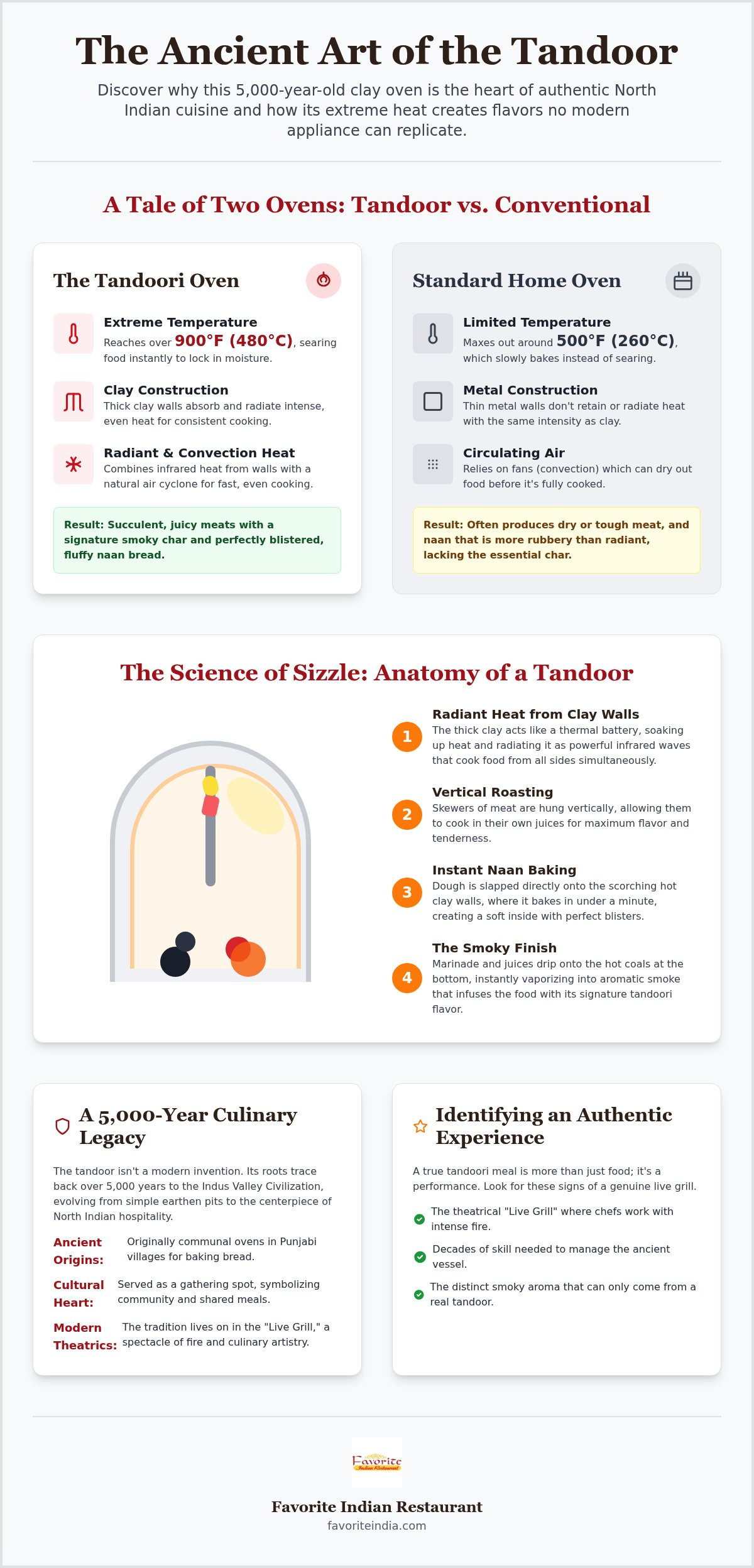
The secret to that unmistakable flavor lies in the oven's construction. Its thick, hand-molded clay walls serve as a massive thermal reservoir, soaking up intense energy and radiating it back with incredible consistency. Because of its bell-shaped interior, super-heated air circulates in a continuous loop, enveloping food in a whirlwind of fire. This design is why a tandoori oven can reach staggering temperatures that would melt a standard home appliance. The vertical orientation isn't just for show; it's essential for suspending long metal skewers. As meats hang vertically, they cook evenly in their own juices while the drippings hit the embers below, creating that signature puff of aromatic smoke that defines the experience.
A 5,000-Year-Old Culinary Legacy
This isn't a new trend. Archeological evidence traces these earthen pits back 5,000 years to the Indus Valley Civilization. Over millennia, the tandoor evolved from a simple hole in the ground into the sophisticated centerpiece of North Indian hospitality. In rural Punjab, these ovens once served as communal gathering spots where families brought their dough to bake fresh rotis together. Today, that spirit of community lives on through the Live Indian Grill Experience. Seeing a chef manage the glowing embers and slap fresh dough against the scorching walls brings a theatrical energy to the dining room. It's a bridge between ancient tradition and your modern table, ensuring every bite carries the weight of centuries of craftsmanship.
The Science of the Clay Oven: Why Extreme Heat Matters for Flavor
While your kitchen oven at home likely tops out around 500°F, a traditional tandoori oven operates in a completely different league. These clay-lined powerhouses regularly reach temperatures exceeding 900°F (480°C). This level of intensity isn't just about cooking food faster; it's about a fundamental transformation of the ingredients. When a skewer of marinated meat enters this environment, the heat sears the surface instantly. This creates a protective barrier that locks in every drop of moisture, preventing the protein from becoming tough or dry. It's a high-stakes environment where seconds matter, and the result is a texture that no modern home appliance can replicate.
The magic happens because the thick clay walls act as a "blackbody" radiator. They absorb the energy from the burning charcoal and release it as steady, deep-penetrating heat. Understanding the science of tandoori cooking reveals that as juices and fats drip from the food onto the glowing embers, they vaporize instantly. This sends a flavorful plume of aromatic smoke back up to coat the food. This continuous cycle of vaporization and infusion creates a complex, earthy profile that defines the tandoori oven experience. You can taste this artisanal precision yourself by exploring the authentic tandoori specialties crafted daily in our kitchen.
Radiant Heat vs. Convection
The specialized shape of the clay vessel creates a dual-action heating system. The walls emit infrared radiation that cooks the food from the inside out, ensuring evenness even in thick cuts of lamb or chicken. Meanwhile, the cylindrical design forces super-heated air to move in a natural "cyclone" pattern. This constant movement prevents stagnant hot spots and keeps the surface from drying out before the center is done. This unique thermal environment is the ultimate secret to why kebabs emerge so incredibly juicy on the inside while maintaining a delicate, charred exterior.
Achieving the Perfect Char
That beautiful, mottled crust on a piece of chicken or a fresh naan isn't just "burnt." It's the result of the Maillard reaction, a chemical interplay between amino acids and reducing sugars that only happens under specific high-heat conditions. Charcoal serves as the preferred fuel because it provides a clean, intense heat and a neutral aromatic base that lets the spices shine. Because the food is suspended in the center or slapped directly onto the walls, it benefits from the smoke without the bitter taste of direct flame contact. This creates a sophisticated "smoky" flavor that highlights the freshness of the ingredients rather than masking them.
Beyond Chicken: How the Tandoor Perfects Fresh Naan and Halal Kebabs
While many diners associate the tandoori oven exclusively with that iconic crimson chicken, its true genius lies in its incredible versatility. This ancient vessel is a multi-tasking marvel that transforms everything from delicate dough to seasoned vegetables and artisanal paneer. The intense, radiant heat works its magic on a wide array of ingredients, creating textures that are simultaneously soft, crispy, and deeply smoky. If you're searching for tandoori specialties near me in Hayward, you'll discover a menu that celebrates the full spectrum of this clay cooking tradition, proving that the hearth is capable of much more than just a single famous dish.
The Art of the Naan Slap
There’s a specific, rhythmic theater to bread-making in a traditional clay hearth. A chef takes a hand-stretched disc of fresh dough and, with a practiced, swift motion, slaps it directly onto the scorching interior walls. It's a feat of manual skill that requires immense precision; the baker must judge the heat perfectly so the dough sticks and rises without falling into the glowing coals below. This direct contact with the artisanal clay surface is what creates that iconic "tear-and-chew" texture. You get those beautiful charred bubbles on the outside and a soft, pillowy interior that’s perfect for scooping up rich curries. The tandoori oven turns simple flour and water into a culinary masterpiece, whether it’s a classic buttered version, aromatic garlic naan, or hearty stuffed kulchas.
Halal Grilling and Live Skewers
Meat preparation in this environment is equally artisanal and health-conscious. During a live grill experience, you can see how the vertical nature of the chamber is used to master the art of the kebab. Skewered meats, such as our seasoned Seekh Kabab or tender lamb boti, are suspended in the center of the intense heat. Because they hang vertically, any excess fat naturally drips away into the embers, leaving behind lean, protein-rich bites that are never greasy. The secret to keeping these meats juicy at such high temperatures is the marinade. These yogurt and spice blends act as a protective thermal shield, allowing the exterior to develop a savory, caramelized crust while the inside remains incredibly tender. It’s a sophisticated method that honors traditional Halal standards while delivering a clean, high-flavor dining experience.
From Ancient Tradition to Your Table: Identifying an Authentic Experience
Walking into a restaurant should feel like an invitation to a sensory feast. When you're seeking the real deal, the first thing you should notice isn't the decor, but the intoxicating aroma of toasted cumin and coriander mingling with a hint of woodsmoke. This scent is the primary calling card of a genuine tandoori oven. Look for a visible Live Indian Grill area where you can see the action for yourself. Watching a chef masterfully navigate the glowing embers and scorching clay is more than just dinner; it's a front-row seat to an ancient art form. Authentic dishes shouldn't look uniform or factory-made. They should boast irregular char marks from the intense heat, while the interior remains incredibly succulent. If your naan isn't served within minutes of being peeled off that clay wall, you're missing out on the true "tear-and-chew" experience that only immediate freshness provides.
The Sensory Signs of a Master Tandoor
The sound of fat hitting hot coals is unmistakable. It creates a rhythmic sizzle that signals the vaporization of juices, sending flavor back into the meat. You'll see the orange glow of the charcoal reflecting off the clay, creating a warm, inviting atmosphere that modern electric kitchens lack. A master chef doesn't rely on digital timers or temperature probes to get things right. Instead, they use decades of intuition and expert craftsmanship to know exactly when a skewer has reached its peak. At our establishment, we've spent over 25 years in Hayward perfecting these nuances. It's this human element, combined with the distinct aroma of "burnt" clay and marinated spices, that separates a handcrafted meal from a mass-produced one.
Why Buffets Benefit from Tandoor Cooking
Many people assume a buffet means sacrificing quality for quantity, but the efficiency of tandoor cooking changes that narrative. Because the tandoori oven cooks at such high speeds, it's the perfect tool for keeping a Saturday lunch buffet stocked with steaming, fresh items. Meats prepared this way are surprisingly durable; the initial sear locks in moisture so effectively that the kebabs stay tender and flavorful throughout the service. It ensures that even the last guest of the afternoon enjoys the same artisanal quality as the very first. This rapid, high-heat method allows us to provide a generous, all-you-can-eat experience without ever compromising on the smoky, traditional flavors you crave.
Finding that perfect balance of tradition and taste doesn't have to be a guessing game. If you're looking for more tips on where to find these specific flavors in the East Bay, check out our comprehensive halal Indian grill near me guide. We invite you to join us and experience the artisanal heat of our own live grill today.
Experience the Sizzle: Tandoori Specialties at Favorite Indian Restaurant in Hayward
For more than 25 years, our kitchen on Mission Blvd has been the heart of authentic Punjabi dining in the East Bay. We've spent a quarter-century perfecting the delicate balance of heat and timing required by a traditional tandoori oven. This dedication to our craft ensures that every piece of bread and every skewer of meat carries the genuine, smoky signature of the Punjab. Our Live Indian Grill Experience isn't just a cooking method; it's a performance that honors our culinary roots while providing you with the freshest possible meal. From the first scent of toasted spices to the last bite of a succulent kebab, we invite you to share in our passion for excellence.
Hayward's Destination for Authentic Punjabi Flavor
Our pride lies in our commitment to traditional recipes and Halal Indian Grill options. We believe that great food should be inclusive and celebratory, which is why we've cultivated a community-oriented atmosphere perfect for large family gatherings and intimate dinners alike. You can taste the difference that expert craftsmanship makes in our Chef’s Signature Indian Curries and our wide selection of sizzling Seekh Kababs. We encourage you to browse our full menu to discover the vibrant colors and bold spices that define our kitchen. Every dish we serve is a tribute to the artisanal methods that have made us a local neighborhood staple for decades.
Plan Your Visit to Mission Blvd
Experience the full variety of our offerings by joining us for our famous Saturday Lunch Buffet or our Weekend Dinner Buffet. These all-you-can-eat events are designed to showcase the versatility of our tandoori oven, featuring everything from pillowy naan to our signature Butter Chicken. If you're hosting a special event, our banquet services offer a sophisticated setting with the same high standards of hospitality we provide in our main dining room. We also provide comprehensive Indian food catering to bring the flavors of our grill to your next big gathering.
We make it easy to enjoy our flavors however you prefer. You can book a table for a night out with the family or use our online ordering for quick takeout and delivery. Join us on Mission Blvd today and let us guide you through a sensory journey that has been 25 years in the making. Your seat at our table is waiting.
Taste the Tradition of the Live Indian Grill
The tandoori oven remains a timeless symbol of culinary excellence, bridging the gap between ancient history and your modern dinner plate. You now understand how intense, radiant heat creates that signature char while keeping every kebab incredibly succulent. From the rhythmic theater of the live grill to the artisanal precision of hand-slapped naan, these traditional methods are essential for capturing the true soul of North Indian cuisine. It's a level of depth and flavor that simply can't be replicated with standard kitchen appliances.
We've spent over 25 years serving the East Bay with a steadfast commitment to authentic Punjabi recipes and Halal certified meat options. Our kitchen is a place where heritage meets hospitality, offering a sensory journey that rewards every guest with bold flavors and handcrafted quality. Whether you're joining us for a celebratory banquet or a casual weekend meal, we promise an experience that feels both sophisticated and deeply personal. It's our privilege to act as cultural ambassadors for these vibrant traditions.
Book your table at Favorite Indian Restaurant and witness the live grill! we can't wait to welcome you for a celebratory meal that you and your family won't soon forget.
Frequently Asked Questions
What is the difference between a tandoor and a regular grill?
The primary difference lies in the cylindrical clay chamber that traps and radiates heat from all sides. While a standard grill relies on direct flame from below, this specialized vessel envelops food in a high-temperature environment. This unique design ensures that meats stay incredibly succulent on the inside while the exterior develops that signature artisanal char that open-air grilling can't match.
Is tandoori cooking healthy?
Yes, it's widely considered one of the healthiest preparation methods because it requires very little added fats or oils. The vertical orientation of the skewers allows any excess fat to naturally drip away from the protein during the roasting process. This results in a lean, high-protein meal that's packed with smoky flavor without the heavy calories often found in fried dishes.
Why is tandoori chicken always red?
The vibrant crimson hue comes from a traditional marinade featuring Kashmiri red chili powder or paprika. In many professional kitchens, this striking color is further enhanced with natural food coloring to create the iconic look diners expect. This visual appeal signals the presence of bold, aromatic spices that have been seared into the meat at temperatures exceeding 900 degrees.
Can I use a tandoori oven for vegetarian dishes?
Absolutely, the tandoori oven is a versatile tool for creating savory plant-based specialties like Paneer Tikka or roasted seasonal vegetables. The intense radiant heat caramelizes the natural sugars in vegetables, creating a savory depth and smoky essence. It's a fantastic way to enjoy artisanal textures that are difficult to achieve with standard stovetop or domestic oven cooking methods.
Why is it called 'tandoori' chicken?
The name simply refers to any dish prepared inside the traditional clay chamber known as a tandoor. Over centuries, the term has become a shorthand for the specific yogurt and spice marinade used to protect ingredients from the tandoori oven and its extreme heat. It represents a specific style of North Indian craftsmanship that prioritizes bold flavors and tender, fire-roasted textures.
How hot does a professional tandoori oven get?
A professional-grade unit typically operates at temperatures between 800°F and 900°F, which is nearly double the heat of a residential appliance. This extreme environment is essential for the flash-searing process that locks in moisture instantly. This rapid cooking time is the secret to why the food stays so tender despite the high-heat charring on the surface of the meat.
What makes the naan from a tandoor so special?
The secret is the direct contact between the fresh dough and the scorching clay walls of the vessel. This causes the bread to bubble and rise in seconds, creating a pillowy interior and a crisp, mottled crust. This "tear-and-chew" texture is a hallmark of authentic Punjabi cuisine and is something that modern electric bread makers or pans simply cannot replicate.
Is the food at Favorite Indian Restaurant Halal?
Yes, we are proud to offer a fully Halal Indian Grill experience for our community in Hayward. We source all our meats according to strict standards to ensure every guest can enjoy our traditional recipes with total peace of mind. This commitment to quality and cultural authenticity has been a cornerstone of our local neighborhood presence for over 25 years.