Imagine the scene: your guests have arrived at your Hayward home, the rich aroma of spices fills the air, but as the first person reaches the buffet, they find the Dal Makhani has developed a thick skin and the tandoori chicken is lukewarm. It's a common nightmare for anyone hosting a celebration. You've invested in the finest Indian catering for house party Hayward residents can find, yet the logistics of maintaining that "just-off-the-stove" quality feel overwhelming. We understand that hospitality is about more than just great flavors; it's about the confidence that every bite is as safe and delicious as the first.
You don't need a commercial kitchen to serve a professional-grade feast. This guide will help you master the techniques used by expert caterers to keep your Punjabi specialties at the perfect 135°F safety threshold without sacrificing texture. We'll walk through the essential equipment you actually need, the secrets to preventing soggy naan, and how to manage a buffet line like a seasoned pro. From preheating water pans to the "staggered buffeting" strategy, you'll gain the tools to host a vibrant, worry-free event that your friends in Castro Valley or Union City will talk about for months. Let's ensure your next gathering is defined by warmth and culinary pride.
Key Takeaways
- Maintain a consistent internal temperature of 140°F to keep your guests safe and ensure your Punjabi specialties remain at peak flavor throughout the night.
- Master the use of professional chafing dishes and insulated carriers to provide a high-end experience when hosting Indian catering for house party Hayward celebrations.
- Apply specific moisture-control techniques to prevent skins from forming on rich curries like Butter Chicken while keeping tandoori kebabs tender and juicy.
- Optimize your buffet flow by pre-heating all warming equipment with boiling water to avoid temperature drops when the food is first served.
- Understand the logistical thresholds for larger gatherings and when to utilize professional catering staff to manage complex food safety and equipment needs.
The Science of Food Safety: Understanding the Danger Zone
Hosting a memorable celebration in Hayward often centers around a generous spread of authentic North Indian flavors. Whether you're serving a small family gathering or a larger reunion, your primary responsibility as a host is the safety of your guests. Understanding the biology of food storage is the first step toward a successful event. Bacteria such as Salmonella and Staphylococcus aureus thrive in specific environments, and your buffet line is their primary target if not managed correctly.
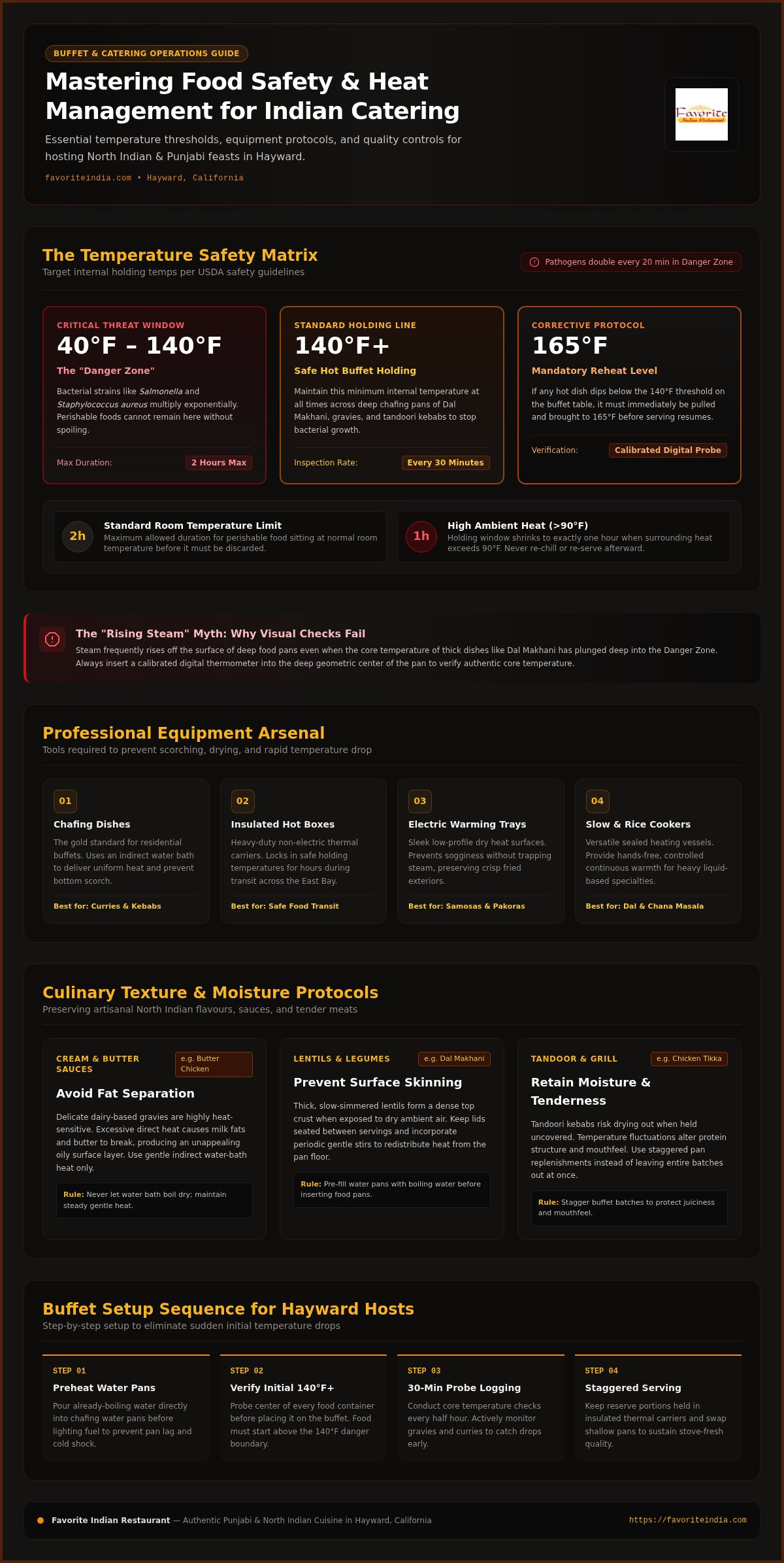
The 'Danger Zone' refers to the temperature range between 40°F and 140°F. Within this window, pathogens can double their population in roughly 20 minutes. To keep your guests safe, hot food must be maintained at an internal temperature of 140°F or higher at all times. This isn't just a recommendation; it's the professional standard that ensures every bite of your Indian catering for house party Hayward remains wholesome and delicious. While many home cooks rely on the sight of rising steam to judge warmth, this is a dangerous gamble. Steam can be deceptive, appearing even when the core of a deep pan of Dal Makhani has dropped into the danger zone. Always use a calibrated digital food thermometer to get an accurate reading from the center of the dish.
Time is just as critical as temperature. Perishable cooked food, like kebabs or samosas, can only sit at room temperature for a maximum of two hours. If your home's ambient temperature is above 90°F, that window shrinks to just one hour. Once this limit is reached, the food must be discarded to prevent illness. It cannot be reheated or refrigerated for later use because certain bacterial toxins are heat-stable and won't be destroyed by a second round of cooking.
Why Temperature Control Matters for Quality
Beyond safety, precise heat management preserves the artisanal quality of Punjabi cuisine. Delicate, cream-based sauces and rich gravies are particularly sensitive to temperature fluctuations. Excessive heat can cause the fats to separate, leading to an oily or broken texture in dishes like Butter Chicken. Conversely, allowing the temperature to drop and then spiking it again can ruin the mouthfeel of tender meats. Per the USDA 2026 guidelines, the 'Danger Zone' is the specific temperature span from 40°F to 140°F where bacteria grow most rapidly.
Monitoring Your House Party Buffet Line
A professional Indian catering for house party Hayward experience requires active supervision. We recommend checking the internal temperature of every hot dish every 30 minutes. If you find a dish has dipped below 140°F, you must quickly reheat it to 165°F before returning it to the buffet. For larger events in Castro Valley or San Leandro, keeping a simple log of these checks ensures nothing is overlooked. Utilizing a proper chafing dish setup provides the indirect heat necessary to hold these temperatures steady. If managing these logistics feels like a distraction from your guests, choosing professional Indian food catering in Hayward allows you to enjoy the party while experts handle the safety protocols.
Essential Equipment for Professional-Grade Food Warming
To serve a feast that honors North Indian tradition, you need the right arsenal. While the vibrant flavors of your Indian catering for house party Hayward are the star, the equipment is the supporting cast that keeps them shining. Chafing dishes remain the gold standard for Hayward gatherings. They use a water bath to provide gentle, even heat that prevents the bottom of the pan from scorching. For those transporting food across the East Bay from a restaurant or prep site, insulated food carriers, often called "hot boxes," are indispensable. These heavy-duty containers hold temperatures for several hours without electricity, ensuring your Paneer Tikka Masala stays safely above the USDA temperature Danger Zone guidelines during transit.
For smaller, indoor residential gatherings, electric warming trays offer a sleek, low-profile solution. They're perfect for keeping appetizers like Samosas or Pakoras crisp and accessible. Slow cookers and rice cookers are surprisingly versatile for liquid-heavy dishes like Dal Makhani or Chana Masala. They provide a steady warmth that frees you up to mingle with your guests. It's a simple way to maintain that "just-cooked" quality throughout the evening.
Choosing the Right Fuel for Chafing Dishes
Fuel choice determines how long your celebration can last. Standard 7-ounce gel fuel cans offer high heat for roughly two hours, making them ideal for a quick lunch. In contrast, sealed wick-style cans provide a more controlled flame for four to six hours. When hosting at a residential Hayward address, safety is paramount. Keep flames away from low-hanging decorations and never leave them unattended. Many modern hosts now opt for ethanol-based gel fuels; they're biodegradable and produce less soot, which keeps your indoor air fresh and celebratory.
The Role of Steam Table Pans and Lids
The material of your pans directly impacts the texture of your meal. Stainless steel is the industry favorite because it distributes heat evenly and won't react with the acidic tomatoes in Punjabi curries. Tight-fitting lids are non-negotiable. They trap steam to prevent your signature gravies from evaporating and thickening into a paste. For Tandoori specialties like Chicken Seekh Kabab, which can dry out quickly, use heavy-duty foil to create a loose tent. This retains moisture while allowing enough airflow to keep the delicate char from getting soggy. If managing this professional gear feels daunting, you can always enjoy the results of a masterfully prepared Indian food experience without the logistical heavy lifting.
Moisture and Heat: Keeping Curries, Kebabs, and Naan Fresh
A successful buffet line is a delicate balancing act between heat and humidity. When arranging your Indian catering for house party Hayward spread, remember that heat alone isn't enough; you must also manage moisture to preserve the artisanal quality of the food. Rich, cream-based dishes like Butter Chicken or Dal Makhani are prone to developing a thick, unappealing 'skin' when exposed to dry air for too long. Similarly, the vibrant spices in a Biryani can lose their aromatic punch if the rice is allowed to dry out under a heat lamp. By focusing on moisture retention, you ensure that the last guest in line enjoys the same succulent textures as the first.
Moisture Control for Punjabi Specialties
The most effective way to maintain the integrity of North Indian curries is through the use of a water bath, or Bain-Marie. This method provides a gentle, indirect heat that surrounds the pan, preventing the direct scorching that can happen with electric plates. For high-moisture dishes like Shahi Paneer or Chana Masala, this indirect warmth keeps the sauces silky and prevents the fats from separating. It's also vital to stir your curries periodically. A gentle stir every twenty minutes redistributes the aromatic oils and ensures that the heat is consistent from the bottom of the pan to the surface. Following FDA safe buffet serving recommendations, you should replace food pans with fresh ones every few hours rather than simply topping off an existing tray. This practice, combined with quality ingredients from our authentic Indian menu, guarantees a premium dining experience for your guests.
Keeping Breads and Grilled Meats Fresh
Naan is perhaps the most temperamental guest at any party. If left in a standard warming tray, it quickly turns either rubbery from trapped steam or hard as a cracker from dry heat. The professional secret is the 'Cloth and Foil' method. Wrap your fresh naan in a clean, lint-free cloth, then place that bundle inside a foil-lined basket with a loose lid. This allows the bread to breathe while retaining enough warmth to stay pliable. For grilled specialties like Chicken Tikka, moisture is even more fleeting. This is why live Indian grill services are so highly valued for Indian catering for house party Hayward events; there's no substitute for meat served seconds after leaving the tandoor. If you're serving fried appetizers like Samosas or Pakoras, avoid the temptation to cover them tightly. Trapped steam is the enemy of a crisp crust, so use a vented lid or a heat lamp to keep them warm without losing that signature crunch.
Step-by-Step Setup for a Successful Event Buffet
Your event's success depends on the seamless transition from the kitchen to the serving table. When managing Indian catering for house party Hayward, the setup must be as deliberate as the spice blends themselves. A common error is placing piping hot curries into cold chafing dishes. This causes a sudden temperature drop that takes significant time to recover. Instead, fill your water pans with boiling water ten minutes before the food arrives. This ensures the stainless steel is already warm and ready to maintain that perfect 140°F holding point from the very first serving.
Arranging the buffet line requires a logical flow that keeps guests moving and heat contained. Place your most temperature-sensitive items, like Butter Chicken and Shahi Paneer, closer to the start of the line. For Hayward homes with standard residential circuits, be mindful of electrical loads. Plugging multiple electric warming trays into a single outlet can trip a breaker, leaving your entire spread to cool in the middle of the party. Spread your equipment across different circuits to keep the celebration going without interruption. For a smooth refill process, keep backup pans of rice and curries in a 150°F oven; this allows for an instant swap when a tray runs low.
The 30-Minute Pre-Event Checklist
Precision is the hallmark of a generous host. Start by lighting your fuel cans and checking water levels in your chafers at least thirty minutes before guests arrive. Verify that every signature dish has its own dedicated serving utensil to prevent flavor mixing and ensure a clean presentation. Finally, use your digital thermometer for a final temperature check of all Halal meat dishes. Ensuring your kebabs and curries are at peak temperature before the first guest arrives is essential for both safety and satisfaction.
Handling Food During the Event
Once the party begins, follow the 'First-In, First-Out' (FIFO) rule for replenishing your North Indian favorites. When a pan runs low, always swap it for a fresh, pre-heated backup rather than simply topping off an existing tray. Topping off mixes old and new food, which can compromise both the texture of the dish and overall food safety. Encourage guests to close lids after serving to trap heat and moisture, which is especially important for maintaining the softness of your breads. If the logistics of a large buffet feel overwhelming, you can book professional Indian catering services to handle every detail for you.
Professional Catering: When to Outsource the Heat
Managing a buffet for a dozen friends is a labor of love; managing one for fifty or more is a complex operation. As your guest list grows, the logistical challenges of maintaining heat and food safety multiply. Ensuring that a large volume of Butter Chicken stays succulent while Tandoori Chicken remains tender requires specialized equipment and constant attention. This is where professional expertise becomes invaluable. By choosing Indian catering for house party Hayward services, you shift the burden of temperature monitoring and equipment management to seasoned professionals. Full-service catering provides not just the food, but the staffing and safety compliance needed to keep every dish at its peak. For those hosting larger celebrations, Favorite Indian Restaurant's banquet services offer a refined solution that brings the elegance of a restaurant dining room directly to your Hayward home or venue.
Customized Catering for Diverse East Bay Events
Every gathering has its own rhythm and environmental challenges. An outdoor summer wedding in Hayward requires a different warming strategy than an indoor corporate lunch in Fremont or Union City. Wind and ambient temperature can quickly sap the heat from a buffet line, making professional wind guards and high-intensity fuels essential. Our team specializes in tailoring these warming solutions to your specific location. Another significant advantage of professional service is the availability of authentic Halal North Indian recipes. Providing Halal options ensures that your community and religious gatherings are inclusive and respectful of all dietary traditions. When evaluating Indian food catering in Hayward, consider how a caterer adapts to these unique environmental and cultural needs.
Making Your Next Hayward Event Stress-Free
We've spent over 25 years perfecting the art of Punjabi hospitality in the East Bay since 1998. That experience means we understand how to ensure your food arrives hot and stays hot, whether you're in Castro Valley, San Leandro, or Dublin. We combine professional delivery with on-site warming solutions that allow you to focus entirely on your guests. For smaller, more intimate gatherings, our online ordering for takeout and delivery makes it simple to have warm, authentic flavors delivered right to your door. We invite you to experience the confidence that comes with expert craftsmanship and heart-centered service. Reach out to our team today to discuss your guest count and menu, and let us help you host a vibrant, delicious, and perfectly timed Hayward event.
Host Your Next Event with Confidence and Flavor
Hosting a successful gathering is about more than just a menu; it's about the warmth of hospitality and the precision of a professional setup. By mastering the specific temperature thresholds and utilizing the right moisture-retention techniques for your naan and curries, you ensure every guest enjoys an authentic North Indian experience. Whether you're managing a small buffet yourself or looking for full-service Indian catering for house party Hayward celebrations, your focus should always remain on the joy of the shared meal. Favorite Indian Restaurant has proudly served the East Bay communities of Hayward, Castro Valley, and San Leandro for over 25 years. Our expertise in Halal Punjabi cuisine and our signature live grill services bring the sophistication of professional banquet dining directly to your home. Don't let the logistics of food warming distract you from your role as a generous host. Plan your next event with Favorite Indian Restaurant’s professional catering to ensure your feast is as hot and vibrant as the culture it represents. Your guests deserve the very best; let's make your next party a delicious success.
Frequently Asked Questions
How long can I keep catered food warm in a chafing dish?
Hot food can safely stay in a chafing dish for up to four hours, provided the internal temperature remains above 140°F. This is a critical safety standard for Indian catering for house party Hayward events to ensure guest safety. Once the four-hour mark is reached, any remaining food must be discarded. Chafing fuel typically lasts between two and six hours, so you should monitor your burners to maintain consistent heat throughout your celebration.
What is the best way to keep naan bread warm without it getting hard?
To keep naan soft and pliable, wrap the fresh bread in a clean cloth towel and place it inside a foil-lined basket or insulated container. Avoid putting naan directly into a steaming chafing dish, as the moisture will turn the bread rubbery. If the bread is exposed to dry air, it will quickly become hard. Small, frequent batches from the oven are always better than keeping a large pile sitting out for hours.
Can I use a slow cooker to keep Indian curries warm for a party?
Slow cookers are excellent tools for maintaining the temperature of liquid-based Punjabi specialties like Dal Makhani or Chana Masala. Set the device to the "warm" setting once the food is already hot. It's important to stir the curry every twenty minutes to distribute the heat evenly and prevent the bottom from scorching. This is a practical solution for smaller house parties where you might have limited buffet equipment available for your guests.
How do I keep food hot if my venue has no electrical outlets?
If your Hayward venue lacks electricity, you can rely on gel or wick-based chafing fuels and high-quality insulated food carriers. Chafing dishes use an open flame to heat water pans, requiring no power cords or outlets. Insulated "hot boxes" can also maintain safe temperatures for several hours by trapping the food's internal heat. These professional tools allow you to host a successful event in backyard spaces, local parks, or community halls without logistical stress.
What temperature should the water be in a chafing dish?
You should always start with boiling water, approximately 212°F, when filling the lower pan of your chafing dish. Using pre-heated water ensures your buffet reaches a safe holding temperature in under ten minutes. If you start with cold tap water, it can take nearly an hour for the fuel to heat the bath, leaving your food in the danger zone. Check water levels periodically to ensure the pan doesn't boil dry during the party.
How do I prevent rice from drying out on a buffet line?
Preventing dry rice requires a combination of tight-fitting lids and minimal air exposure. Keep your Biryani or Basmati rice covered whenever guests aren't actively serving themselves to trap the natural steam. You can also add a very small amount of hot water or place a damp paper towel over the top of the rice pan before covering it. This extra moisture helps the grains stay separate and fluffy throughout your North Indian buffet service.