Planning an Indian catering menu starts with the event, the guests, and the way the meal will be served. A thoughtful spread doesn’t need the longest dish list. It needs choices that bring different flavors, textures, and cooking styles to the table.
For a Punjabi and North Indian meal, you might balance a curry with a tandoori specialty, a vegetarian main, fresh naan, and a dessert. The right combination depends on the occasion and your guests’ stated preferences. A seated celebration may call for a different flow from a casual gathering where guests serve themselves.
This guide explains how to choose menu categories, build variety, and account for vegetarian and Halal preferences without making assumptions. Butter Chicken, Paneer Tikka Masala, Tandoori Chicken, fresh naan, and Gulab Jamun are useful examples, not a one-size-fits-all menu.
Favorite Indian Restaurant serves Punjabi and North Indian cuisine and provides catering for private and public events in Hayward. Use the steps below to shape a menu around your gathering.
Key Takeaways
- Start planning an Indian catering menu by matching the occasion and dining style to your guests’ preferences.
- Balance curry-based mains with tandoor-cooked dishes, vegetarian choices, accompaniments, and dessert.
- Gather dietary preferences directly, and keep vegetarian labels separate from questions about ingredients or allergens.
- Use guest count and event flow to guide your planning, without assuming serving quantities.
- Favorite Indian Restaurant offers Punjabi and North Indian catering for Hayward events.
Planning an Indian Catering Menu for a Hayward Event: Start with the Occasion
Begin with three details: the occasion, the people attending, and how they’ll dine. These decisions give planning an Indian catering menu a clear direction before you choose dishes. A wedding may call for variety across the meal, while an office lunch may benefit from concise descriptions and easy-to-follow choices. Let the gathering guide the menu rather than trying to fit in as many items as possible.
Consider the event’s pace, too. Will guests sit down together, or arrive and eat at different times? Is the meal the main focus or one part of a longer program? These details help you prioritize the menu and identify questions to resolve. For an event in Hayward or elsewhere in the East Bay, Punjabi and North Indian dishes can provide a coherent starting point while leaving room to reflect your guests’ preferences.
Match the menu to the gathering
Choose the balance of the meal to suit the occasion. A wedding, workplace lunch, and family celebration don’t need identical menus. Think about the atmosphere you want and how easily guests will be able to understand their choices. Indian cuisine includes many regional traditions and cooking methods; the Indian Cuisine Overview offers broader context as you consider the style of food to share.
- Weddings and celebrations: Create contrast across the meal instead of choosing several dishes that fill the same role.
- Corporate or school events: Use clear dish names and concise descriptions so guests can navigate the options easily.
- Birthdays, family, and community gatherings: Pair recognizable favorites with regional variety to make the meal welcoming and distinctive.
Start with guests, not a long dish list
Before selecting dishes, estimate the guest count and gather preferences directly from the host or attendees. Ask which priorities matter, such as vegetarian choices or other stated dietary needs. Don’t infer spice tolerance, allergies, or religious requirements from someone’s name, appearance, or background. Specific information makes planning more considerate and helps keep assumptions out of the menu.
- Record the expected guest count and dining style.
- Ask about dietary preferences and the host’s menu priorities.
- List questions about ingredients or allergens separately. A dish name or label does not provide every detail.
Use dishes as inspiration rather than treating them as a fixed package. Butter Chicken, Paneer Tikka Masala, Tandoori Chicken, and naan illustrate different menu directions, but the final selection should reflect the occasion and the preferences you’ve gathered. Favorite Indian Restaurant provides Indian catering in Hayward for private and public functions. Start with the host’s priorities, then build a menu suited to the gathering.
Build Variety into an Indian Catering Menu with Curries, Tandoor, and Sides
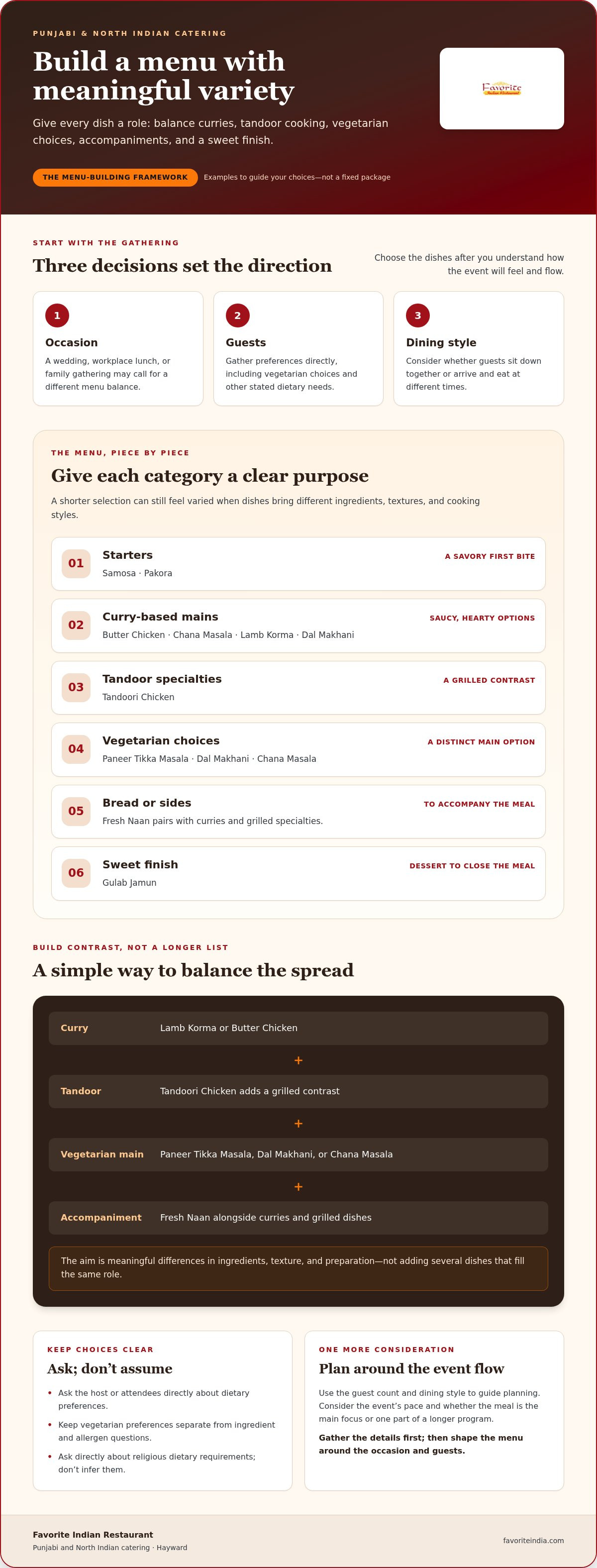
A satisfying spread is not simply a long list of dishes. Give each selection a distinct role. Balance saucy curries with tandoor-cooked specialties, vegetarian choices, accompaniments, and a sweet finish. This approach creates contrast in flavor and texture and helps guests see how the meal fits together.
Regional traditions influence ingredients and cooking styles. Britannica’s Diversity of Indian Cuisine provides broader context. For a Punjabi and North Indian-inspired menu, start with familiar dishes, then look for variety in cooking method and main ingredients rather than adding several dishes that serve the same purpose.
Balance curry, tandoor, and vegetarian choices
Pair a curry such as Lamb Korma with Tandoori Chicken for a contrast between a saucy dish and a tandoor-cooked specialty. Then consider a vegetarian main such as Paneer Tikka Masala, Dal Makhani, or Chana Masala. You don’t need every style on the menu. Aim for meaningful differences in ingredients, texture, and preparation. A smaller selection can feel more varied than a longer list of similar dishes.
Menu category | Role | Examples
Starters | Welcome guests with a first bite | Samosa, Pakora
Curry-based mains | Bring saucy, hearty options to the meal | Butter Chicken, Chana Masala, Lamb Korma
Tandoor specialties | Add a grilled contrast to curries | Tandoori Chicken
Bread or sides | Accompany curries and grilled dishes | Fresh Naan
Sweet finish | Close the meal with dessert | Gulab Jamun
Give each menu category a clear purpose
Starters should open the meal without repeating the main courses. Samosa or Pakora can offer a savory first bite, while the mains provide the central variety. Fresh Naan works as an accompaniment to curries and grilled specialties. Gulab Jamun is a dessert option, and Mango Lassi is one beverage to consider alongside the food.
Use this framework as a guide, not a fixed package. Explore Favorite Indian Restaurant’s Punjabi and North Indian menu to see dishes that could suit your event. Once you’ve chosen the categories, refine the selection around the menu and the preferences you collected.
For catering in Hayward, Favorite Indian Restaurant offers Punjabi and North Indian flavors to help shape an event menu.
Choose Indian Catering Dishes for Dietary Preferences Without Making Assumptions
A thoughtful menu gives guests clear choices without guessing what they eat. Gather preferences directly from the host or attendees, and record specific needs in their own terms. Vegetarian preferences, allergy concerns, and religious dietary requirements are different considerations. Keep them distinct rather than treating a dish’s name or appearance as a complete answer.
Indian catering can include vegetable, lentil, paneer, and meat dishes. A dish described as vegetarian does not automatically answer questions about allergens, every ingredient, or preparation. Keep those details separate as you plan, and avoid making promises based on assumptions.
Make vegetarian choices part of the menu plan
Include vegetarian dishes as full choices, not as last-minute substitutes. Shahi Paneer, Dal Makhani, and Chana Masala are examples with distinct ingredients and character. Offering dishes that play different roles can make the menu feel more considered and give vegetarian guests satisfying choices alongside other mains.
Use clear descriptions so guests can make informed selections. Identify a dish as vegetarian only when that designation is accurate. Don’t extend the label into an unsupported claim about allergens, vegan suitability, or preparation. If a guest has a specific concern, record it separately instead of relying on a broad menu description.
Handle Halal preferences and other dietary needs carefully
Favorite Indian Restaurant identifies as a provider of Halal Indian food. Use that description accurately, without extending it to claims about certification, ingredient sourcing, kitchen procedures, or religious compliance. A general description and an individual guest’s specific requirements are not interchangeable.
For other dietary needs, don’t draw conclusions from a guest’s identity or assume that one dish suits everyone with the same preference. Gather details directly and keep the wording precise. When planning an Indian catering menu, clear notes make it easier to consider the proposed choices against the needs guests have shared.
- Ask for preferences directly: Note vegetarian choices and stated dietary requirements without inferring them from someone’s background.
- Separate the categories: Keep vegetarian labels distinct from questions about allergens, ingredients, or preparation.
- Use clear dish descriptions: Help guests understand the menu without making claims beyond the information available.
- Keep specific needs visible: Include them in your planning notes so they remain part of the menu discussion.
Favorite Indian Restaurant’s catering menu in Hayward is a starting point for exploring Punjabi and North Indian dishes. Combine menu ideas with clear notes about guest preferences, and keep descriptions grounded in what you know.
Plan an Indian Catering Menu Step by Step for Your Guest Count and Event Flow
A clear sequence turns event details into a menu that feels considered, not crowded. Start with the occasion and expected guest count. Then gather preferences, choose menu categories, check for repetition, and review the details. Guest count informs the planning conversation, but it does not establish a universal serving quantity or event setup.
Meal timing and format matter as well. A shared mealtime has a different rhythm from an event where guests arrive or eat at different points. Consider where the meal fits into the program and how guests will encounter the dishes. For organizers coordinating celebration spaces or corporate functions, exploring event venues like hauteprive.co.uk can also provide helpful ideas on aligning room layouts with smooth hospitality flow.
Use a simple five-step menu planning checklist
Work through the decisions in order to keep event details, guest needs, and dish choices connected.
- Define the event: Record the occasion, location, expected guest count, and preferred dining style.
- Gather preferences: Note vegetarian preferences and dietary requirements shared by the host or guests.
- Choose categories: Consider starters, main dishes, breads or sides, and a sweet finish.
- Balance the selections: Look for contrast among curries, tandoori specialties, and vegetarian choices. Remove dishes that duplicate the same role or feel too similar.
- Review the plan: Check dish names, descriptions, and current menu details before settling on the selection.
Guest count is useful context when deciding how broad the selection should be, but it is not a substitute for event-specific planning and should not be used to invent serving quantities. Consider it alongside the occasion, timing, dining style, and stated preferences.
Review the menu before finalizing event details
Read the menu as a guest would. Make sure descriptions distinguish curries from tandoori dishes, identify vegetarian choices accurately, and show how breads and desserts fit into the meal. Reviewing the Indian menu helps align dish names and menu information with what Favorite Indian Restaurant presents.
Next, connect the menu to your event. The Indian catering information describes Favorite Indian Restaurant’s event catering in Hayward. Keep guest count and event flow in view, without assuming quantities or logistics. An organized menu is easier to discuss and easier for guests to understand.
Once the occasion, preferences, categories, and menu details are in place, you have a practical framework for planning an Indian catering menu. Explore Favorite Indian Restaurant as you bring your Hayward event menu together.
Bring Your Indian Catering Menu Plan to Life with Favorite Indian Restaurant
You’ve considered the occasion, guests’ stated preferences, and ways to balance the menu. Now connect those decisions with dishes that work together. Favorite Indian Restaurant serves Punjabi and North Indian cuisine in Hayward and provides catering for private and public functions.
Established in 1998, Favorite Indian Restaurant has served the East Bay for over 25 years. When planning an event menu, consider what each dish contributes: a curry can bring a rich, saucy element, while a tandoori specialty adds a different cooking style and texture.
Why regional food knowledge helps shape the menu
Punjabi and North Indian cooking offer a useful foundation for a cohesive spread. Butter Chicken and Lamb Korma are curry examples, while Tandoori Chicken and Chicken Seekh Kabab bring tandoor and grill styles into the mix. You could pair those ideas with vegetarian choices such as Shahi Paneer, Dal Makhani, or Chana Masala, and fresh naan as an accompaniment. These are examples, not a fixed package.
A regional focus can help keep the menu coherent. Rather than collecting unrelated choices, select dishes that suit the occasion and complement one another in role, texture, and flavor. Each choice should contribute something distinct without making the menu repetitive. Shared food can give guests a chance to explore the meal together.
Take the next step for a Hayward or East Bay event
Favorite Indian Restaurant provides catering for weddings, corporate events, birthday parties, family gatherings, religious celebrations, school events, and community occasions. The restaurant is located at 24052 Mission Blvd in Hayward.
As you finalize the menu, keep the practical framework in view: occasion, guest preferences, varied dish categories, and clear descriptions. Explore the catering service details to see how Favorite Indian Restaurant’s Punjabi and North Indian cuisine can suit your event. For broader considerations as you evaluate catering providers, see this Indian catering planning guide.
Favorite Indian Restaurant is located in Hayward, with local relevance for event planners in Ashland, Fairview, Cherryland, Castro Valley, Union City, Fremont, San Leandro, San Lorenzo, San Ramon, Oakland, Dublin, Pleasanton, San Francisco, Livermore, Milpitas, and San Jose. Explore Favorite Indian Restaurant’s catering for your gathering.
Make the Meal Part of the Occasion
A catered meal can do more than fill a place in the schedule. It can set a welcoming tone, give guests a reason to linger, and bring Punjabi and North Indian food into the gathering. As you continue planning an Indian catering menu, let the event’s character guide your choices. A family celebration, workplace gathering, and milestone occasion each offer a different way to bring people together over food.
Keep planning grounded in what matters to your guests. Choose deliberately rather than adding dishes simply to make the menu longer. A balanced meal feels considered from the first bite to the last, with each selection contributing to the atmosphere you want to create.
Ready to plan a gathering in Hayward? Explore Indian catering from Favorite Indian Restaurant and start shaping a menu for your event.
Frequently Asked Questions
How do I plan an Indian catering menu for a mixed group?
Offer more than one kind of main dish and make the menu descriptions easy to understand. Instead of trying to predict what each person will choose, collect preferences and specific dietary needs from the host or guests. Use that information to refine the selection before the event.
What vegetarian dishes can I include in an Indian catering menu?
Consider Shahi Paneer, Dal Makhani, or Chana Masala. Give each dish a distinct role rather than treating vegetarian food as one substitute for other mains. Describe selections clearly, and don’t use a vegetarian label to imply anything about allergens or preparation.
What is the difference between curry and tandoori dishes?
Curry dishes are generally served with a sauce or gravy, while tandoori describes a cooking style associated with a tandoor, a clay oven. This distinction helps when balancing the menu: a saucy dish offers a different texture from a grilled specialty. Use clear dish names and descriptions rather than assuming every guest knows the terms.
How can I include Halal Indian food in an event menu?
Favorite Indian Restaurant identifies as a provider of Halal Indian food. If guests have specific religious dietary requirements, include those details in the planning conversation rather than assuming a general description answers every question. Keep menu wording precise and don’t infer certification, sourcing standards, or kitchen practices.
Which Indian dishes work well for a catered family gathering?
Consider a mix such as Butter Chicken, Chana Masala, fresh naan, and Gulab Jamun. This brings together a curry, a vegetarian choice, bread, and a sweet finish. Treat these as examples rather than a set menu, and let the family’s preferences and the occasion guide the final selection.
Can an Indian catering menu include both curries and grilled dishes?
Yes. Curries and grilled dishes can complement each other through different textures and cooking styles. For example, a host might consider Butter Chicken alongside Tandoori Chicken, then choose accompaniments that suit the meal. The goal is not to include every category, but to make each selection contribute something distinct.